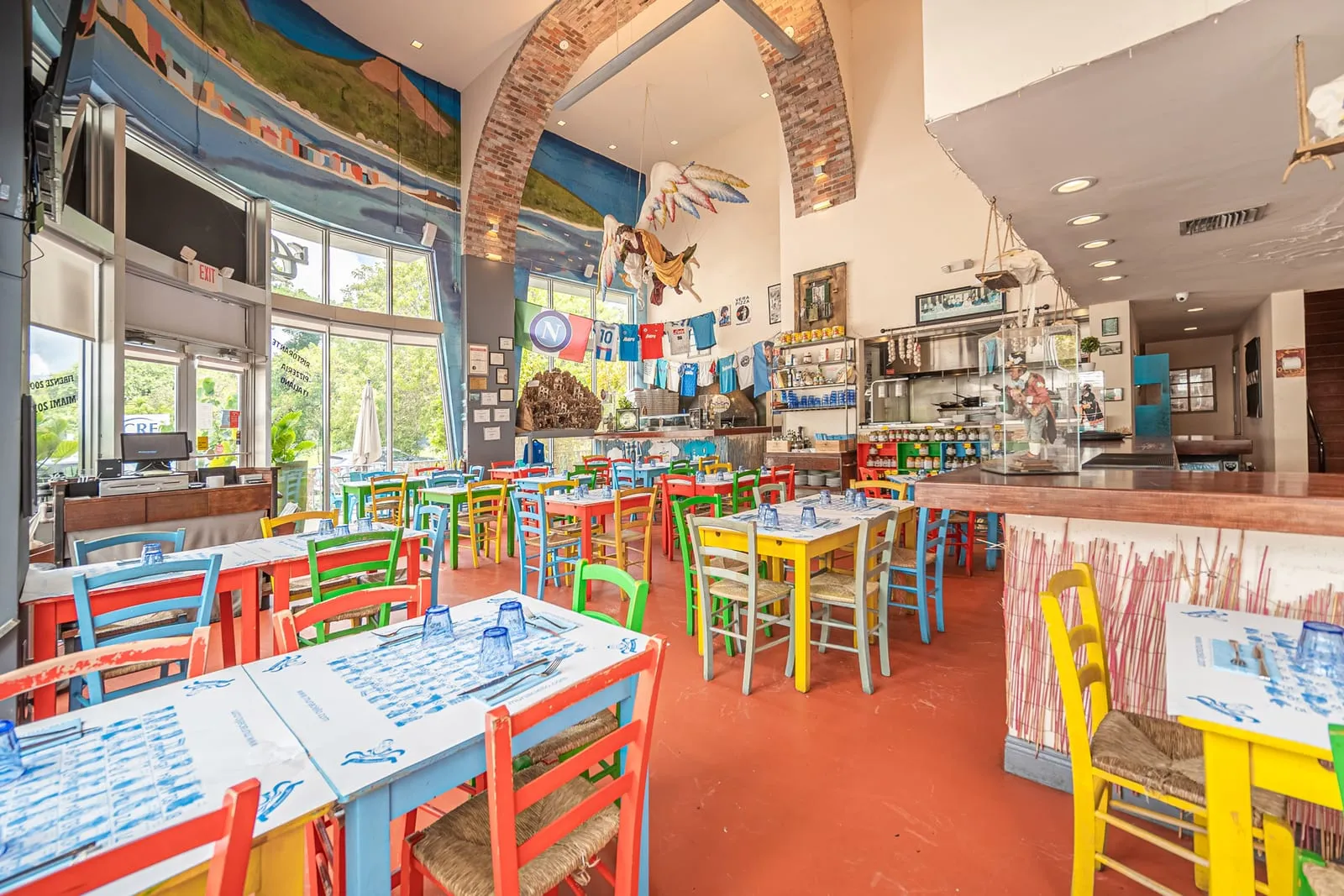
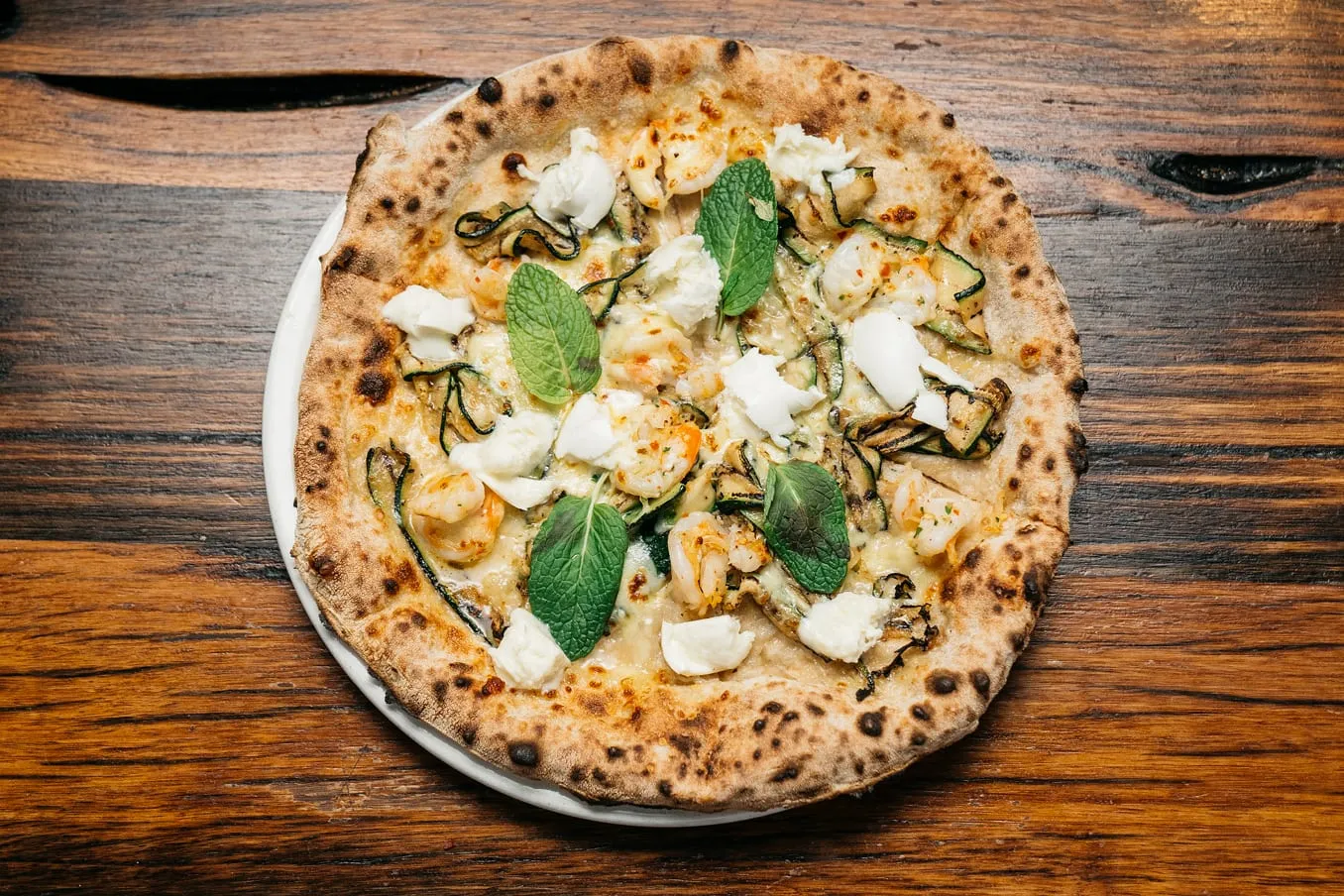
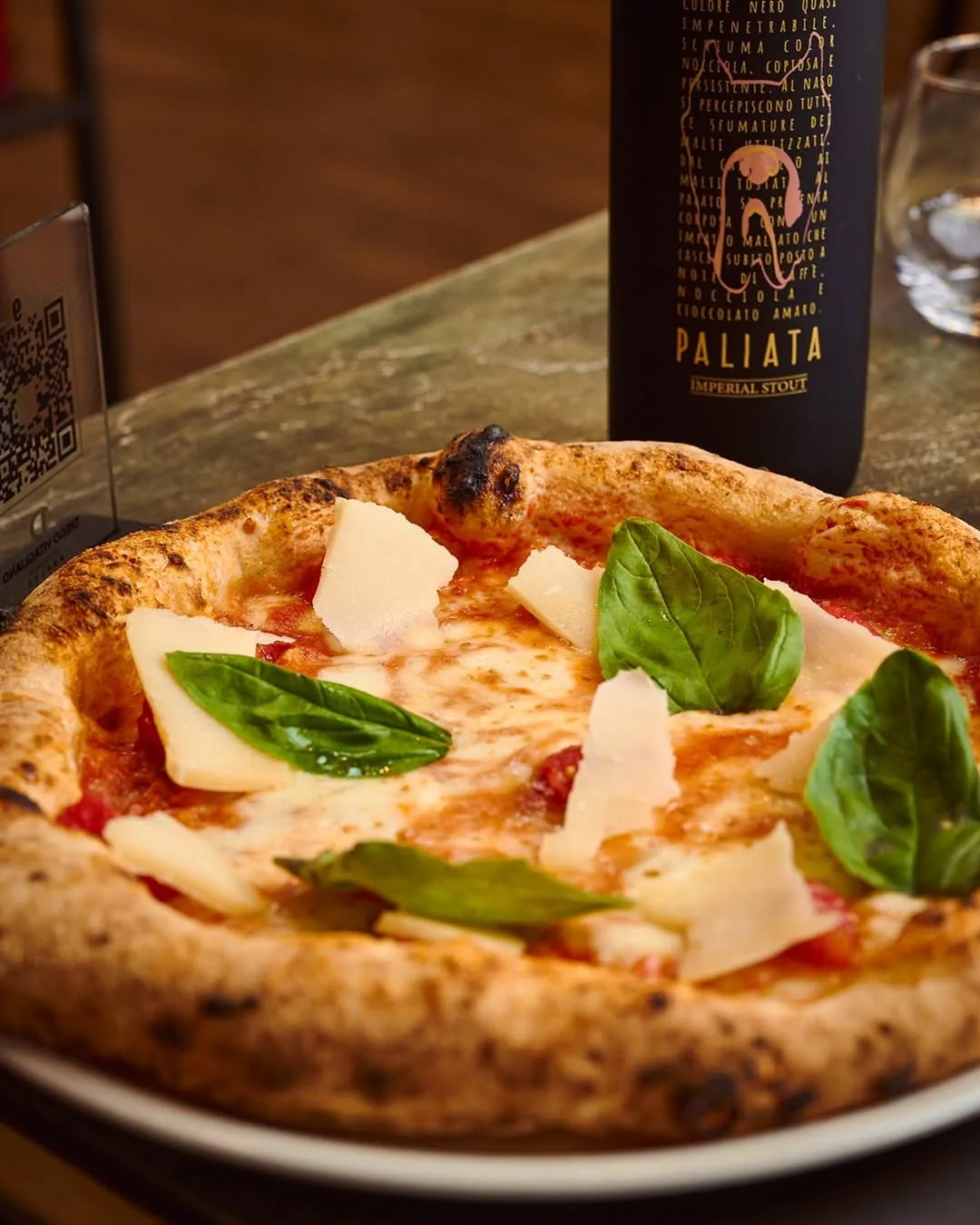
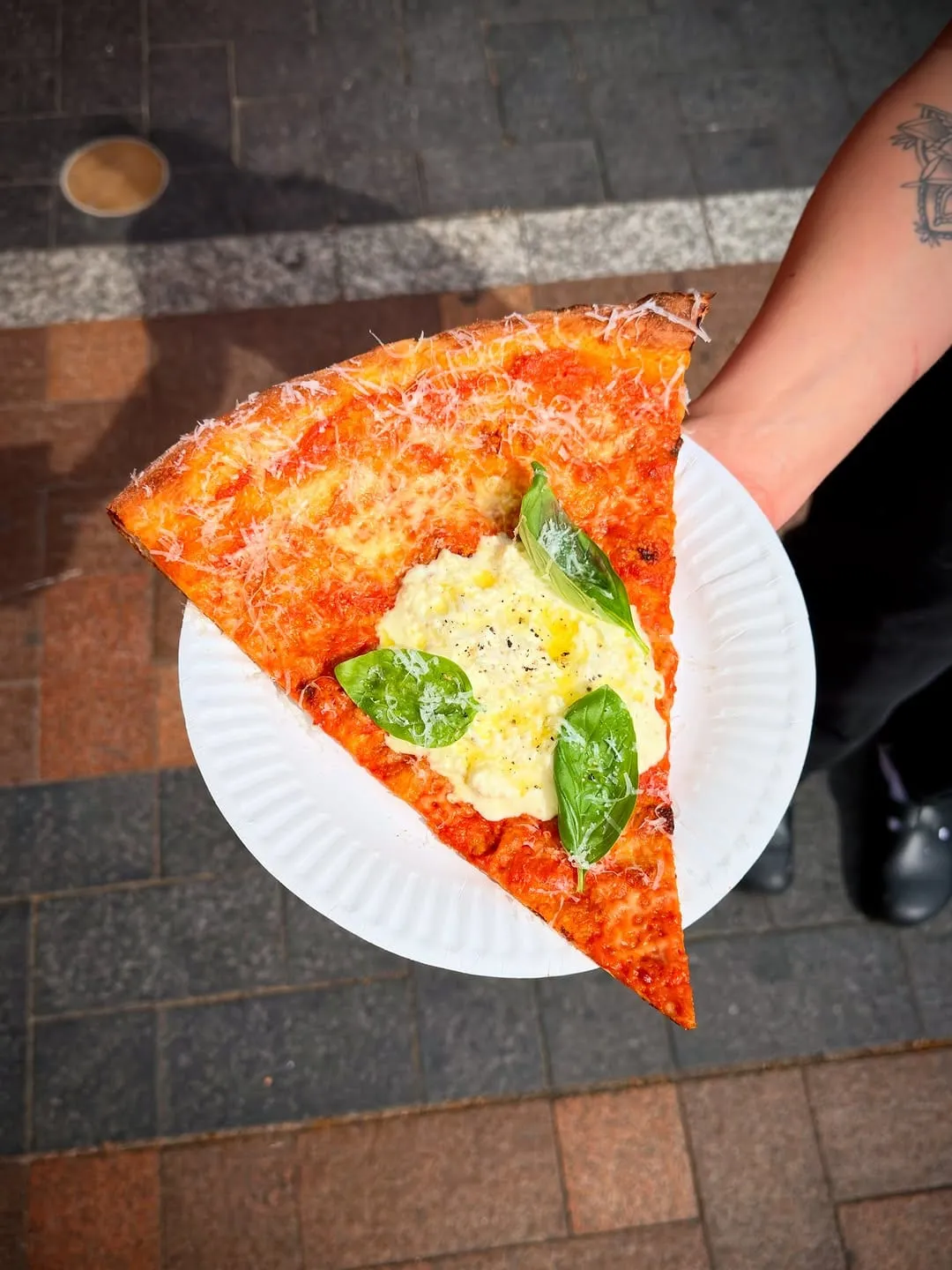
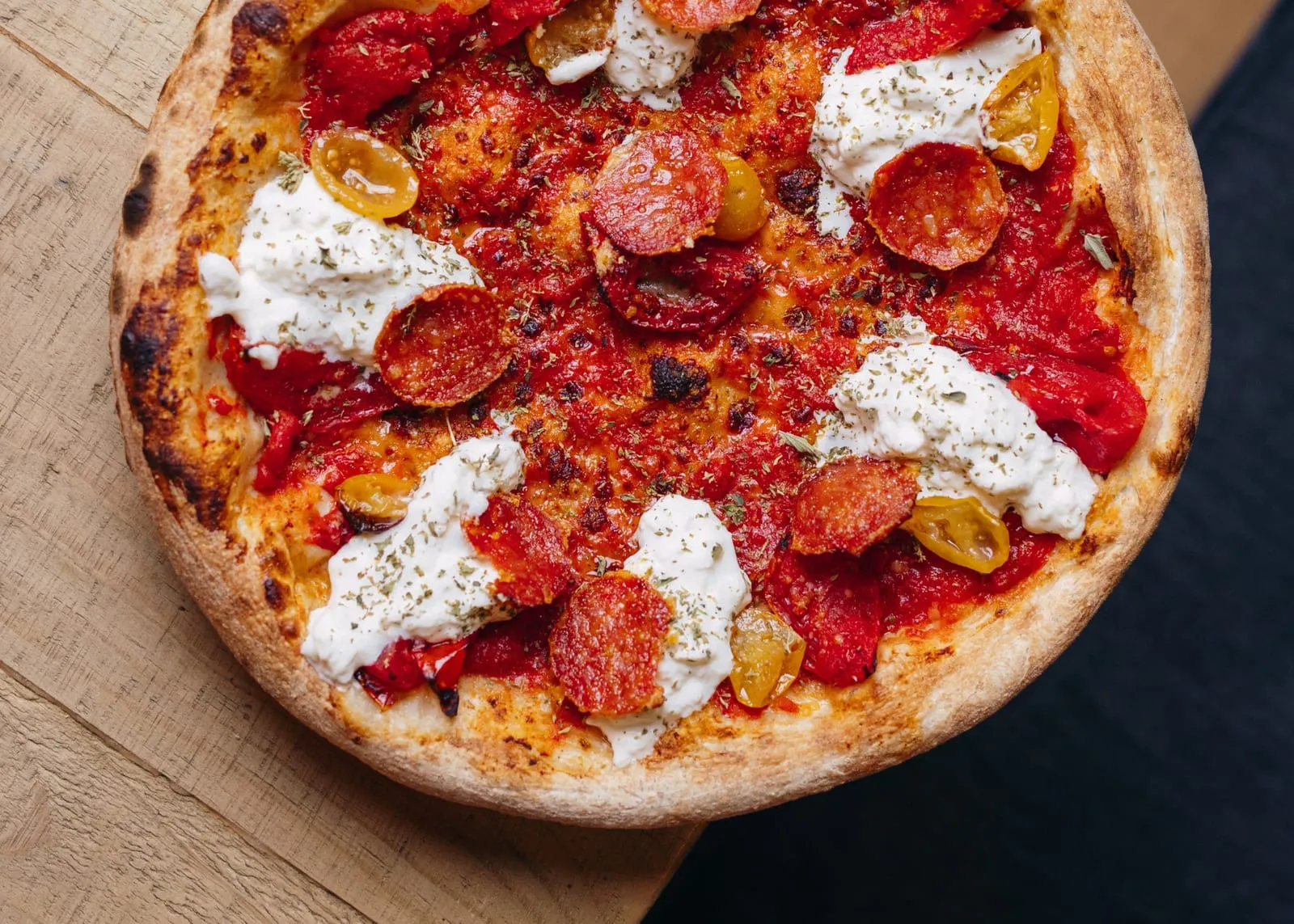
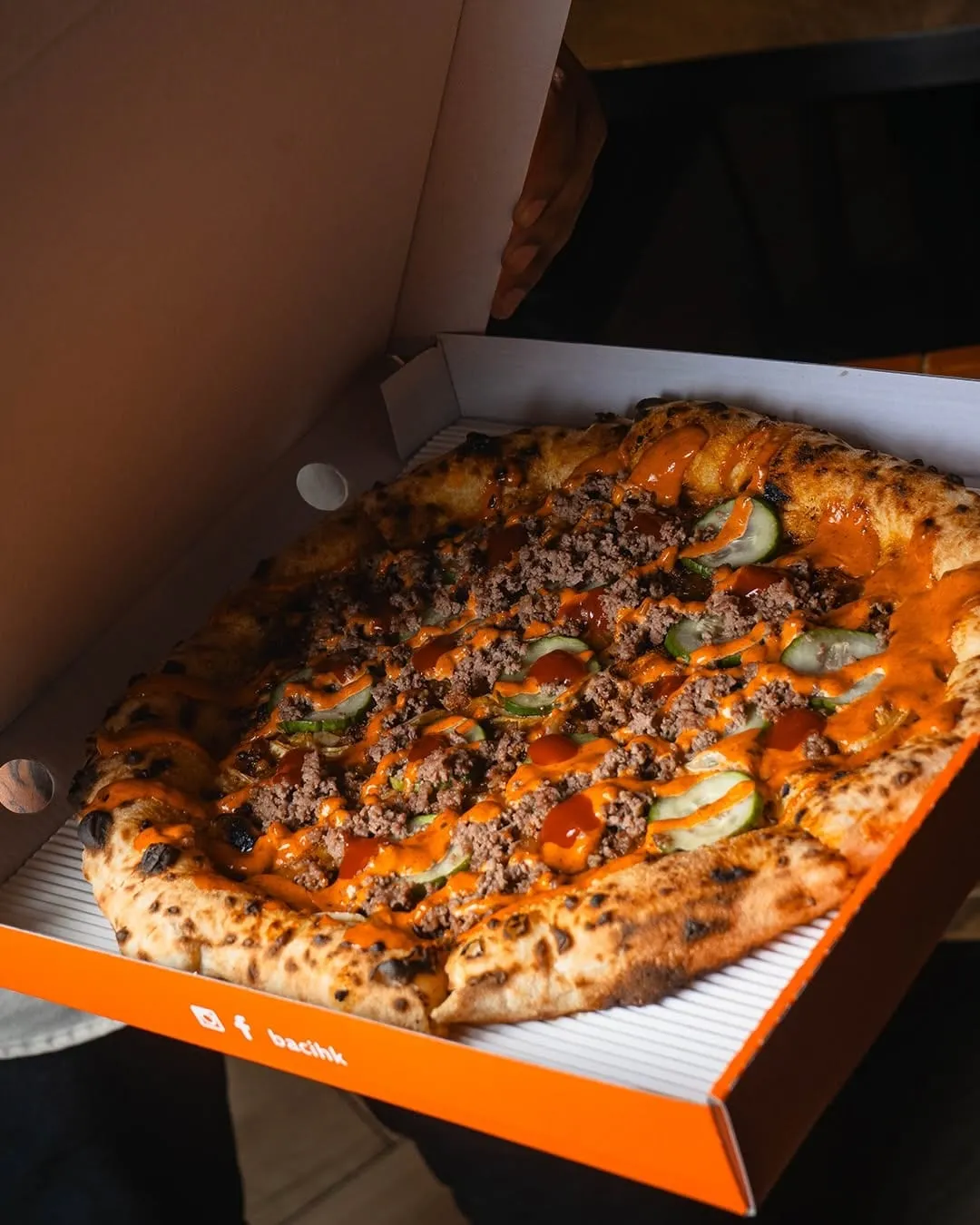
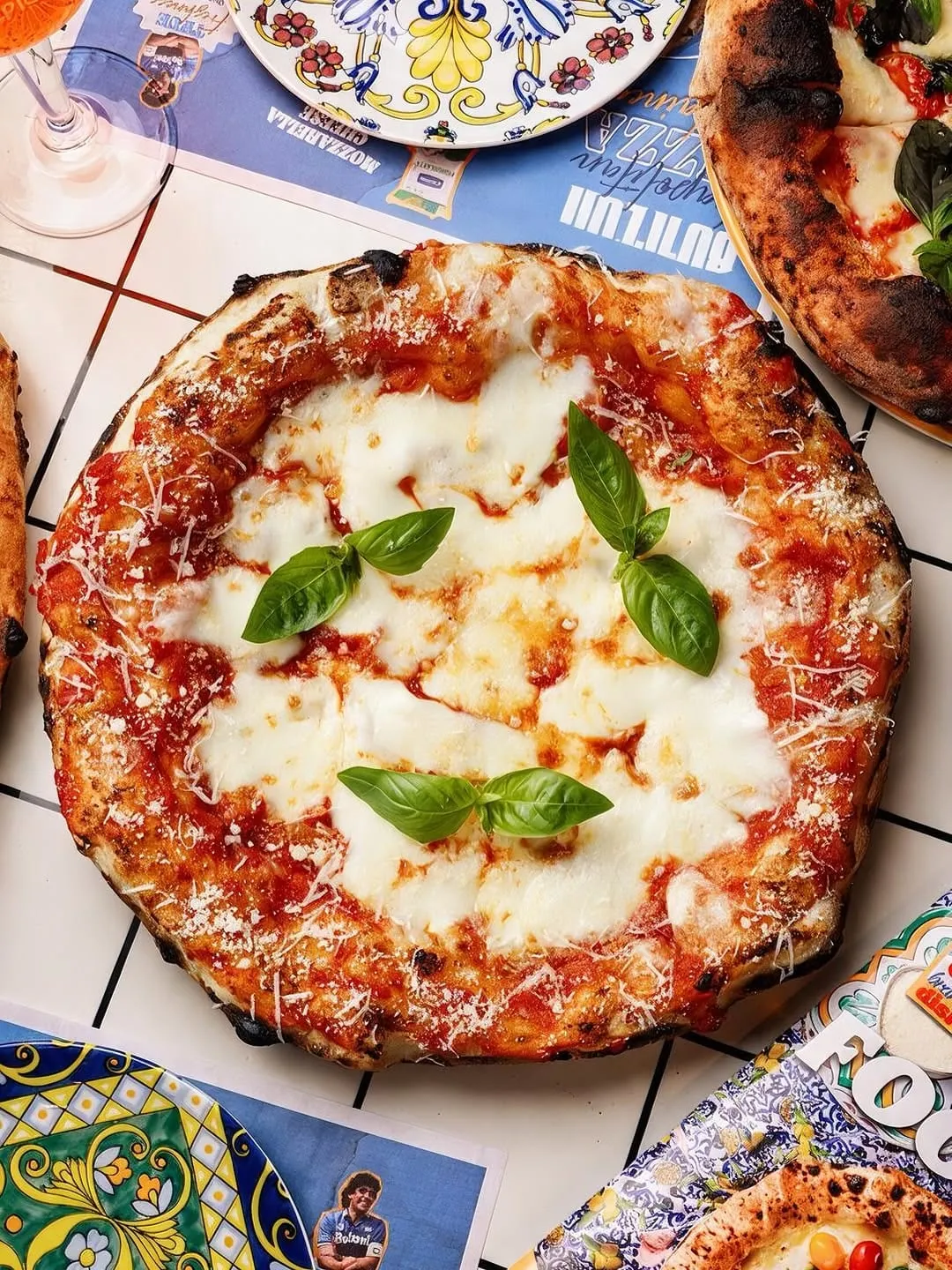
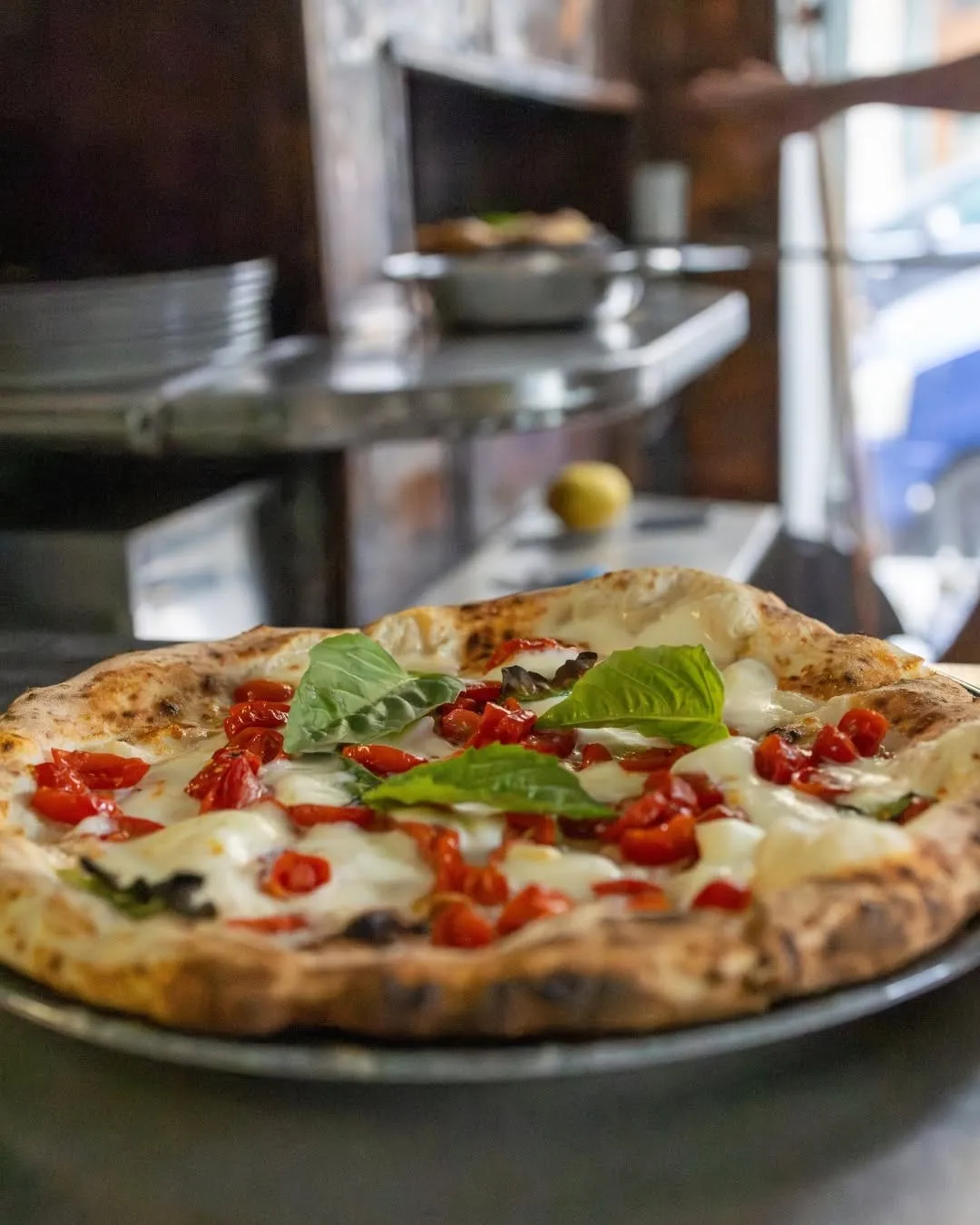
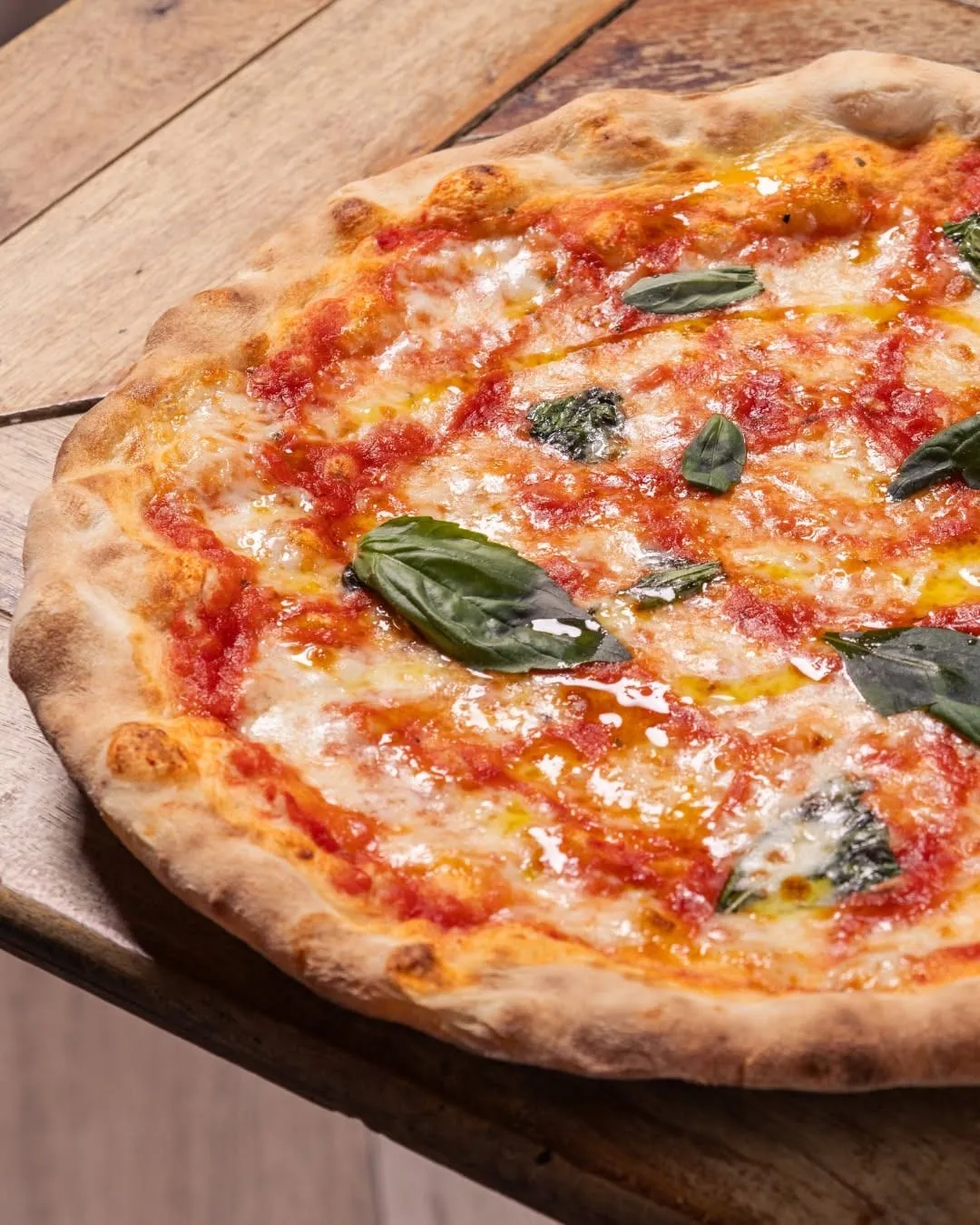
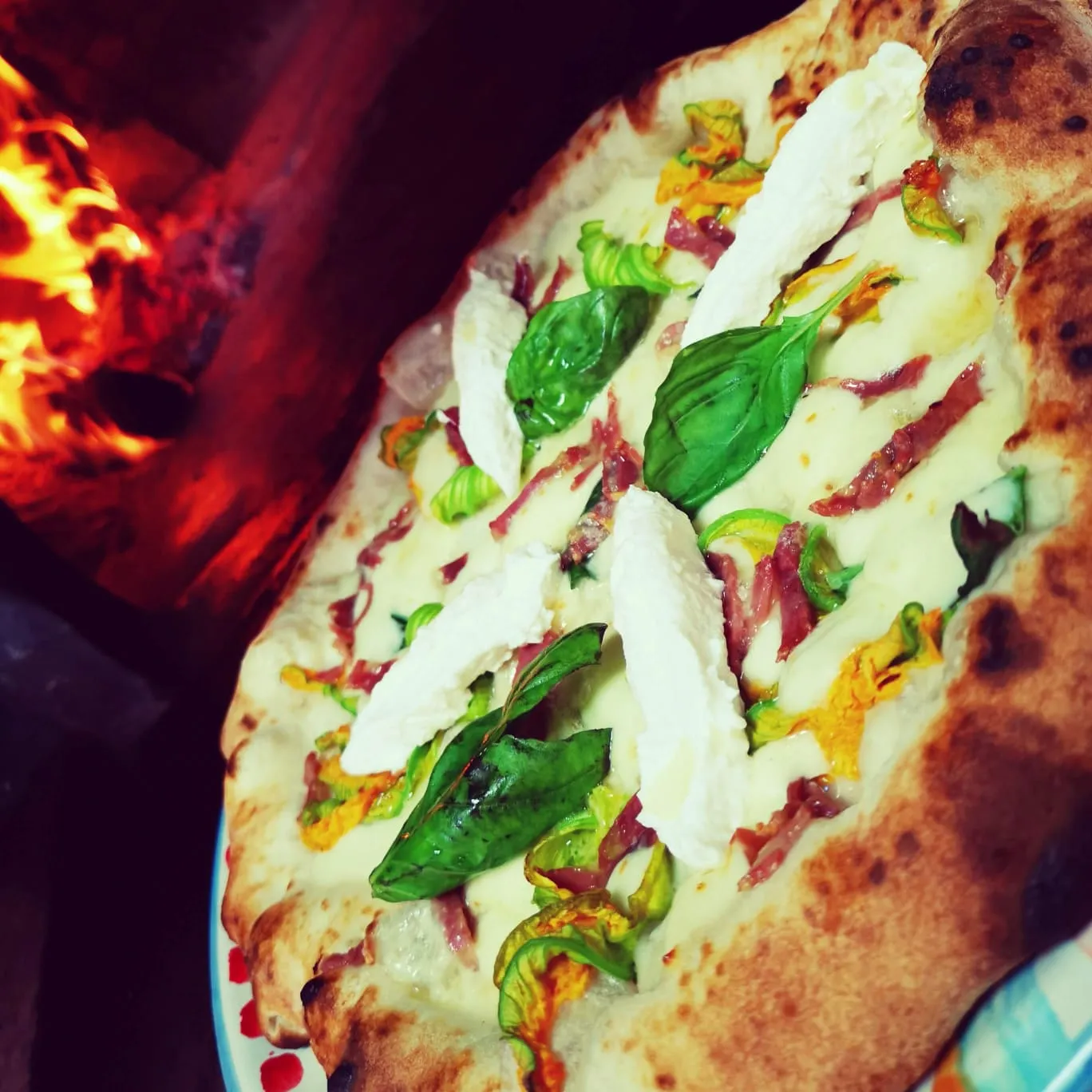
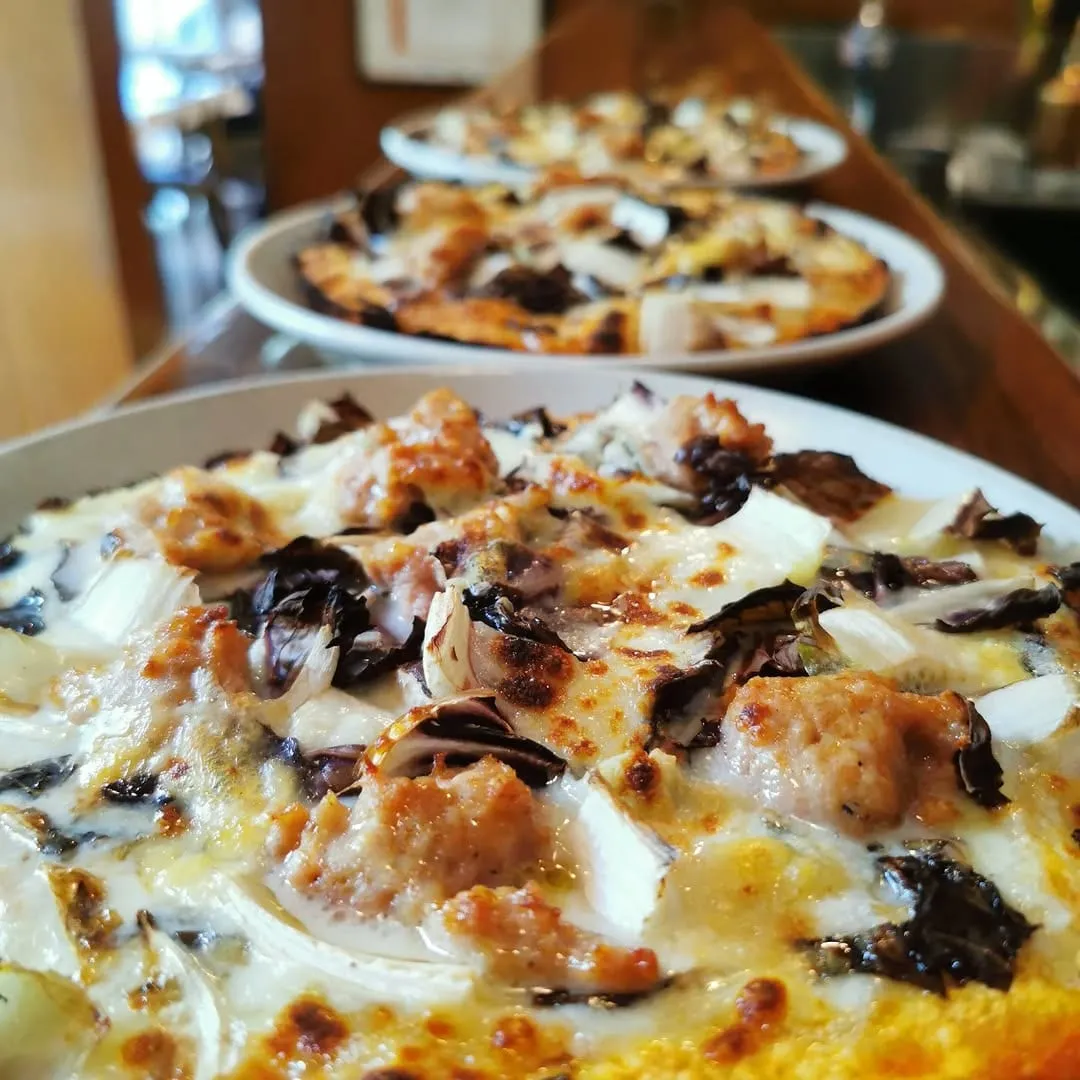
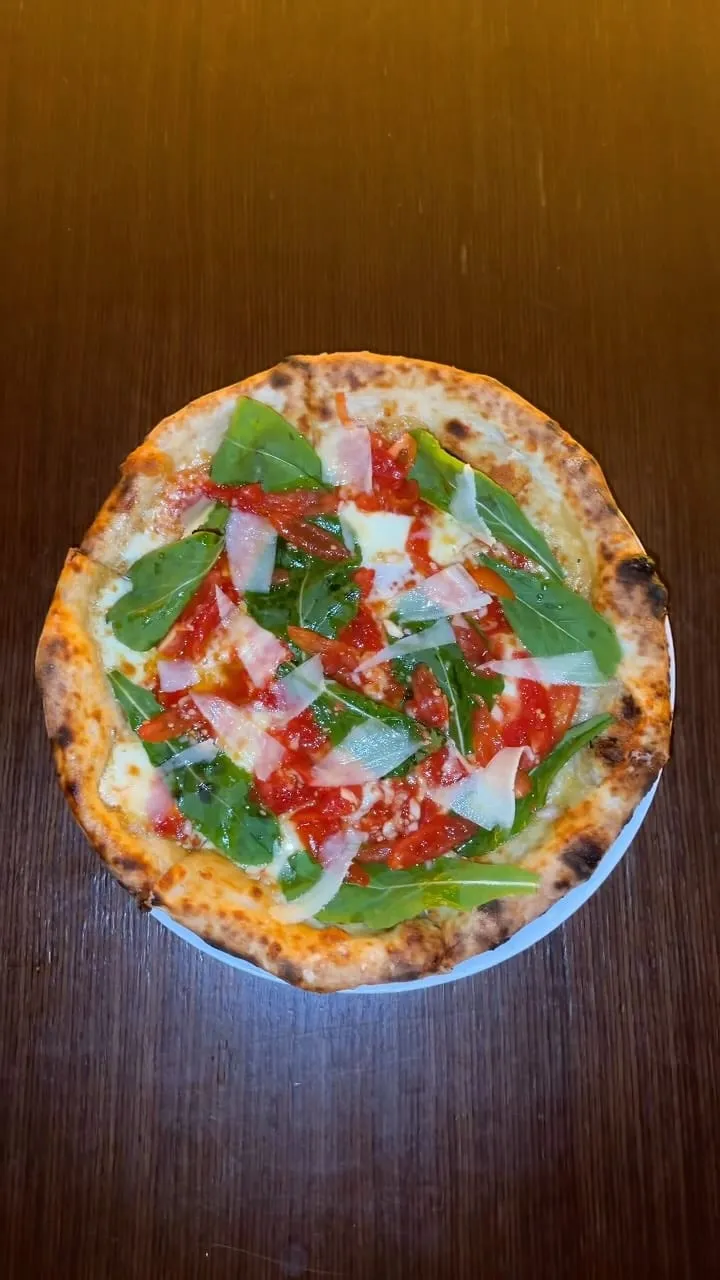
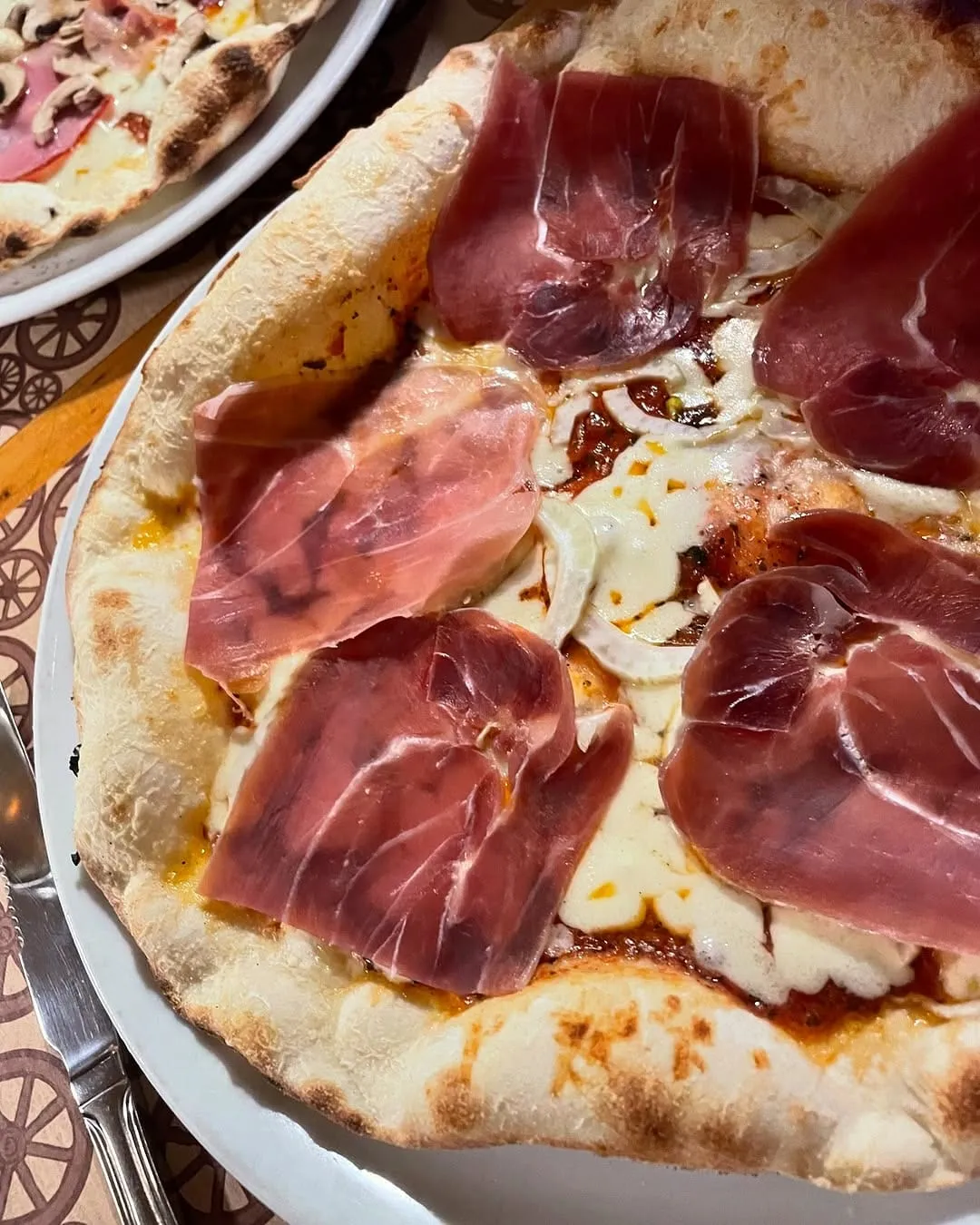
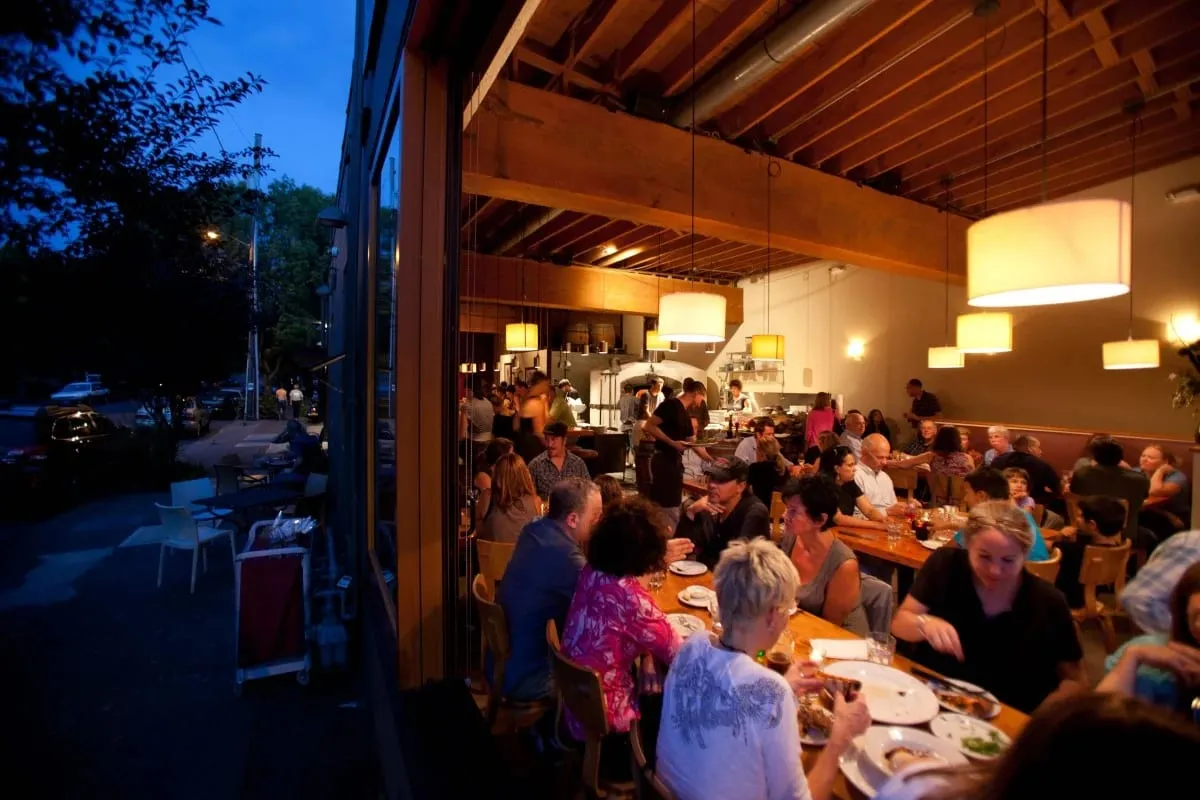
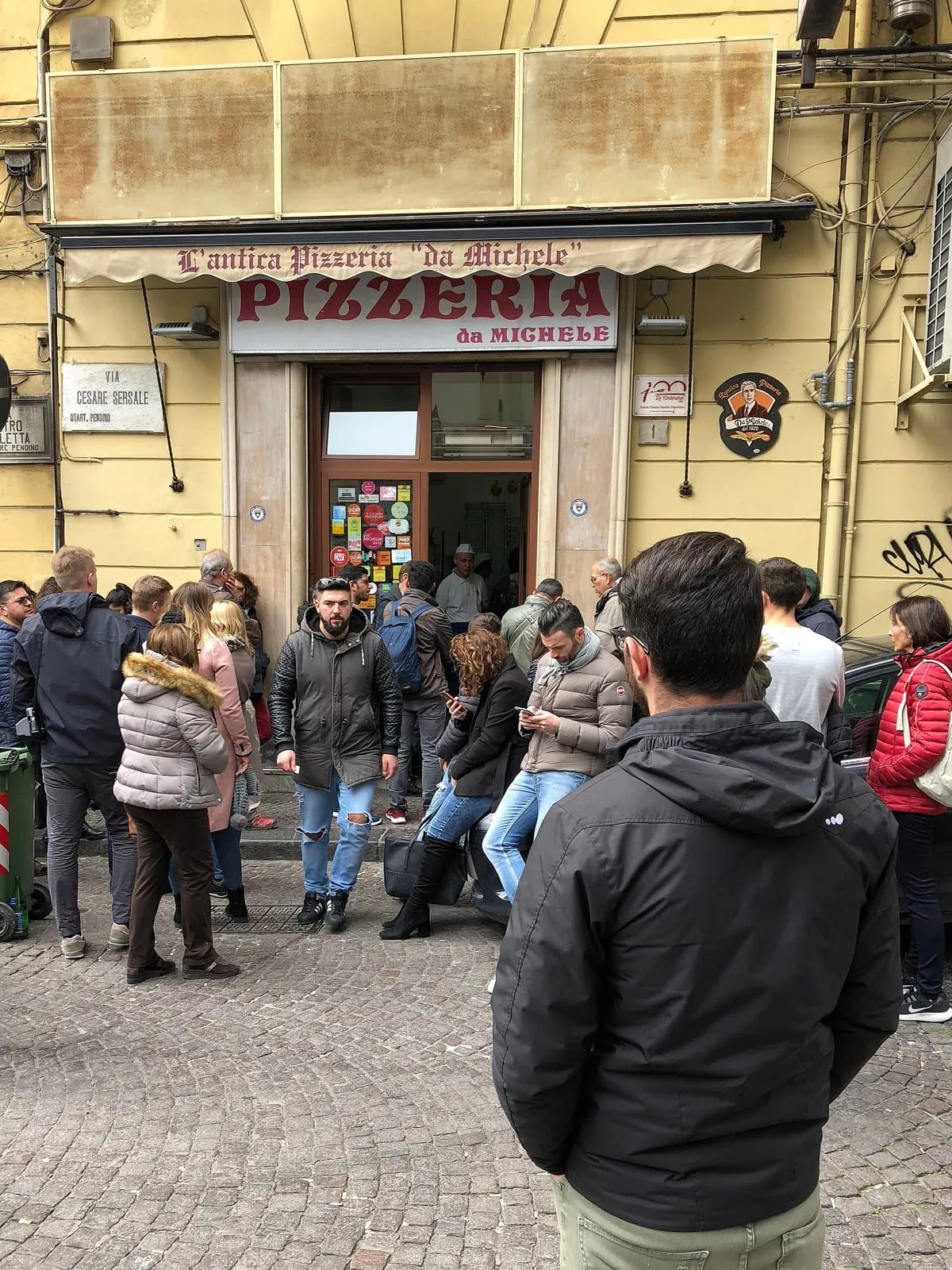
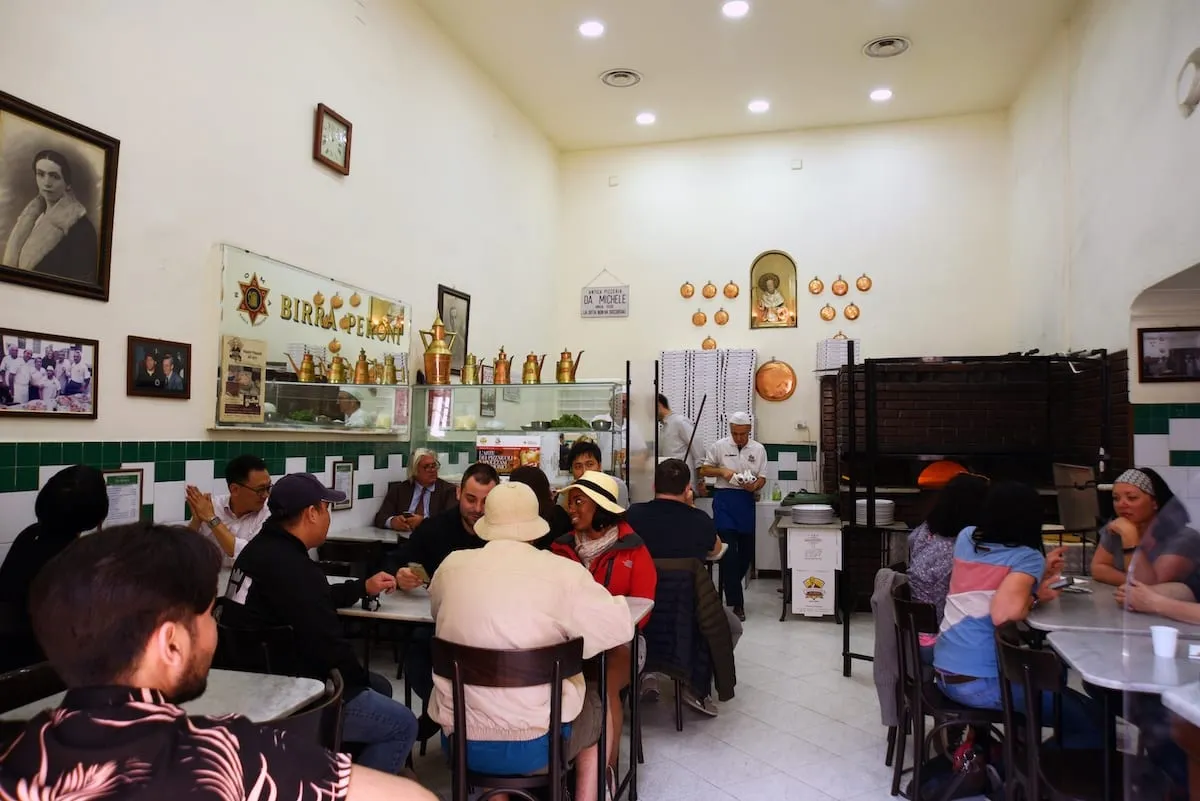
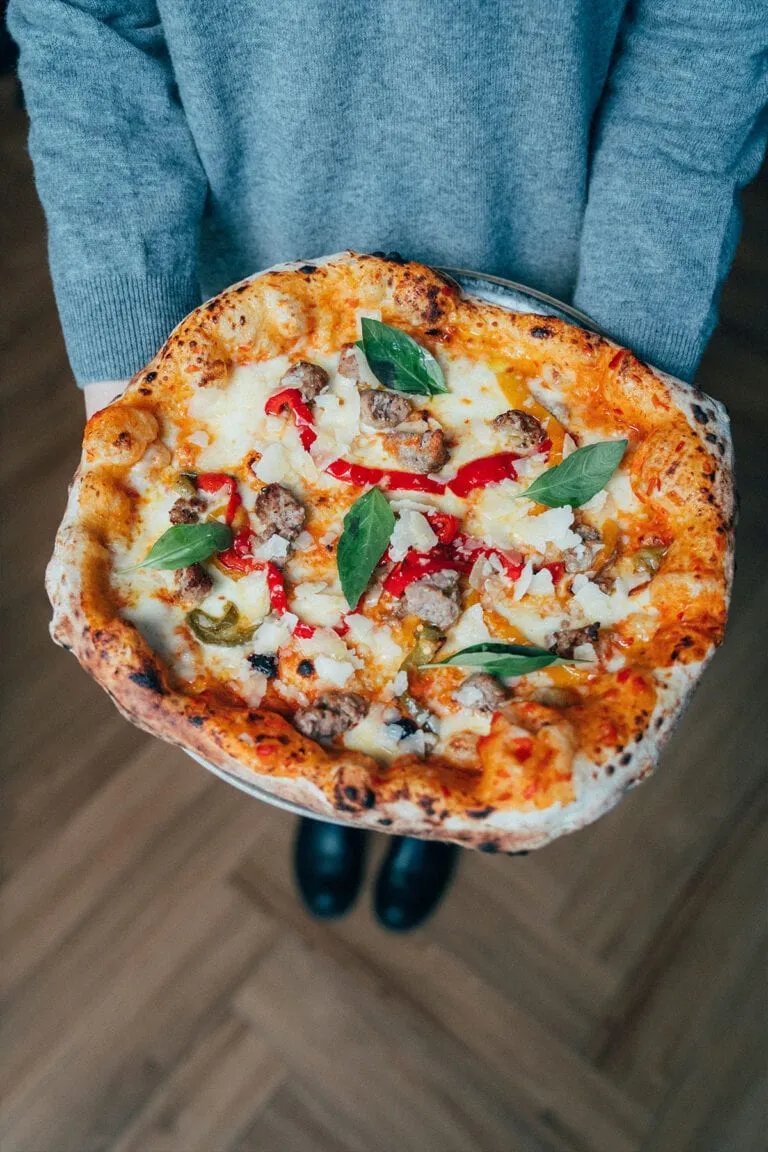
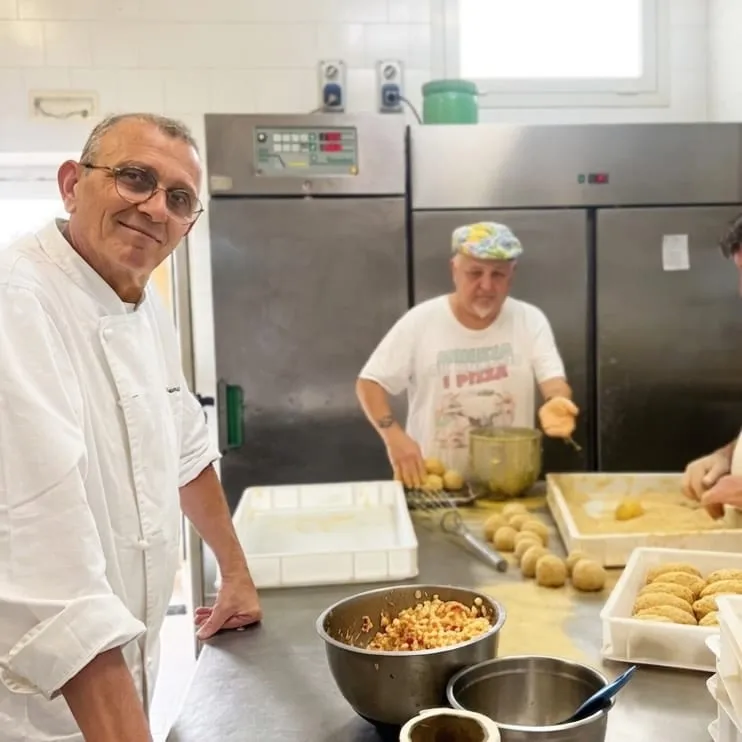
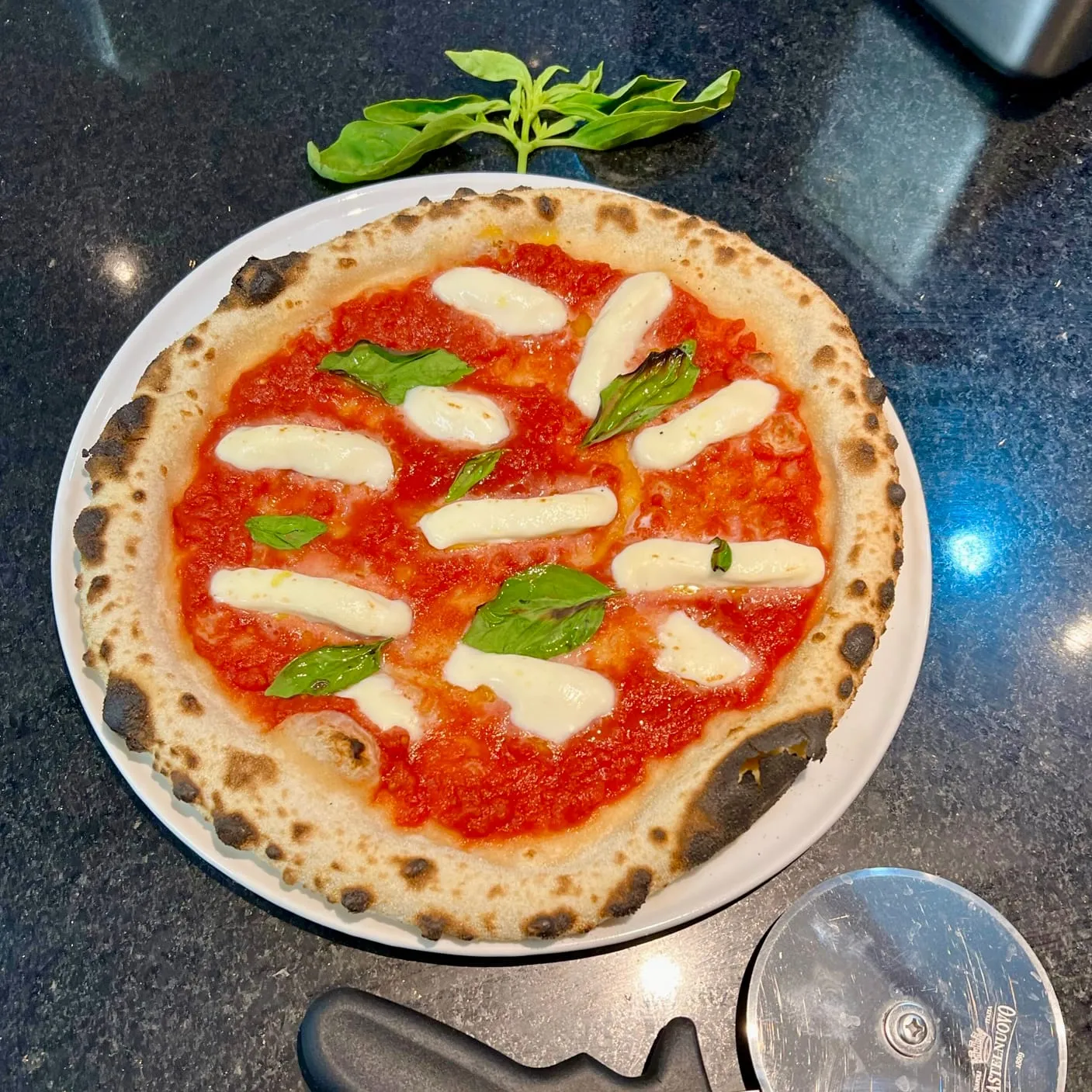
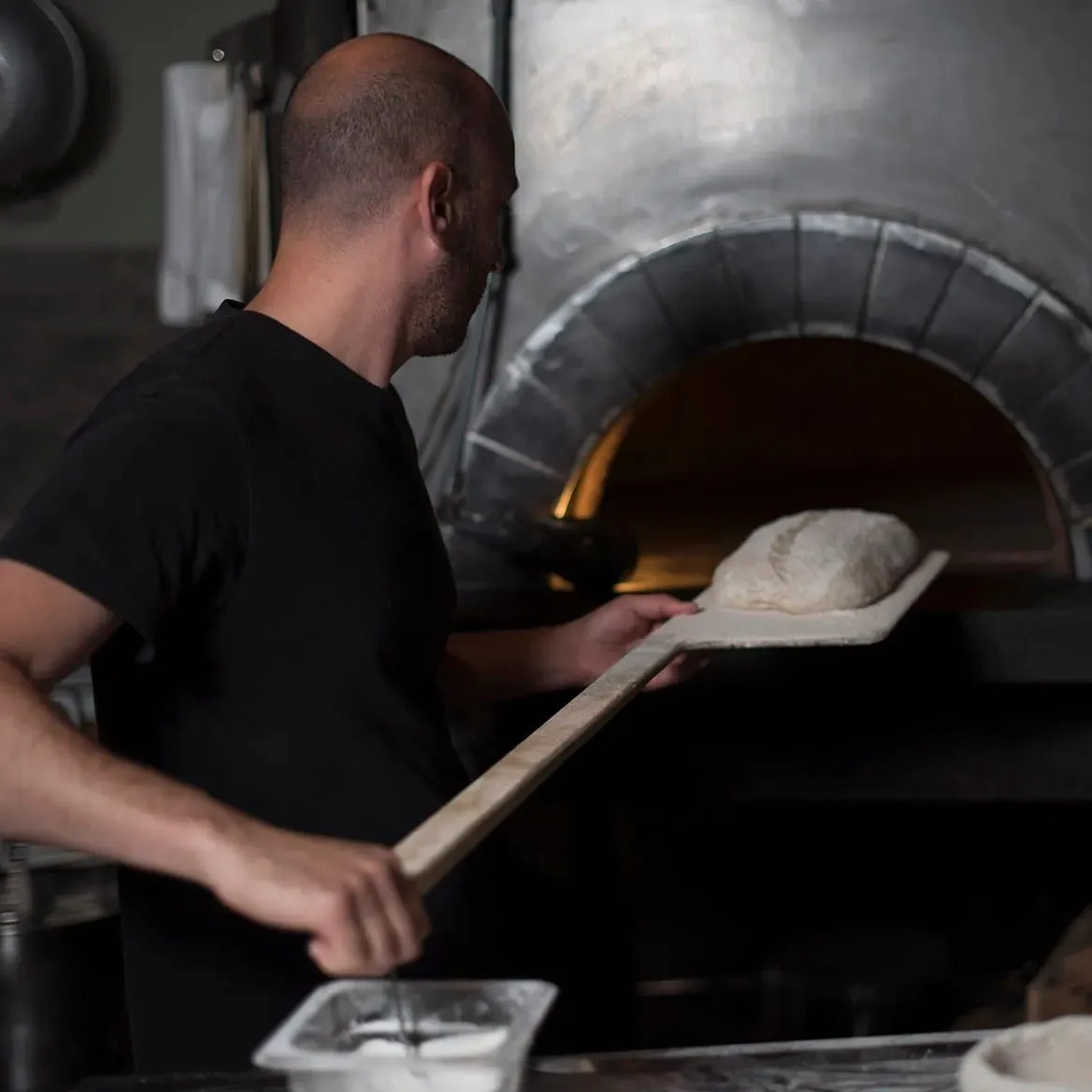
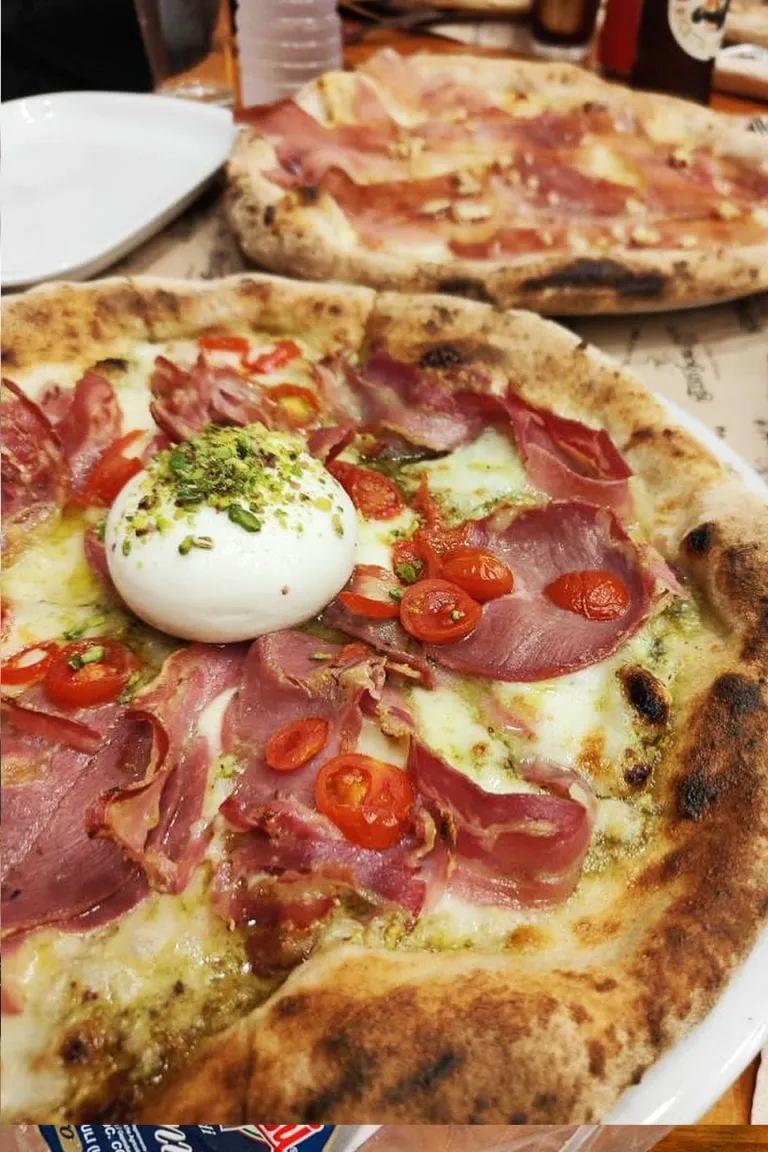
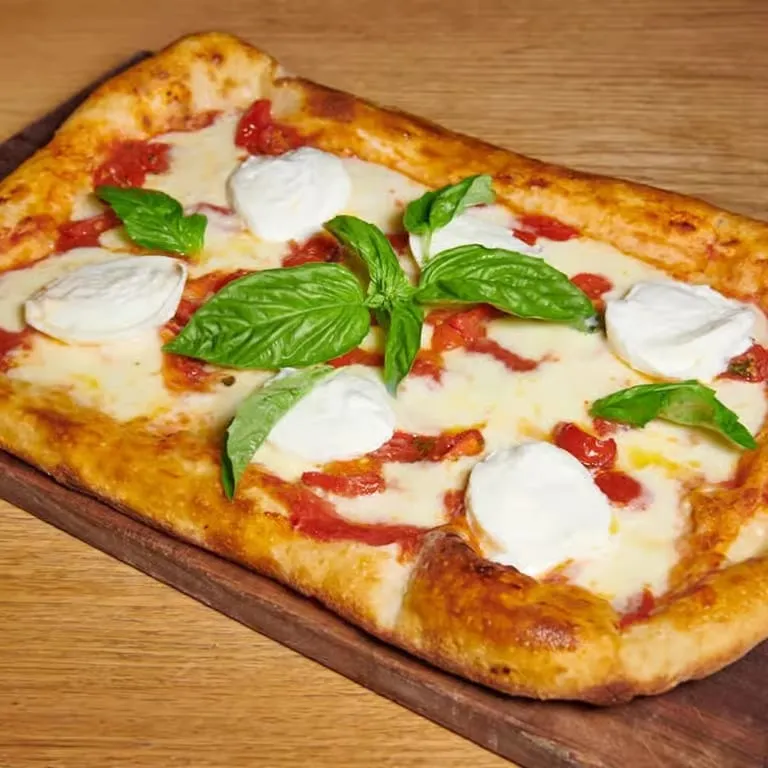
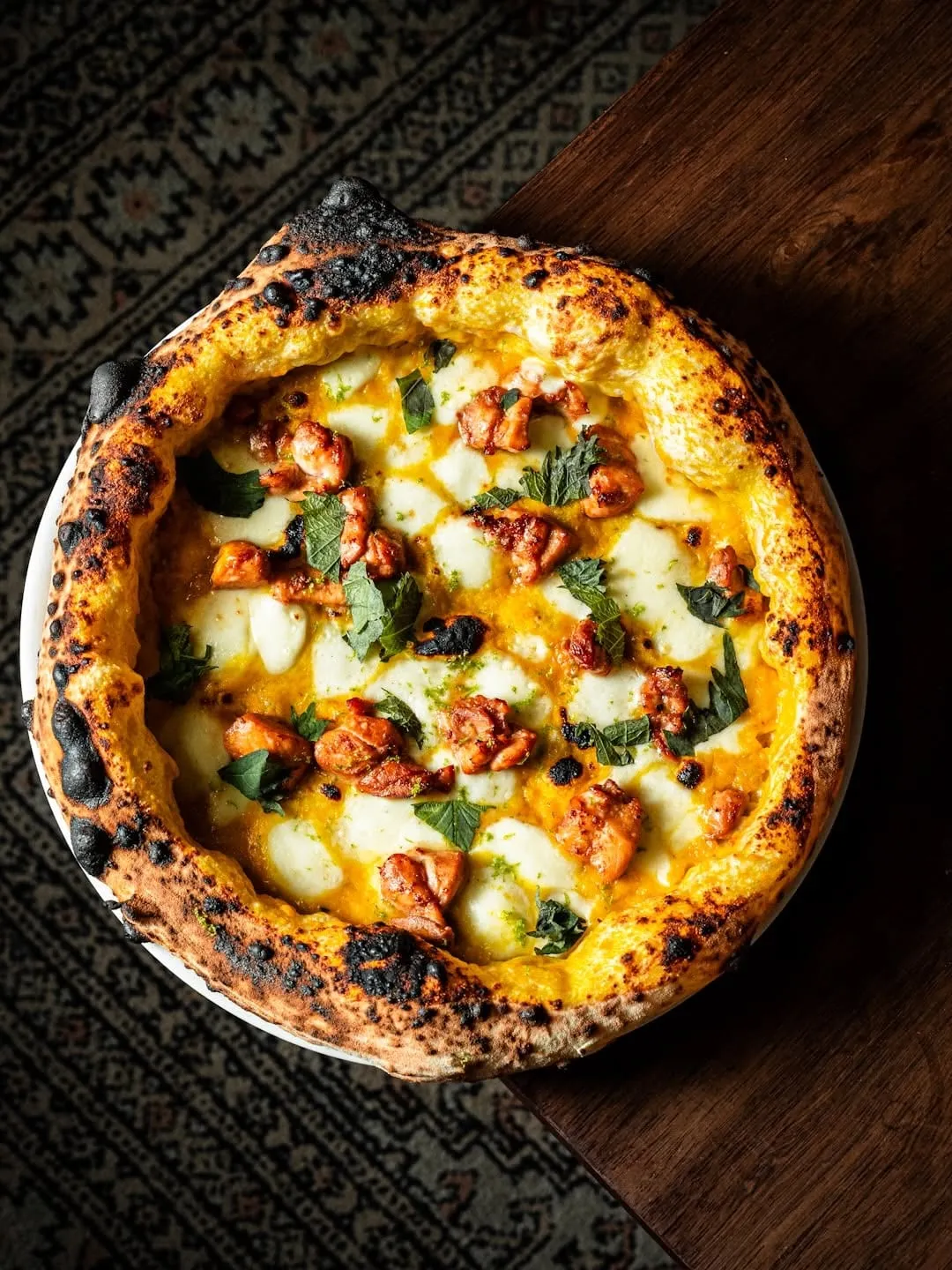
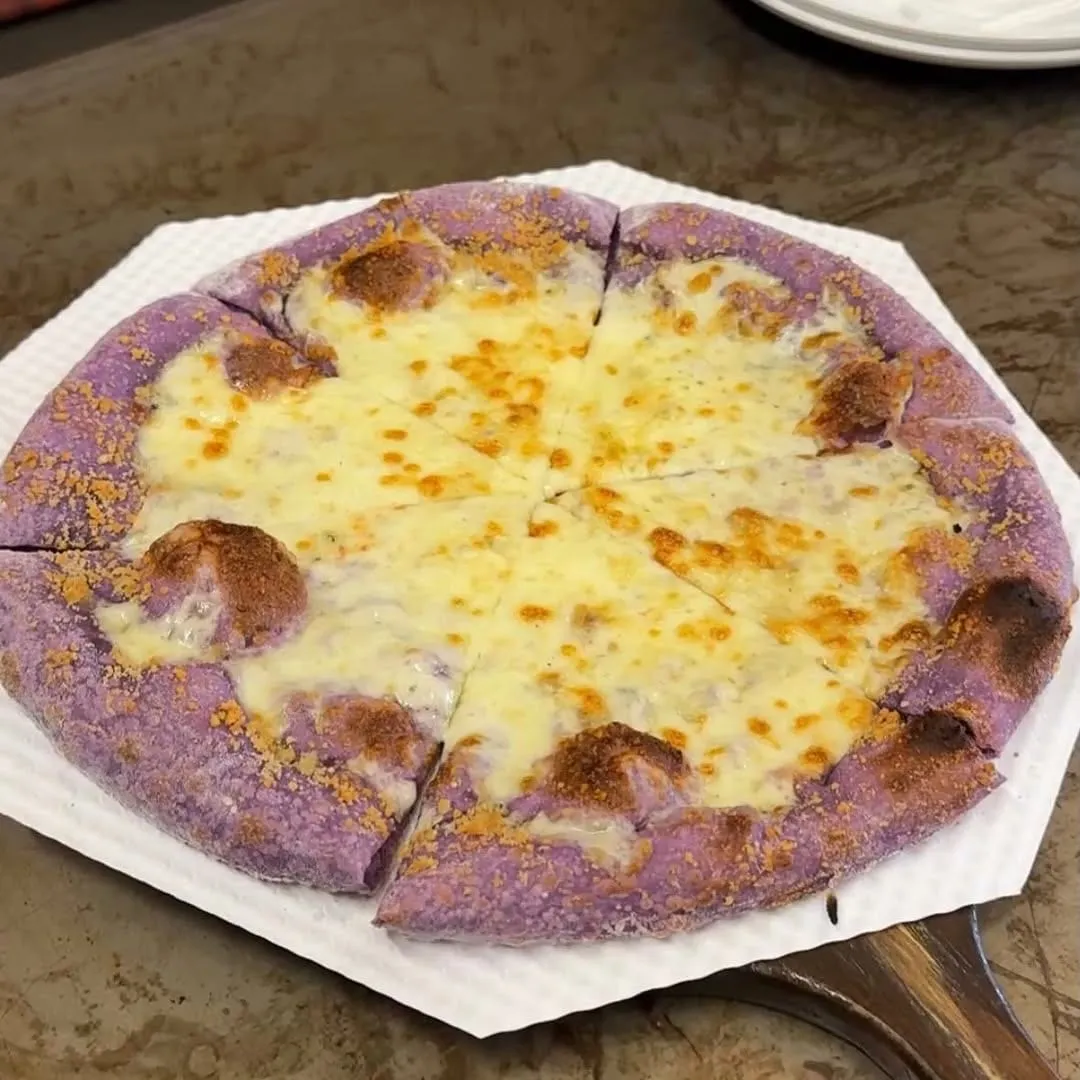
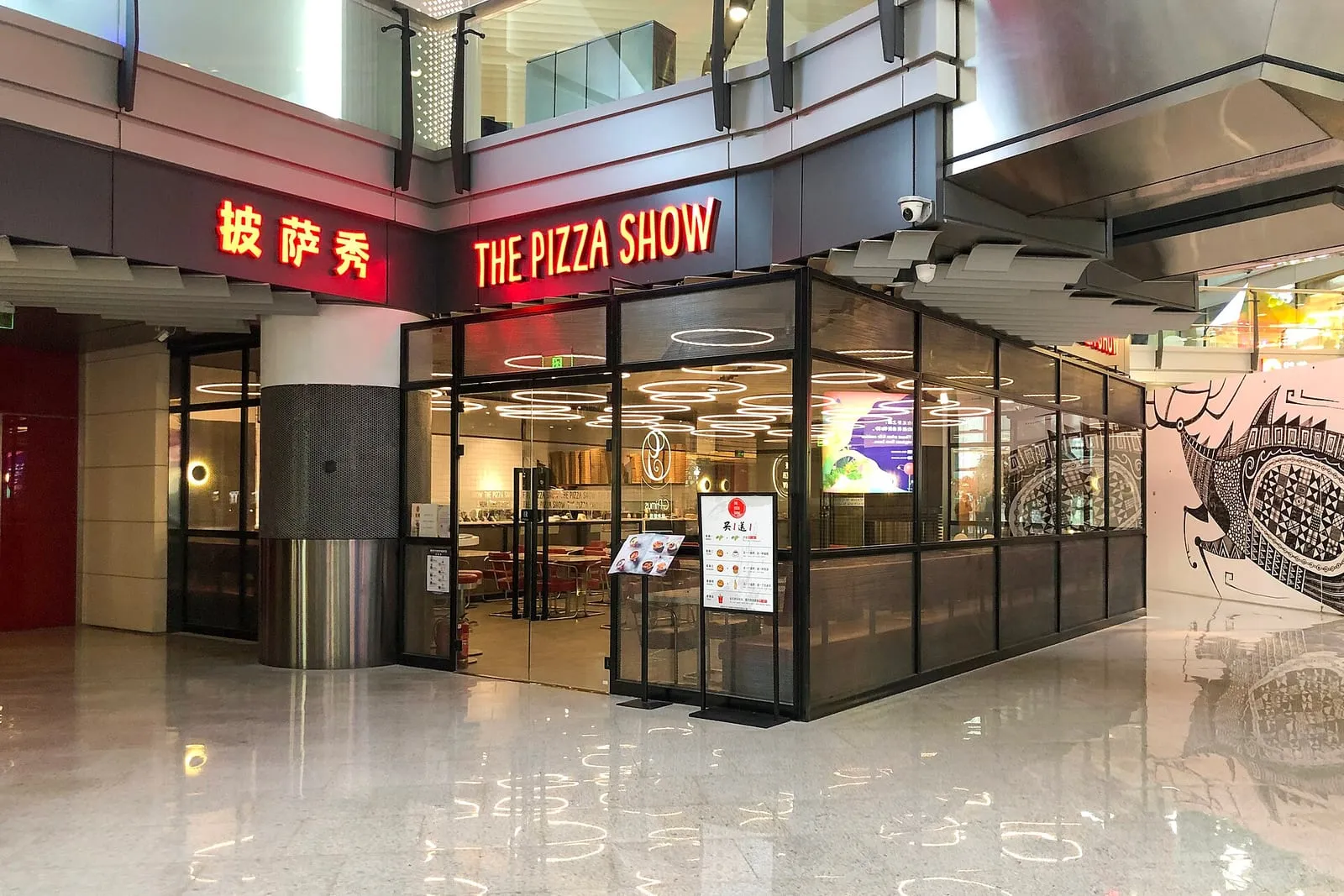
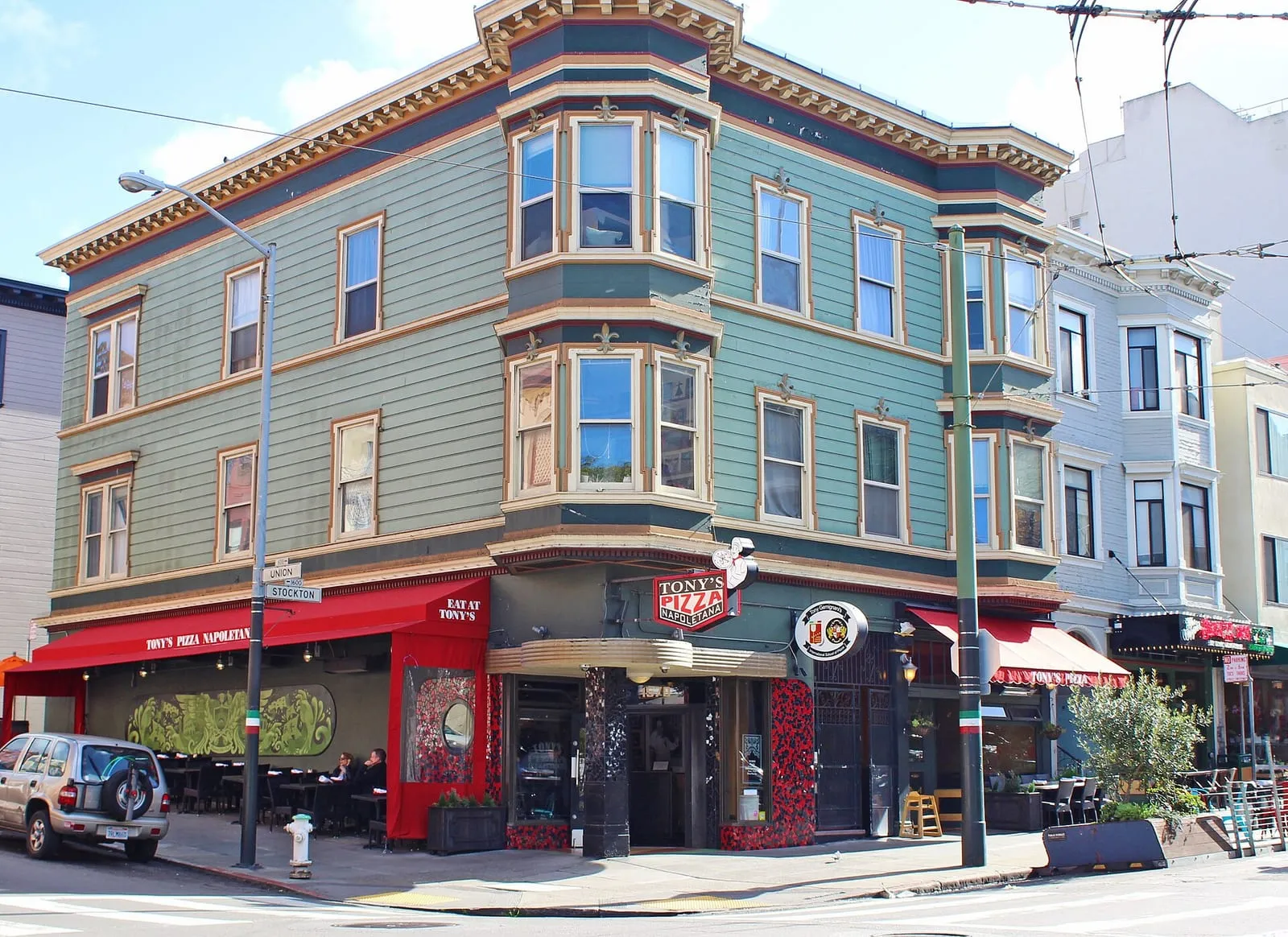
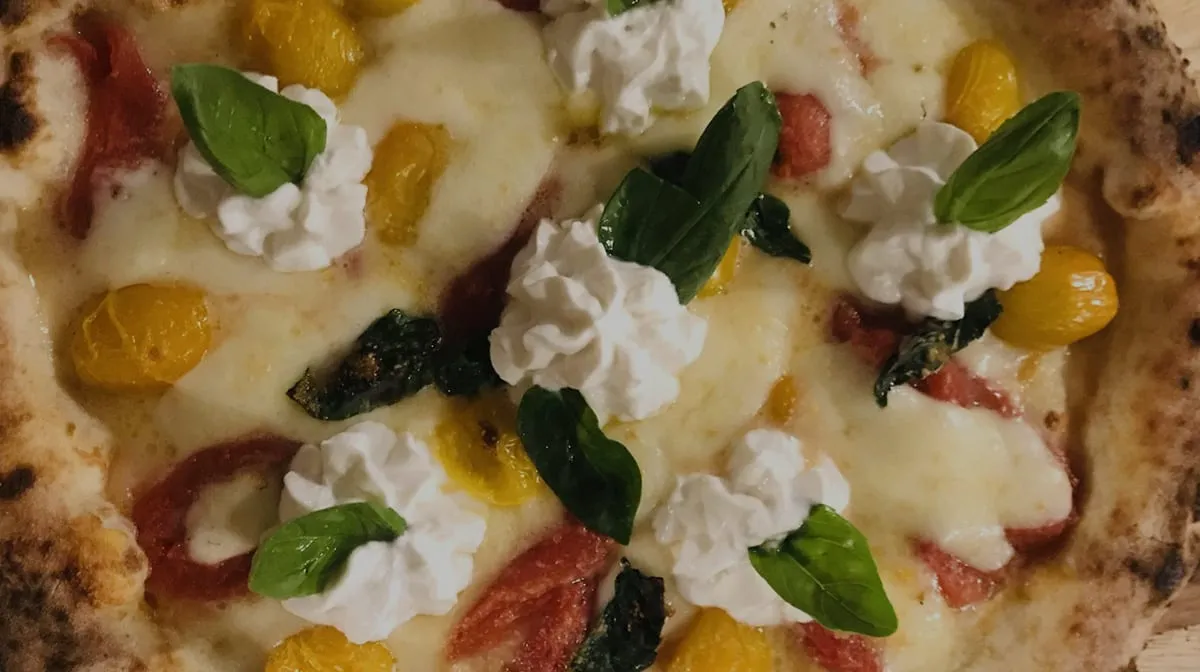
'O Munaciello is the Miami outpost of a Florence pizzeria, opened in 2017 in the MiMo District with a Naples-trained pizzaiolo, Carmine Candito, who grew up working in his family's pizza shop in Naples. The dough ferments 48 hours and is baked in a brick oven imported from Naples; the house is known for both classic Neapolitan pies and pizzas made with activated-charcoal dough.
+39 Pizzeria's owner is Remo Nicolini, brother of Tony Nicolini of DOC — the same family runs two of this report's six Melbourne records. The pizzeria's own site describes itself as 'an ode to the Pizzaiolo of Naples', founded by six friends with family ties to Italy.
081 Pizzeria is named for its founder, the Naples-born pizzaiolo Andrea Asciuti, on the business's own site. He spent years working out the exact right recipe for his 72-hour fermented dough, which bakes at 450°C in 90 seconds. It began as a lockdown pop-up at Peckham Levels in 2021 before taking a permanent site on Peckham Rye, and Asciuti has since opened a second site in Shoreditch and, in January 2026, a third concept (Connie's Pizza, at Queen's Road Peckham) explicitly marketed as 'London-style pizza, made by Italians' — the clearest self-described claim to a distinct London style found in this research run.
Diego Vitagliano opened this Santa Lucia address in December 2023 as the Naples flagship of a brand he started in Pozzuoli in 2016 and brought to the city's Bagnoli quarter the following year. The dough is indirect, built on an organic type-1 preferment with a 36-hour leaven, high hydration and very little salt — the technical basis of the 'canotto'-adjacent contemporary style he is credited with helping popularise.
The dough is specified precisely enough to check: 180 grams is the weight of the ball, made with a liquid pre-ferment and high hydration, stretched by hand until it is almost transparent. The result is low, thin and lightly crisp with a scorched edge, which is the tonda discipline. It has been in Centocelle for a decade and runs two take-away counters elsewhere in the city.
A Forcella pizzeria whose entire programme is pizza fritta, the fried, folded Neapolitan tradition born of postwar scarcity — the shop's name recalls 1947, the year the format spread through the city's alleys. Vincenzo Durante's own site describes a dough leavened up to 24 hours and deliberately well-hydrated, on the stated principle that a wetter dough absorbs less frying oil. The panetto weighs 120 grams, and the dough is offered classic, wholemeal or grain.
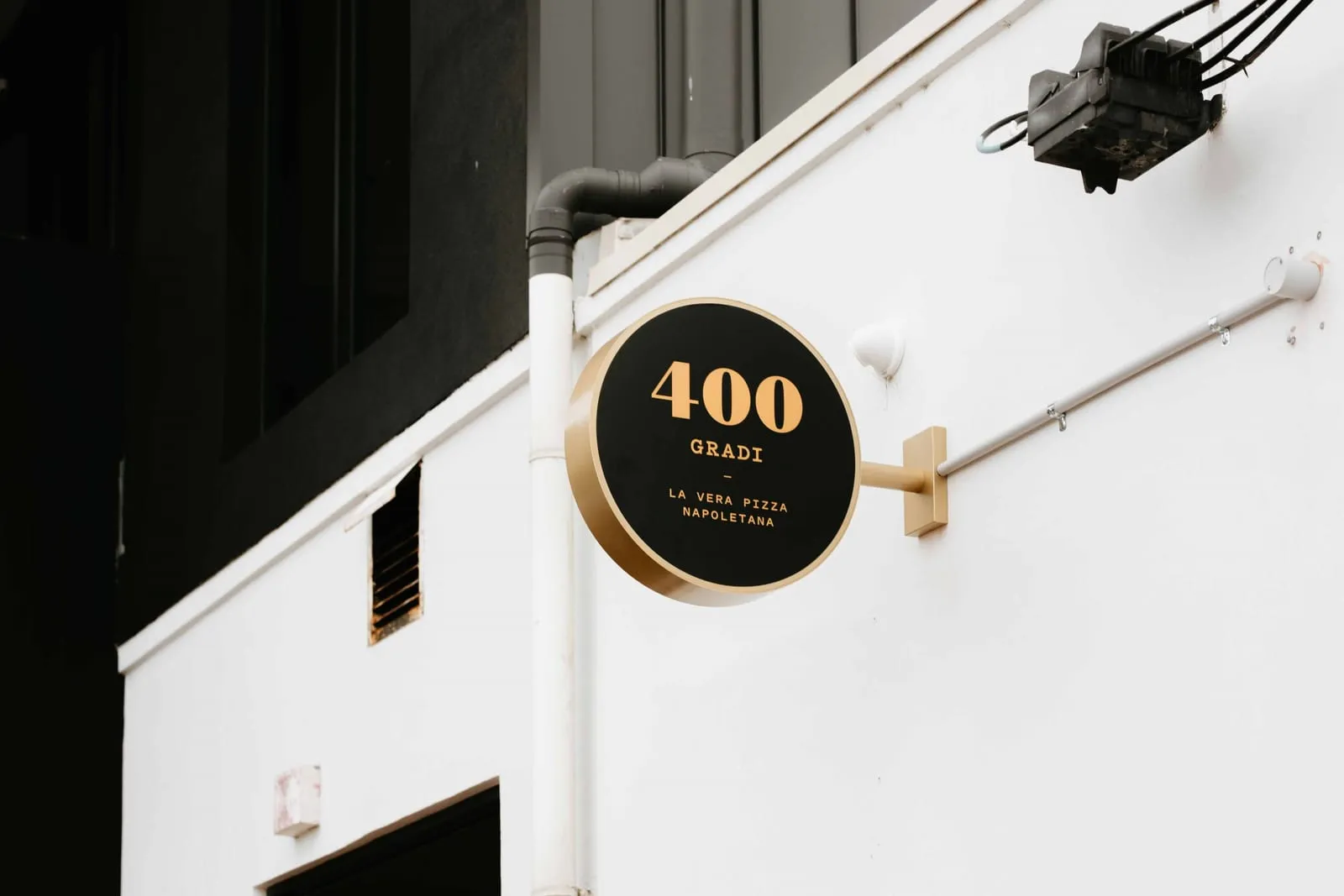
400 Gradi's flagship on Lygon Street, Brunswick East is the house Johnny Di Francesco built his reputation from: named for the 400°C wood-fired bake, run to AVPN discipline by a pizzaiolo who trained in Naples and became the association's Australasian principal, sending his own chefs there for training in turn.
400 Pizzería opened during the pandemic in Las Condes before moving to its current General Flores address in Providencia, built by a couple, Constanza Quiroga and Javier Ortega, around an obsession with fermentation: doughs run 24 to 48 hours and pizzas are baked at 400 degrees, the temperature the business is named for.
48h Pizza e Gnocchi Bar takes its name from the minimum 48-hour natural-yeast rise its owners give the dough. Co-owner Fabio Biscaldi and pizza chef Michele Circhirillo are named as D.O.C. alumni, linking the restaurant to the Nicolini family lineage recorded on this city's D.O.C. Pizza and Mozzarella Bar and +39 Pizzeria entries.
Ciro Salvo, a pizzaiolo the son of pizzaioli, makes a ruota di carro pizza on a dough whose hydration he has pushed to the extreme limits. The piazza Sannazaro room has been joined by a second Naples site on piazza della Repubblica serving the same pizza with the addition of bookings.
50 Kalò is the London outpost of Ciro Salvo's Naples pizzeria, and it carries his name and technique directly: a hydrated, low-protein-flour dough, consistent with the Naples original. The wood-fired oven runs at 480–500°C and turns out a well-executed, leopard-spotted base.
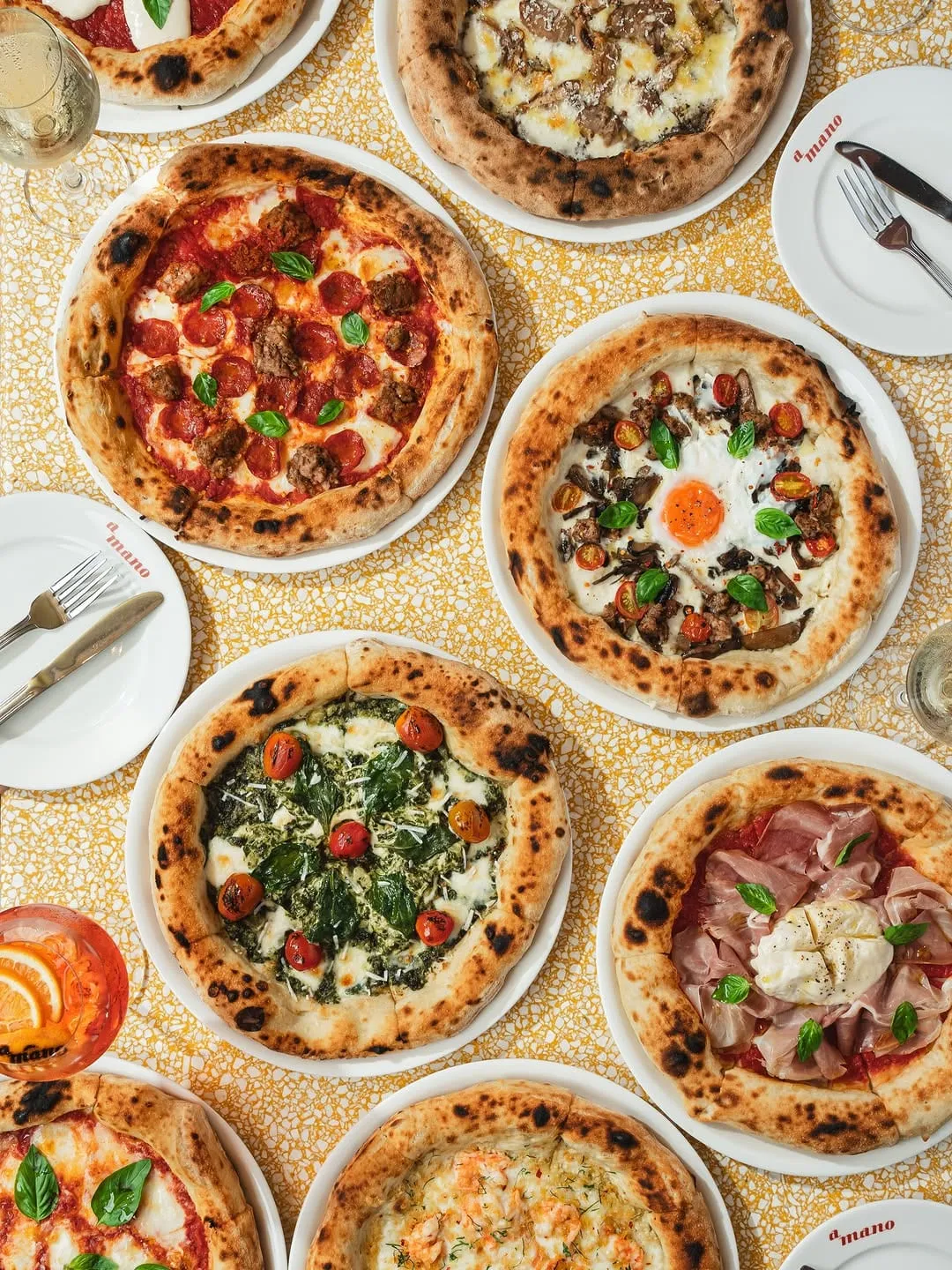
a mano's Rockwell flagship uses Caputo flour in an AVPN-certified Valoriani oven. The brand's other branches sit in Taguig (BGC) and Quezon City and are explicitly excluded from this record.
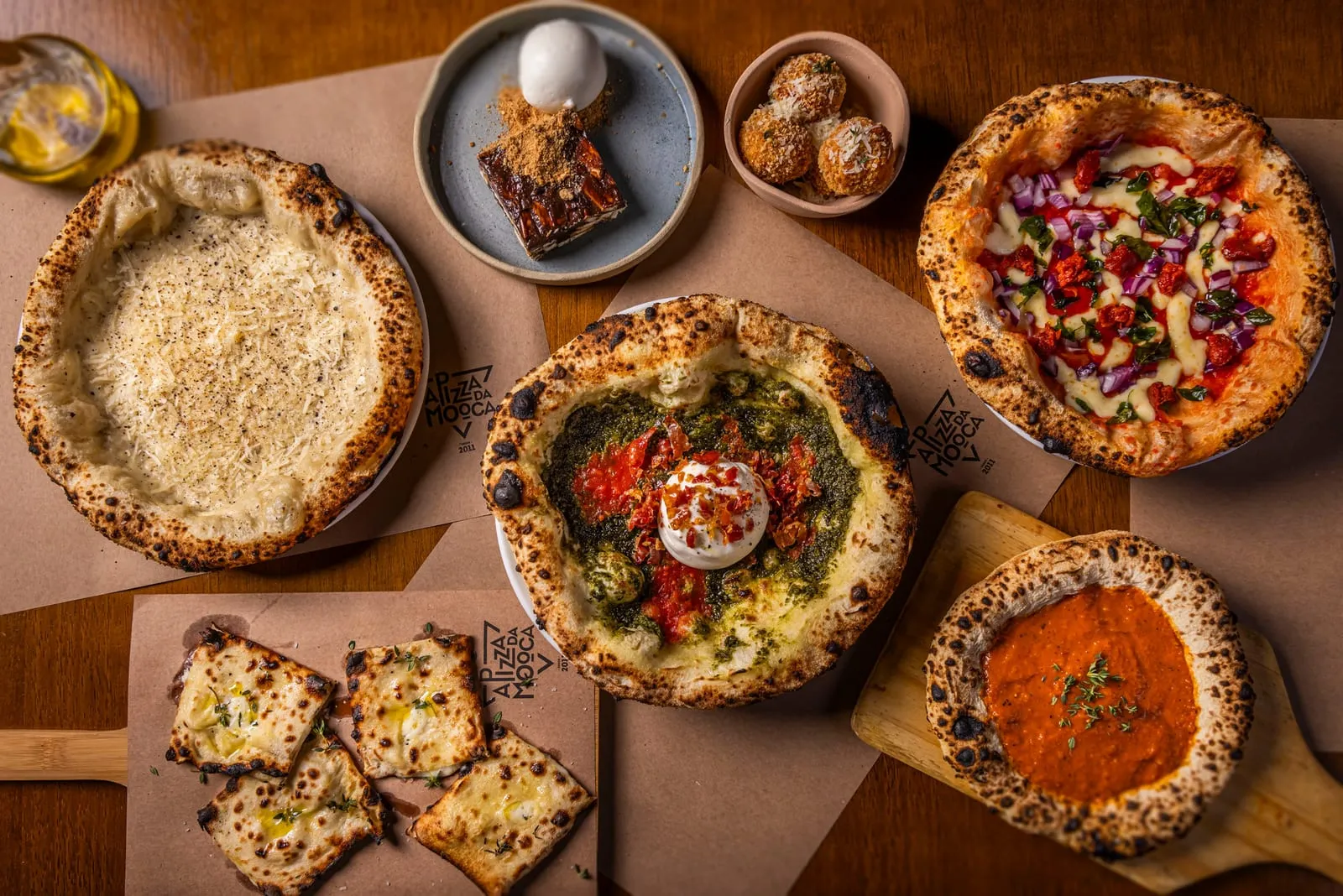
Fellipe Zanuto grew up in the Mooca neighbourhood and opened this pizzeria there in 2011. The dough is Neapolitan in format and made of flour, yeast, water and salt alone, long-fermented and opened by hand.
A Fuorigrotta neighbourhood pizzeria opened by Salvatore Urzitelli, who started at the oven at 18 and has since competed in national and international pizza competitions. His son Ciro now works the oven. The dough is soft and dissolving, Neapolitan in the plain sense, with no concessions to fashion. The house's own site describes a long leaven for higher digestibility, matching the family-transmission story it tells about itself.
Approaching a century on Viale Trastevere and still working the way the discipline is described: a large wood oven in full view, pizzaioli working in front of the room, marble-topped tables. Pier Paolo Pasolini, who lived at Monteverde and ate there often, gave the place the nickname l'Obitorio. It is the longevity-and-local-significance case in the Rome set rather than a dough case, and the record says so.
Al Dente opened in central Zagreb in May 2021 as, by its own pizzaiolo's account, the city's first canotto-style pizza — a puffier-edged relative of Neapolitan he described at the time as 'something between napoletana and canotto'. Enes Hrnjić trained at two of the city's most influential pizzerias, O'Hara and Publico, before bringing the style to his own kitchen, and the business runs pizza alongside a full trattoria programme (San Marzano and fior di latte-based pizzas, but also pasta such as papardelle with smoked mussels).
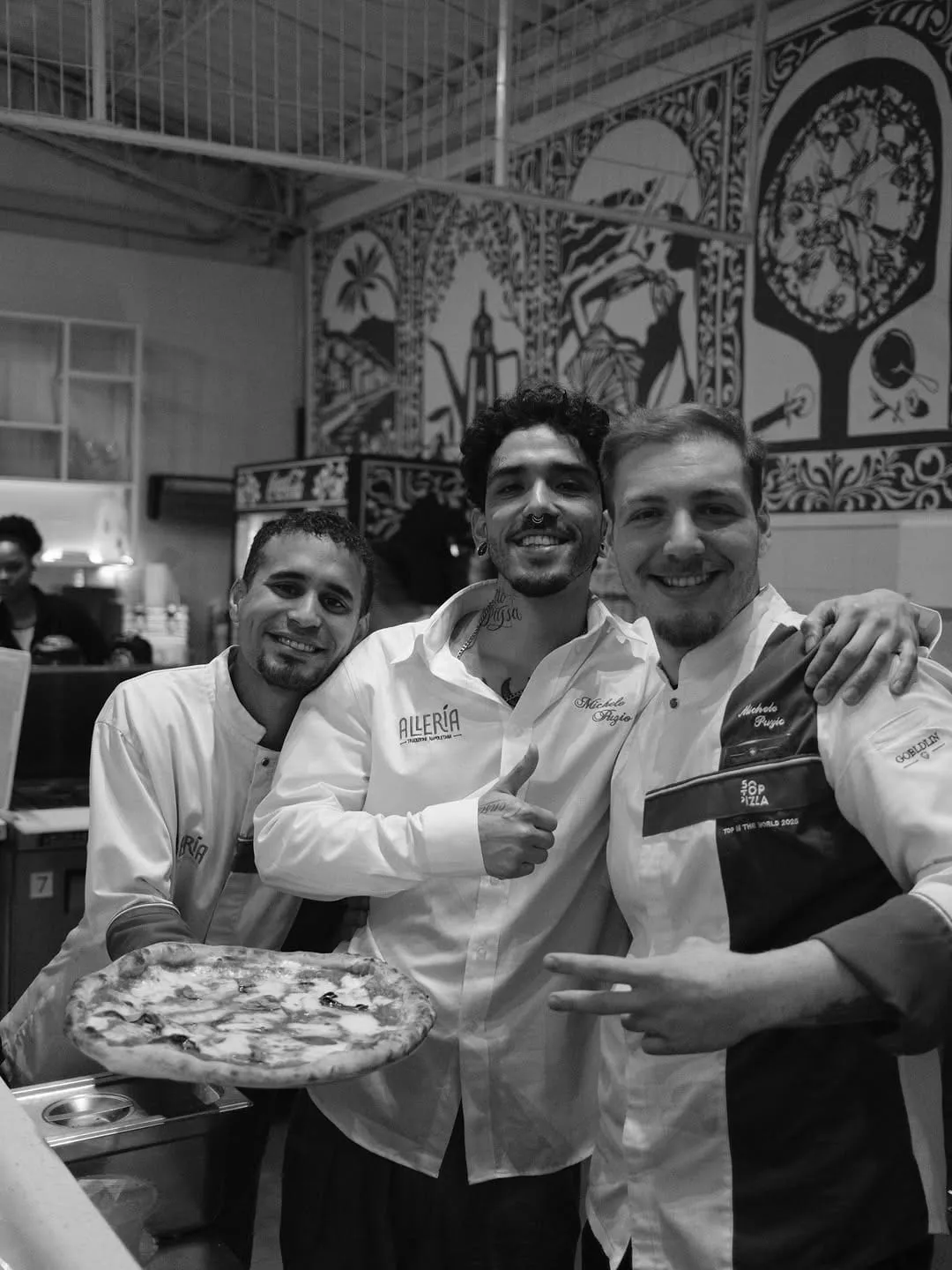
Alleria was opened in 2022 by Michele Puzio, a Neapolitan pizzaiolo whose great-grandmother ran her own pizzeria in Naples and who describes using the same family recipe. The dough is imported wheat flour, purified water and yeast, fermented 24 to 48 hours, and it bakes in the Neapolitan oven the room is built around. The pizzeria has since moved to Barrio Italia.
Ammodo is the Palermo address where the city's two pizza traditions are priced side by side: Daniele Vaccarella's menu runs six named doughs built on Sicilian durum (Russello, Tumminia, bianco madonita) and live lievito madre, and the antipasti carry a sfincione bagherese at 12 euro among the round pizzas. The oven is an open-mouth electric Moretti Neapolis. Vaccarella came to his own place after the research he had been doing since 2010 on slow maturation, lievito madre and ancient grains.
Porzio is the first fully certified organic bakery in Palermo and, by its own account, in Sicily, and it makes both the Palermitan red sfincione and the white bagherese one with organic ricotta and tuma. The family is named and the succession is documented: Salvatore Porzio founded the firm in 1960 in via Terrasanta, his daughter Rosaria, a biologist, took it on with her husband Antonio, and their son Francesco Coco runs it today and works in the laboratory himself. The grains are named - Timilia, Perciasacchi, Russello, Kamut and organic Sicilian durum - and lard and chemical additives have been removed, which is unusually specific for a Palermo forno.
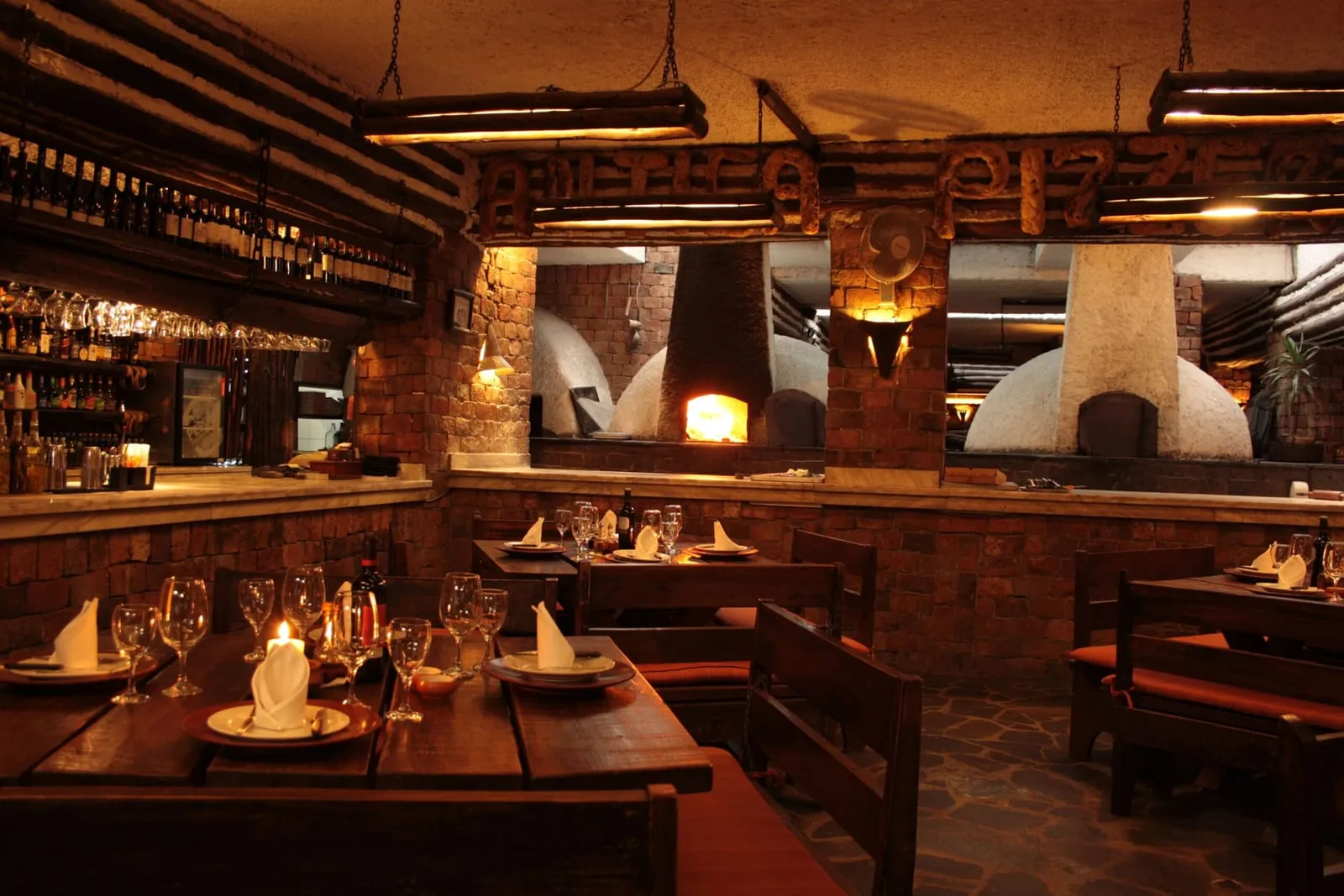
Antica has run a wood-fired pizzeria out of San Isidro since 1999, growing from one small space into a seven-location Peruvian Italian chain, and a 24th-anniversary feature describes its wood oven, worked by pizzaiolos who hand-toss the dough into rounds, as the business's stated heart. Its own site confirms the San Isidro address is still trading alongside Barranco and Chacarilla locations, both also inside the Provincia de Lima boundary.
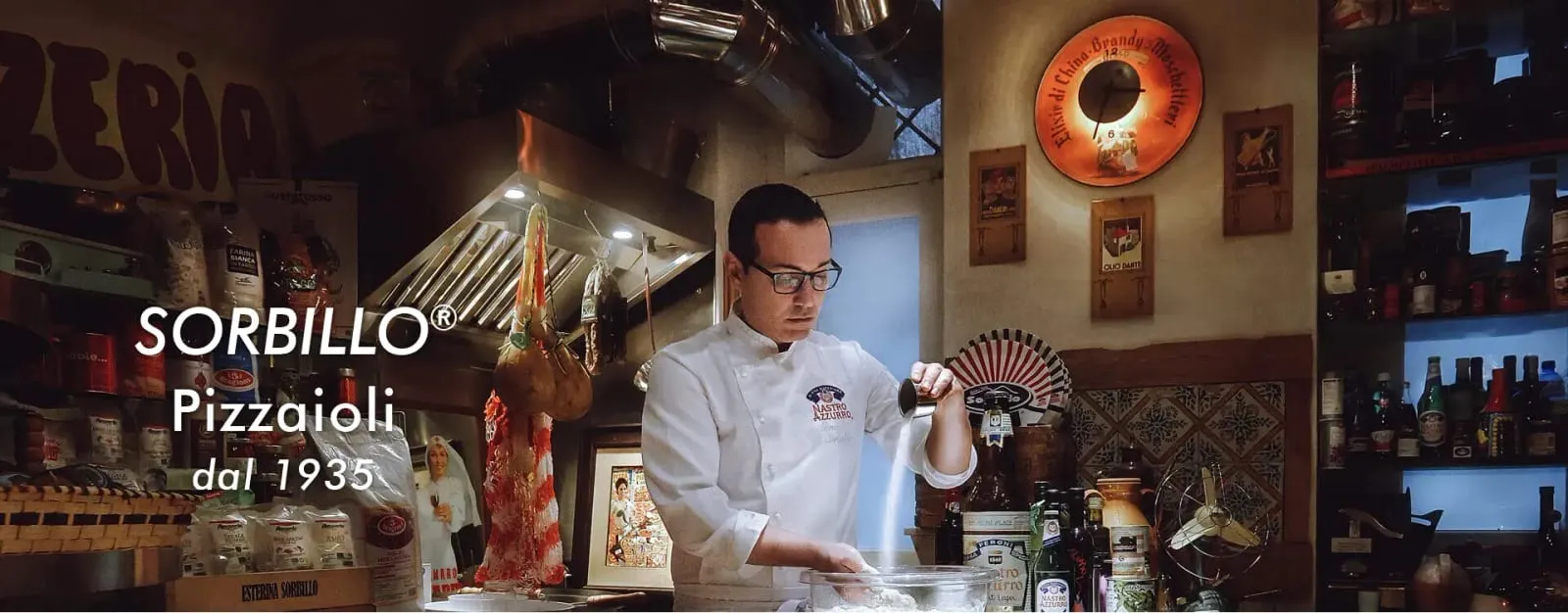
Run by cousins Antonio and Luigi 'Gigi' Sorbillo, grandchildren of the same Luigi Sorbillo who opened the family's first pizzeria in 1935 a few doors down, this is the branch of the family most often overshadowed by Gino's. Pizzaiolo Vincenzo Iannucci raised the hydration and lengthened the leaven on a doppio zero flour base, later adding wheat-germ flour, moving the dough toward a lighter, more digestible result.
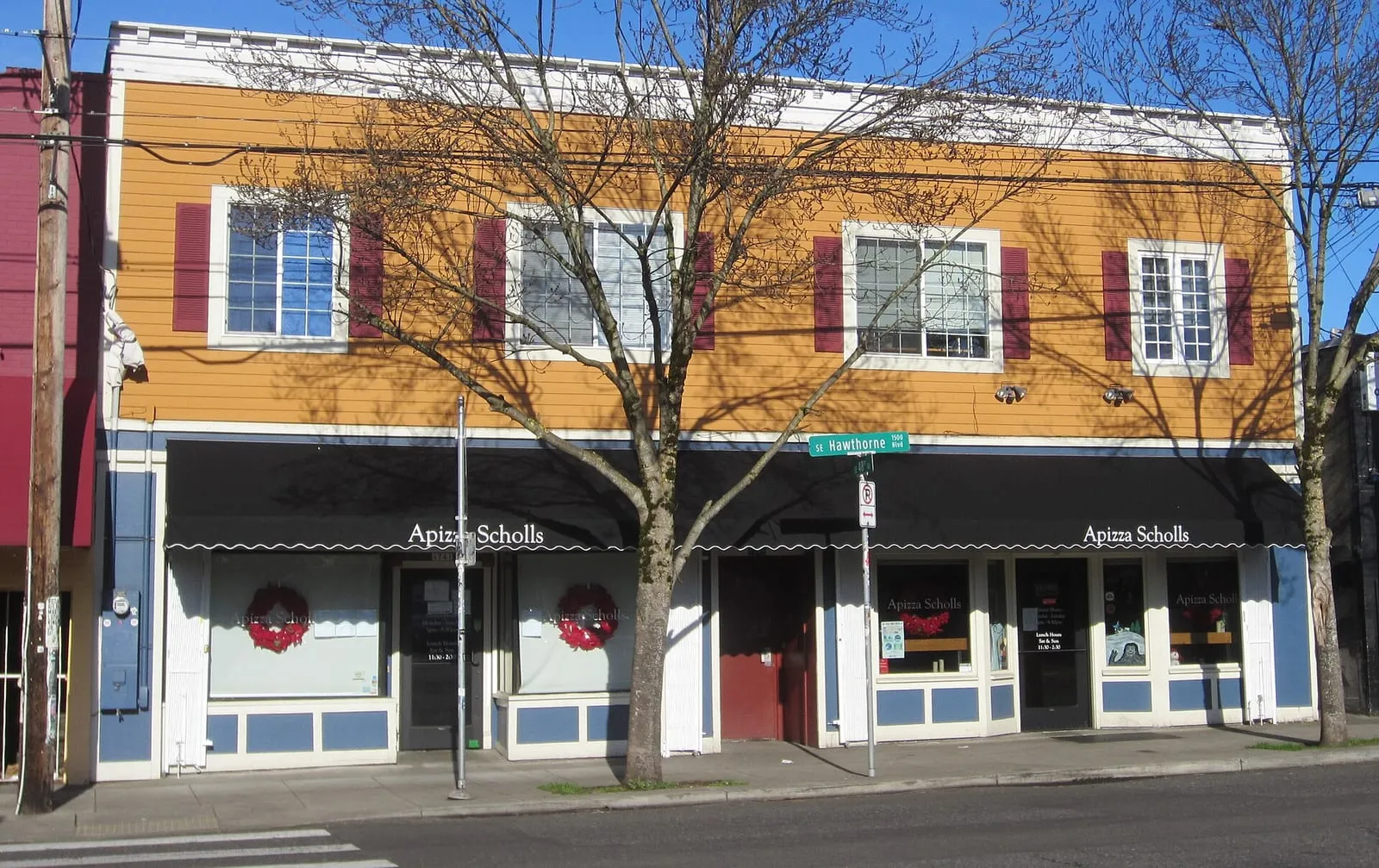
Opened in 2005 by Brian Spangler and Kim Nyland in the Sunnyside neighborhood, Apizza Scholls has held a two-decade reputation as one of Portland's defining pizzerias, ranked among the city's best restaurants by Portland Monthly and named among America's best pizzas by Food & Wine. A named Portland Monthly critic describes the electric-oven pizzas as "neo-Neapolitan splendor" built into large, deliberately imposing pies, alongside an "East Coast classic" bacon pie — an imported discipline pushed toward an unusually large format rather than a wholly distinct local style.
Appizza is a New Haven-style slice shop opened by Stefano De Caro with the AP Bakery team, serving 22-inch rounds by the slice only. The dough is house-milled each morning at AP's Marrickville bakery, then carted to the Darlinghurst site to be shaped, topped and pre-baked before finishing in a Swedish Pizza Master electric deck oven during service.
Araldo is the one candidate in this set that is not Neapolitan: it makes pizza veronesa, a northern form, and brought it to Madrid in 2018 from a Verona business its owners started in 2004. Its own site and the press agree on the dough — organic stone-milled semi-wholemeal wheat flour, sourdough, at least 60 hours resting at controlled temperature and humidity, with extra virgin olive oil in the base. It matters to the Madrid case less for its standing than for being the only import in this set that is not an import of the same thing.
Archestrato di Gela is the clearest case in Palermo of pizza being a programme rather than a dish: Edoardo Chifari's project opened as a restaurant in 2015, added pizza in 2016, and since July 2018 closes at lunch and serves pizza only in the evening, each one named after a district or contrada of Gela. His son Pierangelo runs the dough. The current main dough is 70 per cent tipo 1 flour and 30 per cent evolutionary flour; the house moved to Molino Quaglia's Petra line after testing it. As of May 2026 Pierangelo Chifari is still at the oven.
Opened in August 2019 by Ángeles Zeballos in Palermo Hollywood, Atte. built its Neapolitan-inspired programme with New York consultant Anthony Falco, formerly of Roberta's, who spent four months developing the pizzeria's identity around Argentine-sourced ingredients within a Neapolitan frame.
Master Pizza Chef Roberto Marchi ferments dough for 24 hours, adjusted for Hong Kong's humidity, and puts genuinely local toppings on the menu rather than treating them as a novelty: a Char Siu Pork pizza with Hong Kong-style roast pork over fior di latte, and Pizza Pechino, burrata over Lao Gan Ma chilli sauce.
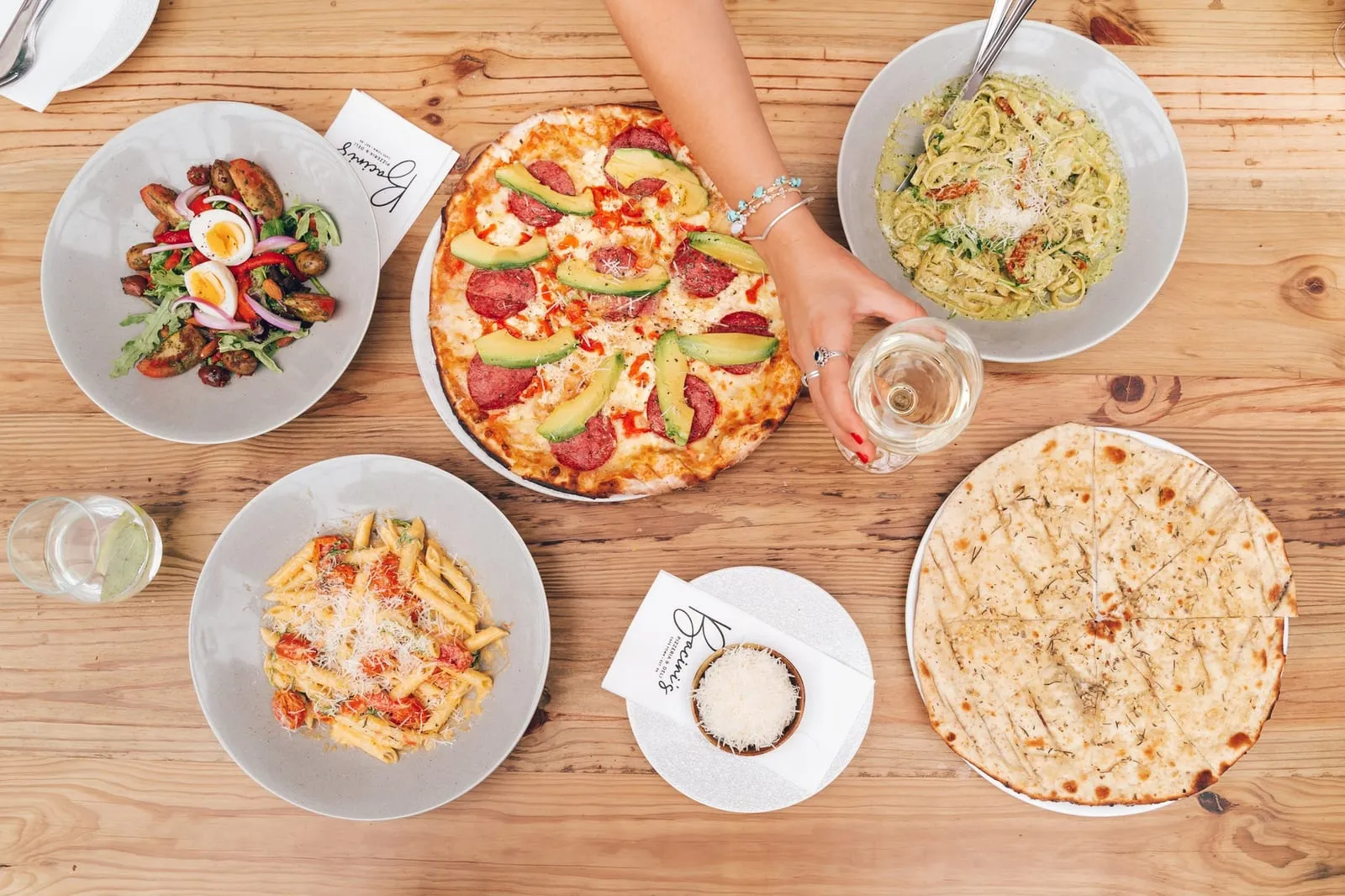
Bacini's began in Johannesburg in 1989 under founder Raimondo Napoli and has run in Cape Town's Gardens since the mid-1990s; his daughter Della now operates the Kloof Street restaurant, which has kept its pizza menu deliberately unchanged through a 2020 renovation even as the rest of the menu evolved. It is a family-transmission story the business tells about itself, not one assembled from outside coverage.
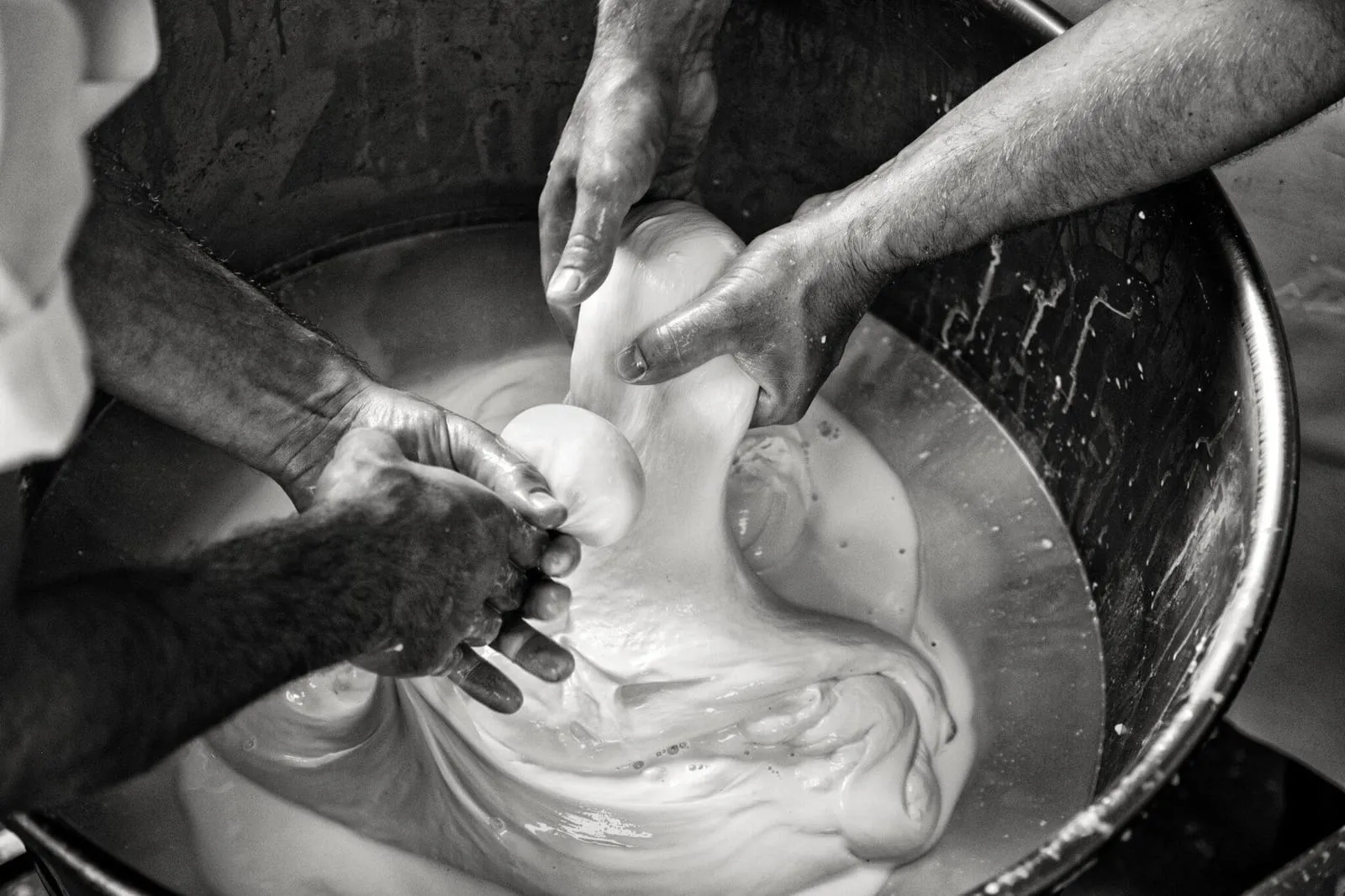
BÆST opened in 2014 as chef Christian Puglisi's tribute to his own Italian roots, and its pizza programme is built on a working micro-dairy and salumeria on the premises: mozzarella and stracciatella are made daily from biodynamic Danish cows' milk, and cured meats come from named Danish farms. Italian pizzaiolo Matteo Martinenghi, trained in the Neapolitan tradition, uses a biga pre-ferment on organic flour to build the dough. Puglisi stepped back from day-to-day ownership in February 2025, handing the restaurant to his business partner Ulrik Mikkelsen; it continues operating under the same programme.
The dough is made entirely on the premises with Italian flour and a biga preferment at 50% hydration, 24 hours of fermentation and 24 hours of rest, baked in an Acunto oven carried from Naples. It is a Neapolitan programme executed in Madrid by a Neapolitan, and nothing about it is claimed as Madrid's own.
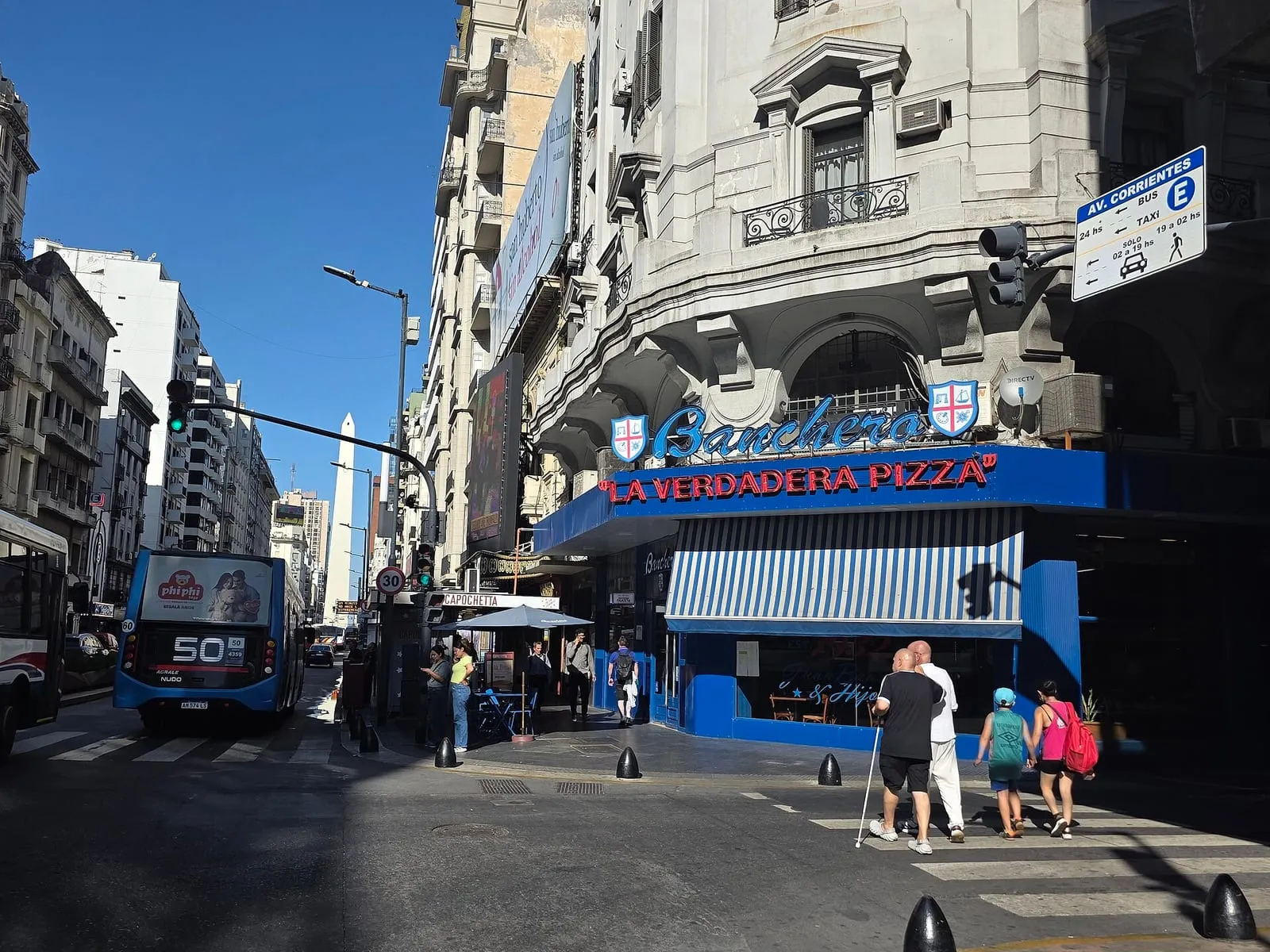
Banchero invented the fugazzeta — adding cuartirolo cheese to the Genoese fugazza — at its original La Boca corner opened in 1932, and remains under direct descendants of the founding family. It is the oldest continuously family-run pizzeria in Buenos Aires, and was declared a Sitio de Interés Cultural by the city government in 2002.
BAR opened in 1991 as a bar and dance club and added a brick-oven pizza programme in 1996; unlike the coal-fired Wooster Street pizzerias, its oven is gas-fired. Its mashed potato and bacon pizza — hand-mashed potatoes and brick-oven bacon on a white pie — is still described locally as the secret handshake of New Haven's pizza scene, and locals sometimes count BAR alongside Pepe's, Sally's and Modern as a 'Big Four'.
A Kenilworth neighbourhood pizzeria since 1992, Bardelli's rebuilt after a fire forced a nine-month closure and then won South Africa's national Porcupine Ridge Pizzeria Challenge in 2024, the country's own annual pizza vote among professionals and the public. Owner Grant Hawkins, running the restaurant for 17 years, attributes the win to consistency rather than novelty.
Basta opened in autumn 2015 beside Kino Europa, marketed on opening as the city centre's first authentic Neapolitan pizzeria and later certified by the Associazione Verace Pizza Napoletana. A named-writer review from the same year that opened it, however, found the dough itself indistinguishable from the soft, thick-edged style Zagreb's earliest pizzerias served in the late 1980s, not the thin, high-heat Neapolitan crust the marketing claims — a direct, sourced dispute between the venue's own self-description and independent tasting.
Bella Napoli's own landlord, ISF Group, dates the business to 2001, making it one of the longer-running wood-fired pizza addresses in Bangkok; both sources I opened independently confirm the wood-fired oven, though neither names an individual pizzaiolo. It is a useful counterweight to the newer, more heavily marketed Bangkok pizzerias: a family-owned, self-described trattoria that has simply kept its oven lit for two decades.
Bottega is run by brothers Paolo and Daniele Salvo, third-generation members of Naples' Salvo pizza-making family. The dough is contemporary Neapolitan, hand-kneaded rather than machine-worked, and baked in a large wood-burning oven visible from the open kitchen.
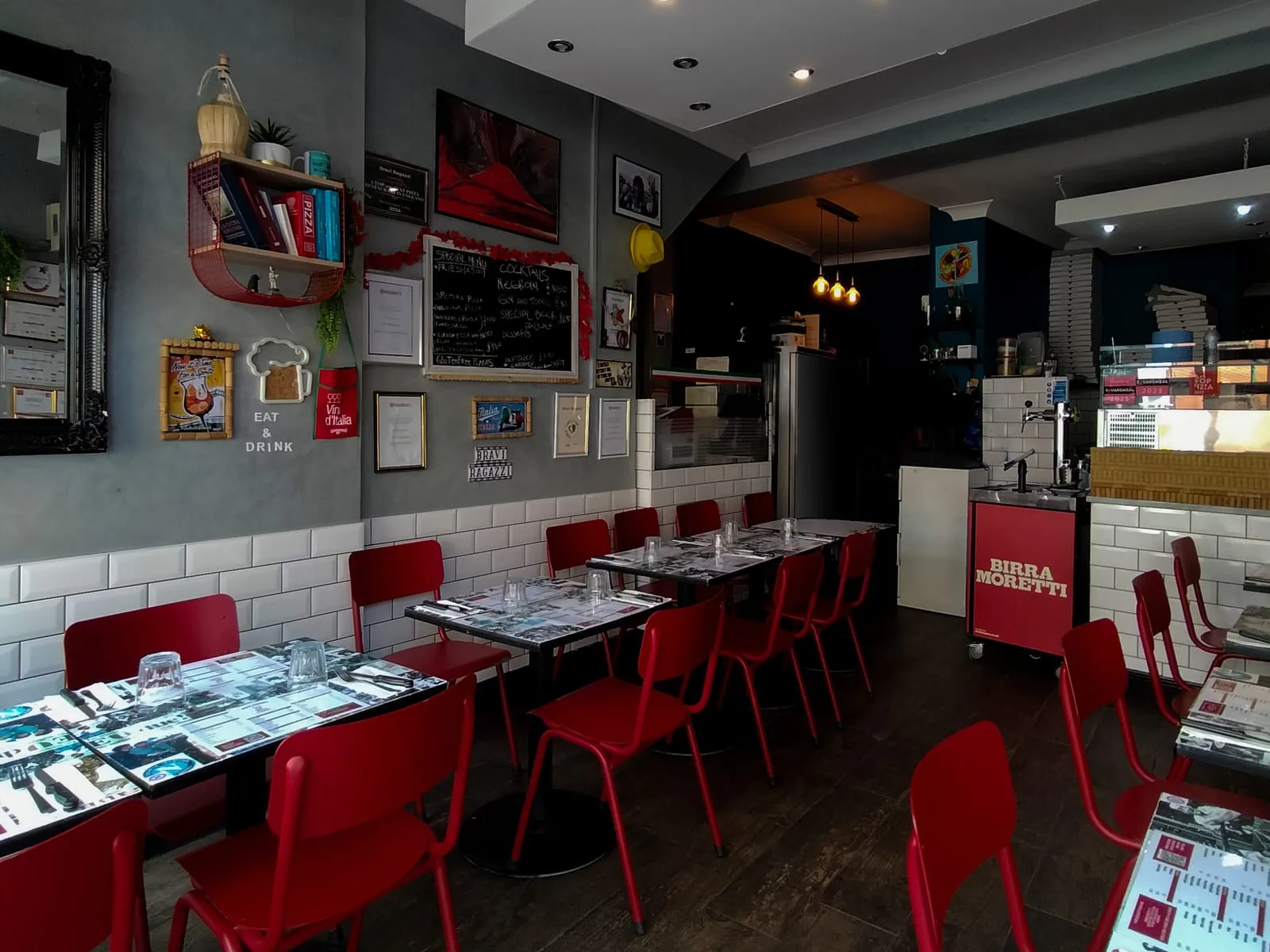
Bravi Ragazzi is a Streatham pizzeria that was on the 2016 seed list and is confirmed still trading in 2026, now under pizzaiolo Ferdinando Cirillo. In June 2026 Cirillo won the Pizza di Stagione category at the Caputo Cup world pizza championship in Naples, with named dough detail: an indirect dough with double fermentation totalling 30 hours (bulk then balled), made with Caputo 'Pizzeria' 00 flour. This is unusually precise, checkable dough evidence for a neighbourhood pizzeria and comfortably clears the specialist floor.
Rick Easton, a James Beard Award semifinalist baker who learned pizza al taglio in Rome, opened Bread and Salt in the Jersey City Heights in June 2019 after closing his Pittsburgh bakery of the same name. The dough is naturally leavened from a multi-flour blend with a days-long fermentation, and the shop operates as essentially an oven and a counter rather than a full kitchen, selling Roman-style pizza al taglio by the slice alongside focaccia and Italian provisions.
Bros. Pizza describes itself, in its own name and site title, as a 'Sauerteigpizza' bakery-and-stand-up bar (Pizza Bäckerei & Stehbeisl). What it makes is pizza nach Wiener Art on echte Wiener-Sauerteig-Kultur — a genuine Viennese sourdough culture rather than an imported Neapolitan one — with seasonal, regional toppings, and it stands deliberately apart from the Neapolitan orthodoxy that reached Vienna late and by import.
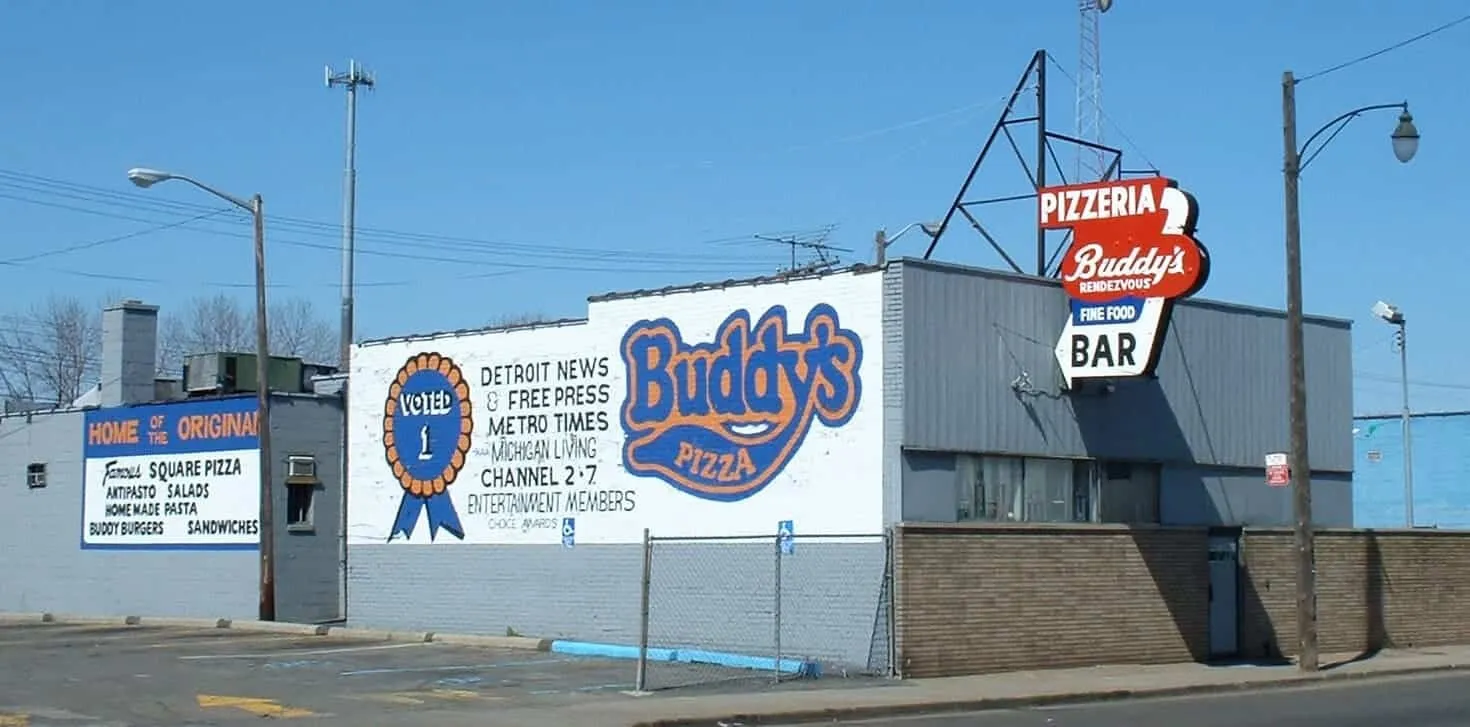
This is the address the Detroit square pan pizza is dated to: Gus Guerra's first square pie in 1946, baked in blue steel pans borrowed from local auto plants. It is also the significant boundary finding of this research pass — of the lineage's three founding names (Buddy's, Loui's, Cloverleaf), this is the only one still standing inside the city of Detroit; Loui's is in Hazel Park and Cloverleaf is in Eastpointe, both separate cities.
A Fuorigrotta pizzeria whose founding name, Capasso, became Cafasso for the whole family after a registry clerk's transcription error. Today's dough is a blend of four flour types (grade 0 and 00) with a small amount of yeast, left to leaven 13-14 hours, worked by grandson Stefano who took over from his father Ugo.
Café 28 is built around Andrea Giromini, an Italian chef from Piedmont who trained on the Amalfi Coast specifically in Neapolitan pizza-making and has run the kitchen for over twenty years, most ingredients imported from Italy alongside produce grown in the restaurant's own garden. It is a full Italian restaurant with pasta, burgers and desserts rather than a pizza-only operation, so the pizza is a strong programme within a broader menu rather than the whole of it.
Café Barbieri, a Lavapiés café-restaurant open since 1902 and relaunched in 2022, describes a specific, checkable pizza programme: Veronese-style pizzas made with natural sourdough starter, stone-ground organic semi-wholemeal flour and a 60-hour rest, baked in a purpose-built oven visible to diners. The dough and oven detail clears the specialist floor even though the venue is historically known as a literary café rather than a pizzeria.
This is the Caserta record with the maker's own numbers in it. Vitiello, quoted directly in a named review, describes a blend of wholemeal, semola, 0 and 00 flours with dried lievito madre, a 100% biga run at deliberately varied temperatures to keep acidity down, 85% water plus 3% oil, and a bake at 380°C. He grows vegetables for the pizzas on a reclaimed plot below the UNESCO silk village of San Leucio and a hydroponic vertical garden in the pizzeria's own grounds. San Leucio is a frazione of the comune di Caserta, not a separate town.
A delivery-oriented wood-fired pizzeria on MG Road, baking in 900°F brick ovens and offering both Neapolitan and thin-crust styles. No maker is named and nothing is stated about where or how the dough itself is made, but the oven claim alone is specific enough — a stated temperature and construction, not just the word 'wood-fired' — to clear the floor.
Can Pizza is a Catalan-founded group (first restaurant in El Prat de Llobregat, 2014) whose stated policy, in co-founder Lolo Lorenzo's own words, is to train its own pizzaioli in-house — including people from vulnerable backgrounds — rather than import formed pizzaioli from Naples. The dough is a hand-shaped, five-flour blend (00, toasted soy, wholemeal, wholewheat and semolina) fermented 72 hours, prepared daily at each restaurant. The Sagrada Família branch, its fourth and first inside Barcelona city, was named in the 2022 '50 Top World Artisan Pizza Chains' list alongside Grosso Napoletano and NAP.
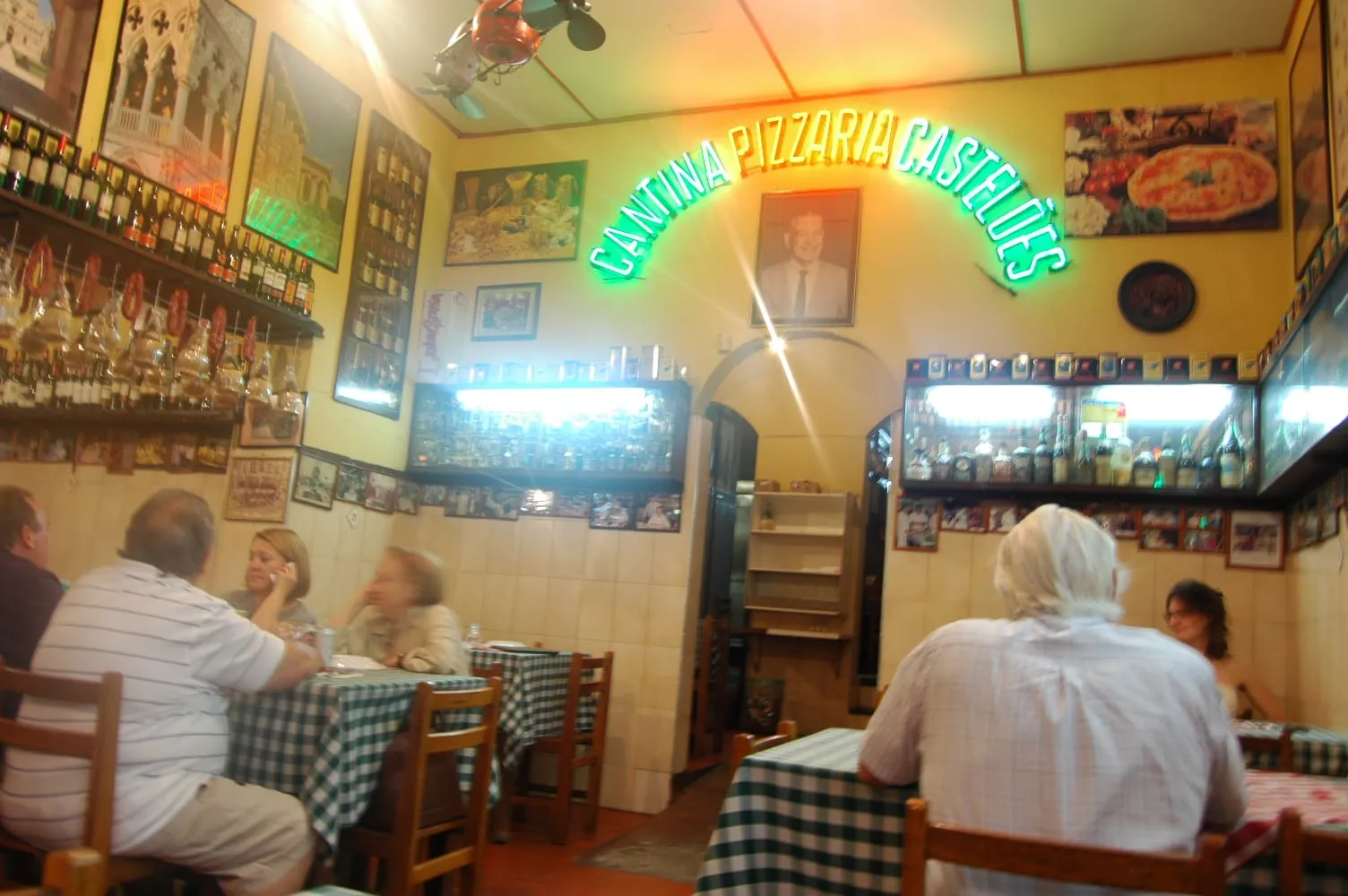
Founded in 1924 in the Brás neighbourhood, Castelões is documented by the city of São Paulo's own Department of Historic Heritage as the oldest continuously operating pizzeria in the city, at the same address since its founding. Its long-fermented, thick-crust pizza — most famously the house 'Castelões' pizza of mussarela, calabresa and tomato sauce — is described in the press as a paulistano classic imitated by many other pizzerias, still baked in the original wood-fired hearth and run by the third generation of the founding Donato family.
Brought to Brazil by the Neapolitan Tarallo family at the end of the 1950s, Speranza became the first pizzeria in Latin America certified STG (Specialità Tradizionale Garantita) by the Associazione Verace Pizza Napoletana, with AVPN director Giulio Adriani personally training its two São Paulo kitchens. The family's own account describes the house style as a deliberate middle point between vera pizza napoletana and 'o modo paulistano', made with imported flour and San Marzano tomato and baked wood-fired at high heat.
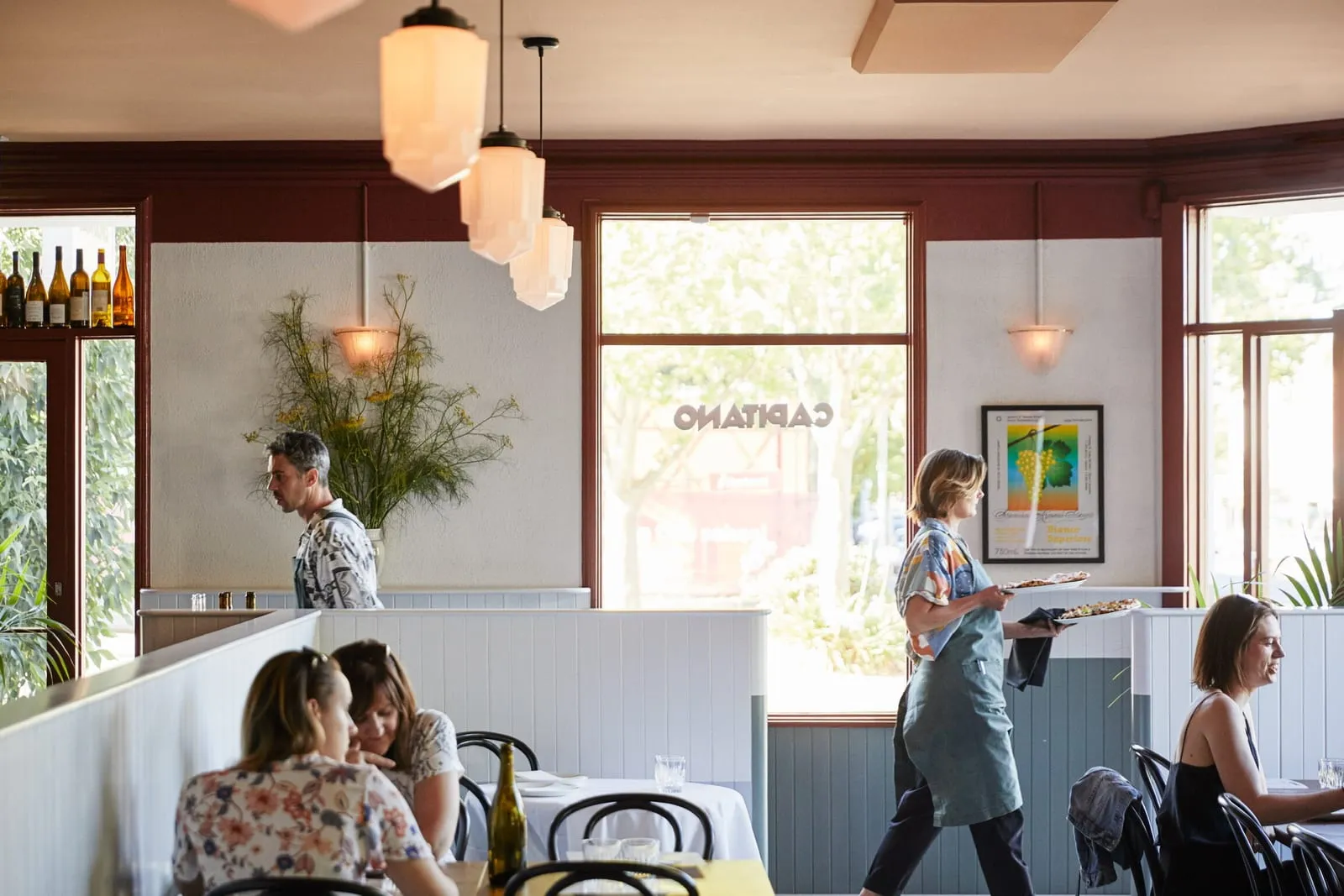
Capitano, from the Bar Liberty team, is inspired by co-owner Michael Bascetta's Sicilian heritage and the Italian-American food chef Casey Wall grew up eating. Co-owner Banjo Harris Plane has described a sourdough base fermented for 48 hours and cooked in an electric oven, producing a pizza 'slightly sturdier than a traditional Neapolitan pie'.
Capricciosa opened in Ipanema at the end of the 1990s and is a genuinely local pioneer — carioca da gema, not an import — credited with raising Rio's pizza standard even though its own dough is built on imported Italian 00 flour and a wood oven run above 400°C. It has since expanded to at least two Zona Sul addresses.
Casanova is not on the seed list and predates almost every other record found in this city. Maria Paola Porru, an Italian who had moved to Portugal to study cinema in the 1970s, opened it in 2000 on a quay by the Tejo, when thin, crispy wood-fired pizza was still uncommon here. The pizzeria has occupied the same riverside warehouse space for over two decades, one of only two original tenants (alongside the Lux nightclub) still there.
Owner Mason Lim uses no commercial yeast at all: a starter made from Type 00 flour from Naples and water, at 72.5-75% hydration, fermented 6-8 hours at room temperature and cooked in a Gozney Roccbox at 420-450°C. The business started as a takeout operation from a single Roccbox during Singapore's 2020 Covid-19 dining restrictions and now runs a reservation-only, three-nights-a-week room.
Mario Cipriano, who trained through Il Vecchio e il Mare's pizza department before striking out on his own, opened this San Frediano address in 2024 around 'pizza a rota 'e carretta toscana' — a wide (38cm+) Neapolitan-descended disc baked in an electric oven for a crunch pitched at Florentine taste — served alongside a wood-fired 'Margherita contemporanea', deliberately putting Naples and Tuscan ingredients (San Marzano DOP, Monti Lattari fior di latte, Tuscan pecorino and truffle) in dialogue.
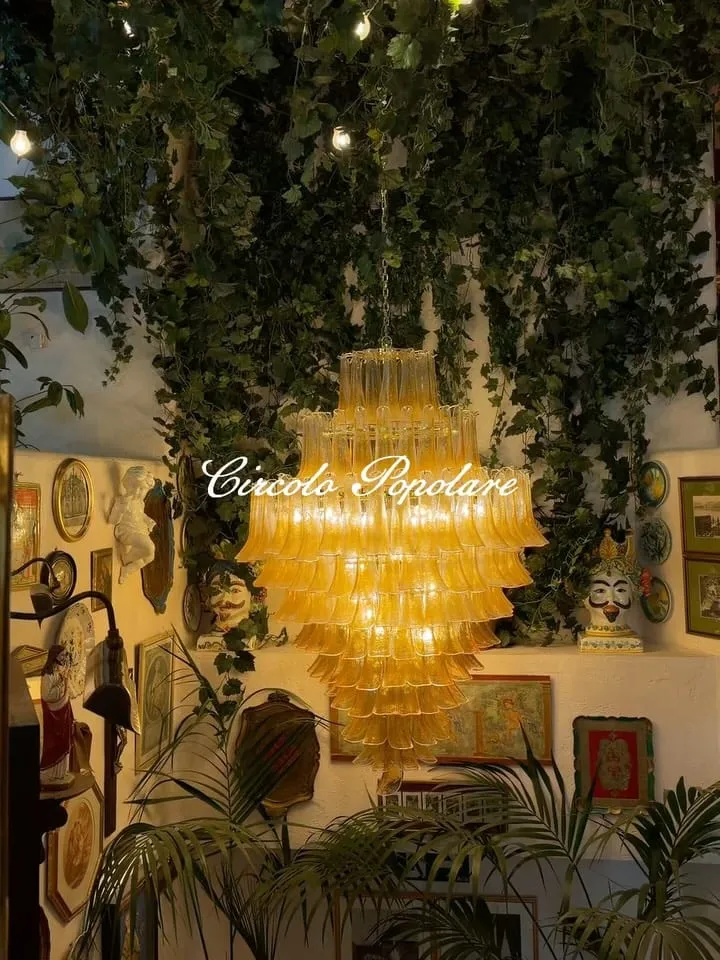
Circolo Popolare is Big Mamma Group's Madrid trattoria, built around an 80cm pizza al metro cooked in a named 2,000kg Marana oven, with the kitchen led by Neapolitan chef Luigi Venturo. It is one of three Big Mamma venues in Madrid pitched to Tapas Magazine's readers for World Pizza Day, and the only one of the three with a specifically described, named oven rather than a generic 'our oven' claim.
A neighbourhood pizzeria in the Loggetta quarter near the old Stadio San Paolo, opened by Ciro Pellone in 1984 after his own father trained at the Trianon, one of the postwar schools of Neapolitan pizza-making, and after an earlier family shop called Pellone on Via Nazionale. The dough is direct, given a twelve-hour leaven and not pushed to extreme hydration, and the family still works the oven together. Now Ciro's sons Marco and Antonio share the shift.
Open since 1974 at the foot of the Turin hill below the Basilica di Superga, Cit Ma Bon ('piccolo ma buono' in Piedmontese) cooks both farinata and pizza al tegamino in a wood-fired oven, with seasonal produce driving the daily toppings. The pizza to order is the Ciapinabo — anchovy, garlic, topinambur and mozzarella on the local pan base.
Ben Fester and Drew Huston, who began popping up with square pan pizzas at Poor Toms gin hall in Marrickville, run this Detroit-style pan pizza bar under Central Station. The base is a sourdough given a longer fermentation than their round pizzas, par-cooked in American Lloyd pans and finished with a second, lower-temperature bake to caramelise the edges.
Civerinos began at Hunter Square when founder Michele Civiera sold his sneaker collection to buy an oven, and by 2018 it was a sourdough Italian-style pizzeria with a 72-hour proven dough. By 2026 the business describes itself very differently -- as Scotland's home of 'authentic East Coast-style pizza', built around large New York-style slices alongside New Haven, Detroit and Chicago items -- and that shift in self-description across roughly a decade is itself a finding about how an Edinburgh pizzeria's identity has moved.
Coalition runs a wood-fired oven and a two-day slow-rising dough that a local guide explicitly contrasts with the thinner, less chewy base typical of South African pizza generally — a stated departure it makes on purpose rather than an unexamined default. It has multiple Johannesburg branches (Blairgowrie, Parkwood, Sandton Central).
Concettina Oliva opened the pizzeria on this spot in the Sanità in 1951, beside the shrine to the Madonna, Sant'Anna and San Vincenzo that gives it its name. Her great-grandson Ciro Oliva has turned a neighbourhood pizzeria into an experimental one without leaving the neighbourhood, and the form that takes is concrete: a dedicated laboratorio di lievitazione e maturazione, a clean separation of takeaway from the dining room, and a cellar run by a trained sommelier.
Confine was built by Francesco Capece — trained at his family's pizzeria near Salerno — around a tipo 1 dough given up to 72 hours of maturation and recalibrated for an electric oven after years on wood. The kitchen pairs deliberately non-traditional toppings (roast beef, chickpea cream, a margherita finished table-side with parmigiano) with a 600-label wine list, a wine-and-pizza format with few precedents in Italy.
Under Japanese-Filipino pizzaiolo Yuichi Abellare Ito, Crosta runs three parallel formats -- round sourdough, Sicilian pan and Detroit-style deep-pan -- built on long fermentations and a self-described mix of Italian, Filipino and Japanese ingredients, which is the clearest Makati example of a named maker deliberately working outside a single regional tradition rather than reproducing one.
Da Orazio has run a wood-fired, blistered Neapolitan-style pizza programme in Bondi since founder Orazio D'Elia opened it in January 2014, closed it in 2019 after selling in 2018, and reopened it himself in 2022. Pizzaiolo Ernandes is credited with perfecting the biga-style fermentation now used for the dough.
The plainest statement of the tonda romana method this run found: low, rolled out with a mattarello, short-risen, and baked in a wood oven for barely a minute. It has been feeding Testaccio since 1976 at prices under 20 euros for a starter, a capricciosa and a drink, which is the kind of everyday fact the depth-of-field dimension actually rests on. It is one of six strongholds the city's revival generation says it learned from.
House pizzas are stretched in front of customers at the counter and baked in one of three ovens on site, in a small Baixa storefront that previously housed a sandwich shop. The evidence found is thin — no named pizzaiolo and no oven type — but it does establish that the dough is made on the premises rather than bought in.
The pizza at Dante's is documented rather than merely reputed: sourdough made with flour imported from Italy, fermented at least two days, baked in wood-fired ovens imported from Naples. It was the first pizzeria in New Zealand certified by the Associazione Verace Pizza Napoletana, and head pizzaiolo Enis Baçova placed second in the Neapolitan category at the 2024 Caputo Cup in Naples.
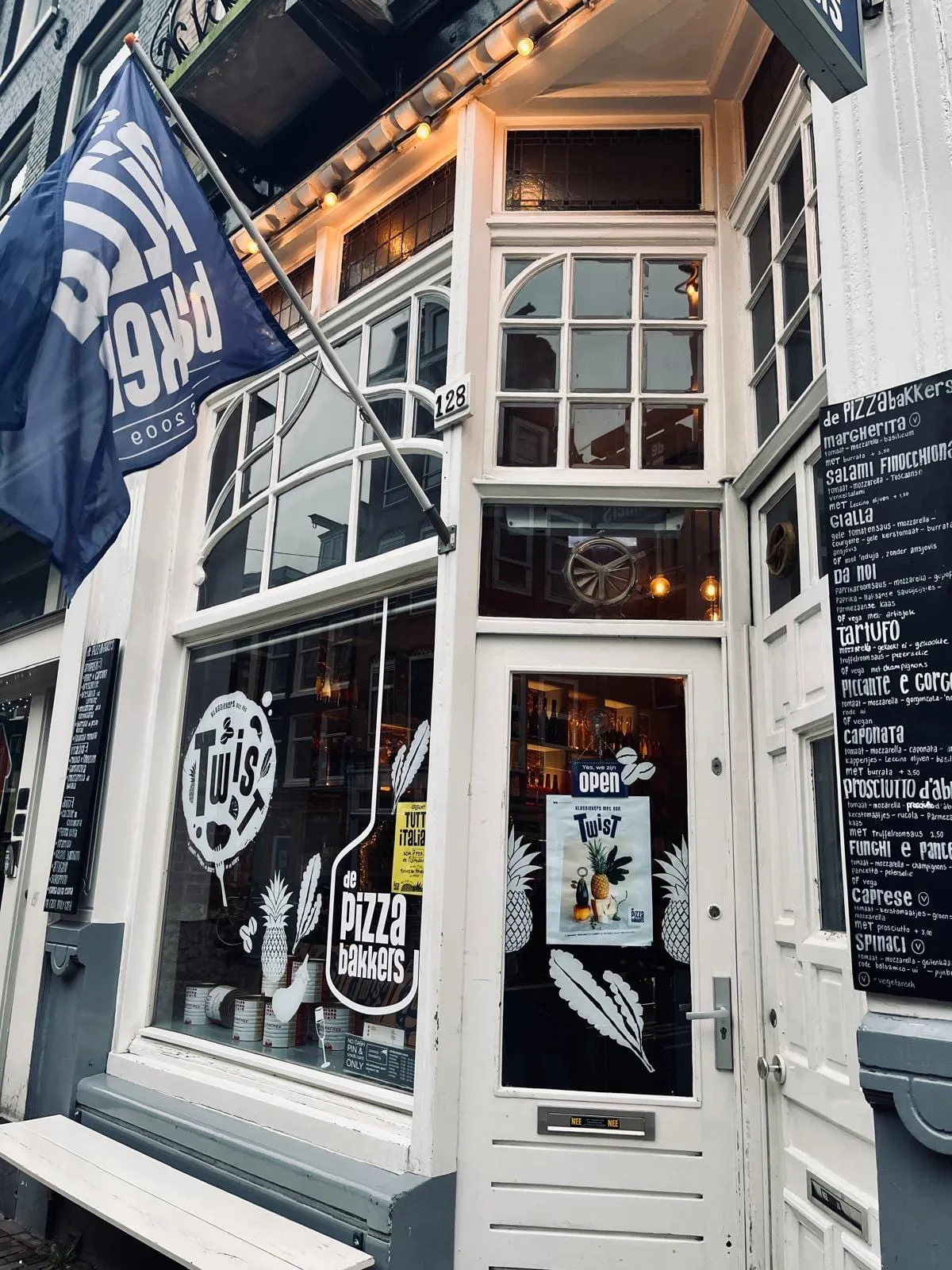
De Pizzabakkers began as a single neighbourhood restaurant on Haarlemmerdijk in 2009, founded by two couples -- Margreet Leguijt and Anthony de Vries with their friends Siang-Lan Go and Dmitri Schokker -- who set out, in their own account, because they could not find a genuinely good wood-oven pizza in Amsterdam. It grew into a national franchise from 2016, now over thirty locations, built around what the founders call Roman pizza: thin, crisp bases baked in real Italian wood ovens. The Haarlemmerdijk restaurant is the original location and remains inside the city's boundary.
Dom DeMarco opened Di Fara on Avenue J in Midwood, Brooklyn in 1965 and personally stretched every pie's dough for over fifty years until his death in 2022. The shop still mixes dough in-house and bakes it the same day in the same three secondhand gas deck ovens bought when it opened; his widow and seven children, including Margaret Mieles, now run the original 60-year-old Midwood location.
Open in Mariahilf since 2013, Disco Volante bakes its Neapolitan pizza daily in a purpose-built southern Italian wood oven shaped like a giant mirrorball, made from Vesuvius volcanic rock. The business has since grown into a small local group (a delivery arm, a home-pizza retail line, and 'Scuola Volante', which it states is Austria's first Neapolitan pizza school), evidence of a genuine specialist commitment beyond one dining room.
DOC is a Melbourne pizza group (see the companion Carlton record) whose Surry Hills branch was its first outside Victoria. The base is wood-fired, mostly wholemeal with some white flour, minimally topped to let a four-day slow-rise crust show through, and the founder describes the dough as respecting fermentation with ancient and organic grains.
This Carlton corner is the flagship of the DOC group (see the companion Surry Hills, Sydney record for the branch this spawned). Tony Nicolini opened Carlton Espresso in 2004, renamed it DOC Espresso in 2007 and opened DOC Pizza the same year; in his own words the dough celebrates 'contemporary pizza but using ancient and organic grains and respecting the fermentation of the dough'. The pizza is a hybrid of Neapolitan and Roman styles.
A pizzeria that exists because its founder could no longer eat the pizza he wanted. Sonay Ali built the dough during recovery from Crohn's disease, and the 72-hour poolish fermentation is not a flourish borrowed from the Neapolitan playbook but the thing the place was designed around — a base light enough to eat daily. London has plenty of New York slices; what is unusual here is a dough programme with a stated reason for every hour in it, and a maker who cooks every pizza himself rather than writing a recipe for someone else to run.
Dom's is a three-level pizzeria, pool room and rooftop bar in the CBD from Sam and Tom Peasnell and Adam Goldblatt, who also run Preston's Dexter and Takeaway Pizza (both outside the City of Melbourne boundary). The base is a sourdough fermented for 72 hours and dimpled like focaccia before it goes into the wood oven.
Domani describes itself as Chile's first Neapolitan pizzeria, founded by five friends who trained in Naples and brought back Acunto ovens -- a named Neapolitan oven-building family -- and pizzaiolos trained in Italy. Co-founder Cuto Oradini has spoken at length about the oven, which he says has run at 450°C almost continuously at its Manuel Montt location for close to fourteen years.
Running in Turin for more than ten years, Domenico Volgare fuses Mediterranean and Asian flavours onto pizza, giving classic round doughs up to 100 hours of fermentation and sourcing tomatoes, flour and oil from his family's Puglia farm. The menu also carries one pizza in the local padellino format (the KOOFFE Margherita, made with natural coffee fibre), engaging Turin's own pan-pizza tradition from a contemporary, fusion angle rather than the classic one.
Don Antonio was opened in 2012 by Roberto Caporuscio with his mentor Antonio Starita of Naples' Starita a Materdei, founded in 1901, and is now run by Roberto's daughter Giorgia Caporuscio. It bakes at roughly 850°F in a wood-fired oven and is particularly known for pizza fritta (fried, then oven-finished dough).
One of the first Italian houses to pair pizza with serious cocktail mixology, from 2013. Lorenzo Sirabella's direct dough with a small percentage of biga, tipo 0/1 flour and 48-72 hour fermentation is pizza contemporanea, aimed at diners who don't want a classic Neapolitan crust; the house also reclaims unused dough as bread and pastry base.
Open at the same Talcahuano address since 1934, El Cuartito makes media masa molde by culinary definition — a specific Porteño dough style distinct from fugazzeta or thin-crust pizza — with the recipe's exact method kept as a house secret by Manuel Diz, a partner since 1970 and the pizzeria's maestro pizzero since 1969. It is one of the pieces of evidence for the argued-but-not-yet-added 'media masa' discipline value.
Founded by José Caramés in 1947 at the busy transit intersection of Corrientes and Federico Lacroze in Chacarita, per the city's own tourism site, El Imperio is known specifically for pizza al molde — thick, generous, cheese-laden — and, per a 2026 press profile, for a fugazzeta rellena distinguished by a provenzal (garlic-and-parsley) seasoning folded into the recipe across generations of pizzeros.
Emmer, opened 31 January 2020 under Filipino chef Karla Mendoza (previously executive chef at Pizzeria Mozza in Los Angeles and Singapore), builds its dough around emmer, an ancient heritage grain the kitchen hand-mills itself and blends with rye and Italian flour, fermented for two days before baking in a rotating steel oven. This is a real, named departure in what the flour is rather than a topping novelty, and it does not fit any tradition in the discipline enum.
An Italian eatery with a dedicated wood-fired pizza programme, one of two locations (the other in south Delhi) run by founders Parul and Sachin Grover. The business's own site describes a copper-mosaic-clad wood-fired oven; at this Gurgaon branch, not the Delhi one, that oven stands in an open kitchen and a Cacio e Pepe pizza comes out of it. No dough production detail (hydration, fermentation time, where the dough is made) is stated anywhere found for either location.
Falcone opened in May 2023 under head chefs Roberta De Sario and Josh Stumbaugh, and its own site states its position bluntly: 'We don't do "authentic Neapolitan pizza"... Neo-Neapolitan is all about techniques, flavours and ingredients that break the rules and live outside tradition.' De Sario names her seasonal Campania sourcing directly — mature Italian cheeses, seasonal potatoes with garlic and rosemary — as the thing she is building the menu around.
Sergio Maglione, a pizza chef from Naples, opened Farina in 2014 after co-owning Toto Restaurant; in 2016 it became one of only three AVPN-certified pizzerias in New Zealand. The restaurant's own terrace still carries steel-and-glass tables left over from when it served Toto's pizza by the metre, before switching to the current Neapolitan format at the end of 2015.
Teresa Iorio, daughter of pizzaiolo Ernesto Iorio, is a two-time world pizza champion — 2015 in the Neapolitan STG category and 2017 in fried pizza with the recipe that gives this shop its name. She opened Femmena e Fritta in her home neighbourhood in November 2023 after a three-year wait through the pandemic, building the space around two dedicated stations: a wood oven and a separate fried-pizza counter. This is one of very few Naples records in this guide with a named woman at the head of the dough and the fire, in a trade the guide has otherwise recorded almost entirely through men.
Sei Shiroma, a New York-raised cook of Japanese and Chinese descent, started Ferro e Farinha in 2012 with a wood oven built into a trailer towed by a Fiat Uno in Catete; it has since grown to at least four Rio locations (Leblon, Ipanema, Botafogo, Barra da Tijuca). The dough takes the Neapolitan style as its starting point while the toppings are pitched to Carioca taste with various Italian ingredients -- a fusion, and not a claim to a separate local dough tradition.
Salvatore Fiata grew up in Caserta in a family of three generations of pizzaioli and opened at the end of 2021. He describes his own formula as '75% moisture, 510 degrees Celsius, 90 seconds and 100% passion.'
Fimmina is a small two-level Neapolitan pizzeria run by Sicilian-trained pizzaiolo Davide Luca and his wife. The dough is slow-fermented — 72 hours, per the maker — and the pizzas are named after Italian actresses.
Fired Dough sets out its own production chain in specific, checkable steps: dough prepared fresh daily and given an overnight proof plus further fermentation, San Marzano tomatoes it says are grown on Mount Vesuvius's slopes, fior di latte mozzarella, and an Italian-built oven running above 400°C for a 60-second bake. No pizzaiolo is named, and no independent review of the dough or oven was found in this run, so the record rests on the business's own account.
Flama is a Miraflores pizzeria built around AVPN (Associazione Verace Pizza Napoletana) certification, held since October 2023 and the first in Peru. Its founder describes the certified oven as 'the heart of Flama' without which it could not meet Neapolitan pizza's demands; the dough it fires is slow-fermented.
Forno a Legna is a long-running Frederiksberg fixture -- inside the Copenhagen city boundary, which explicitly encloses Frederiksberg -- built around a stone oven fired at a stated 400°C and a 24-hour dough rise, using Italian ingredients across a 40-plus item menu. A local guide singles it out for its 'hvide pizzaer' (white pizzas, served without the usual tomato base) as its specialisation within a wider Neapolitan-style menu.
Tanka Sapkota built a wood-fired oven on site with volcanic stone and gold leaf brought from Naples. The dough rises on a natural levain given to him by Gabriele Bonci and is kneaded for an airy, tall crumb that he insists is the genuine Neapolitan style, not the thin crispy version fashionable in Portugal.
Fortuna's dough numbers are specific: flour from Molino Casillo, 75% hydration, 50 hours of fermentation, cooked 60-90 seconds at 430-480°C in a Valoriani oven, with a fry-then-bake step on the base. There is a genuine conflict, recorded below, over who is actually responsible for that dough.
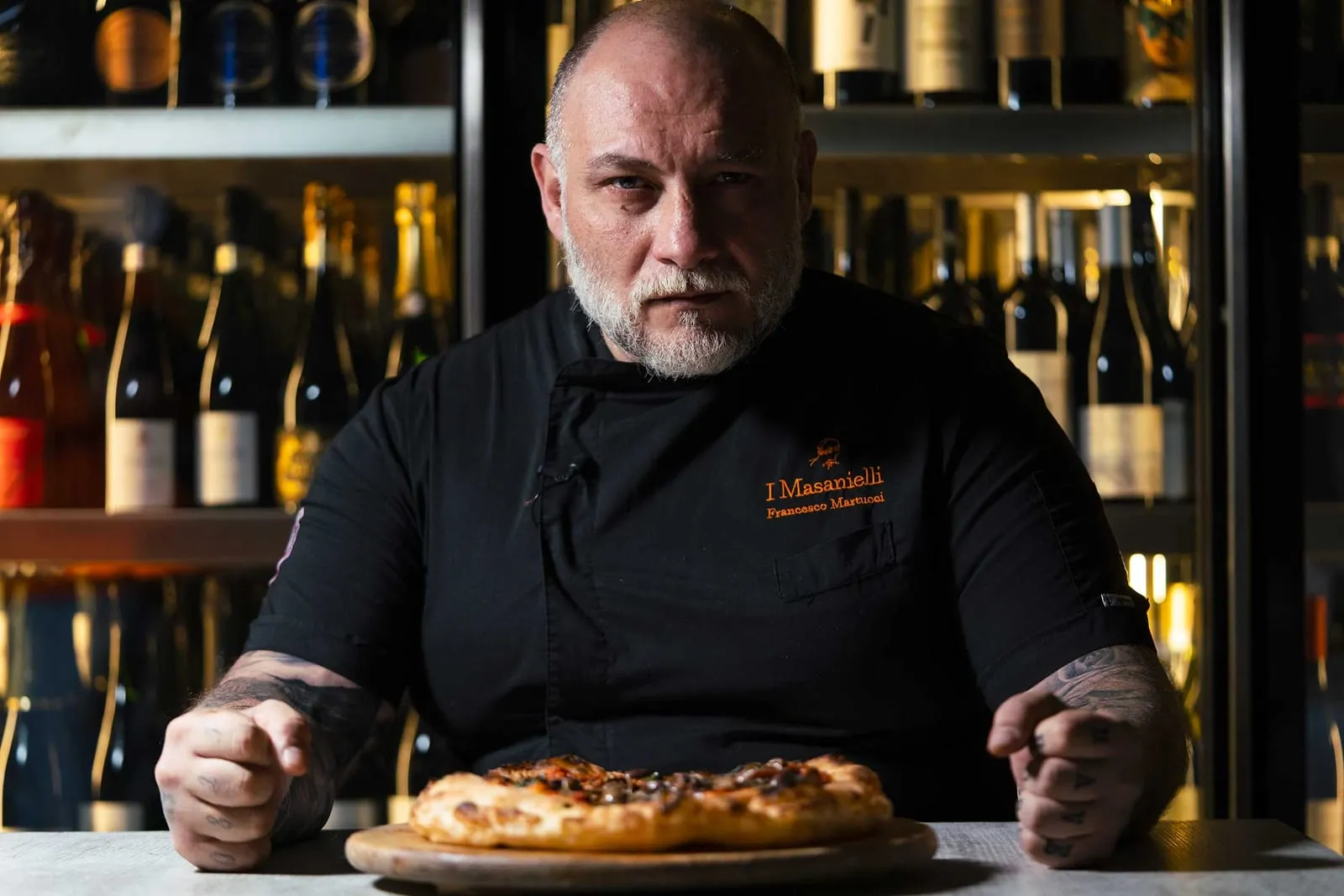
This is the first restaurant Francesco Martucci has opened outside Italy, bringing the long-fermented, high-hydration dough and wood-fired technique of his Caserta flagship I Masanielli to a dedicated Wynwood dining room built around a $200 pizza tasting menu. The caged ovens at the back of the room are by now a distinctive sign of the pizzaiolo from Caserta, and the signature technique is a twice-cooked pizza a due temperature.
Franco Forleo has run a pizza oven at 54 Tyrone Avenue in Parkview since 1986 — confirmed when December 2024 repair work turned up a coin sealed into the original wet cement 38 years earlier — making this one of the longer-running family pizza operations found across the three cities researched. His family, including a nephew and sons, still works the kitchen.
Frank Pepe, an immigrant from Maiori near Naples, opened his pizzeria on Wooster Street in 1925 after years selling tomato pies from a wagon in the Wooster Square market; the family moved to the current address in 1936 or 1937 and still fires a custom-built coal oven, replicated at every location from the original. The family's own site says the dough recipe is unchanged since Frank Pepe created it, and current pizzaiolo Gary Bimonte has explained why coal, at roughly 1,000°F, gives the crust its char.
Opened in March 2019 on Branimirova, Franko's works a 70%-hydration dough made with Caputo Nuvolu Super flour, a 10-12 hour bulk ferment followed by 36-48 hours of cold fermentation, and a wood-fired oven where the pizza is finished close to the open flame. Its dough programme traces directly to Marin Vanjak, the pizzaiolo who founded O'Hara and effectively started Croatia's Neapolitan-pizza scene before that business closed in 2022.
A Neapolitan pizzeria in Madrid that bakes in an electric oven, not a wood one — the brothers spent €20,000 of a €50,000 opening budget on an artisan electric oven built in Naples. Vittorio Figurato describes the dough as a baker's discipline rather than a pizzaiolo's eye, weighing every ingredient rather than working by feel, and says nothing on the menu is bought ready-made. It is a Neapolitan form brought to Madrid by the people who grew up with it.
Fratelli Pulcinella grew from a backyard catering pop-up in North Parramatta into a proper wood-fired restaurant on Church Street. Brother Simone Zullo placed first in the Classical category of the Neapolitan Pizzaiuoli Association's World Pizza Championships, judged in Naples, for what judges considered the most authentically Neapolitan pizza in the field.
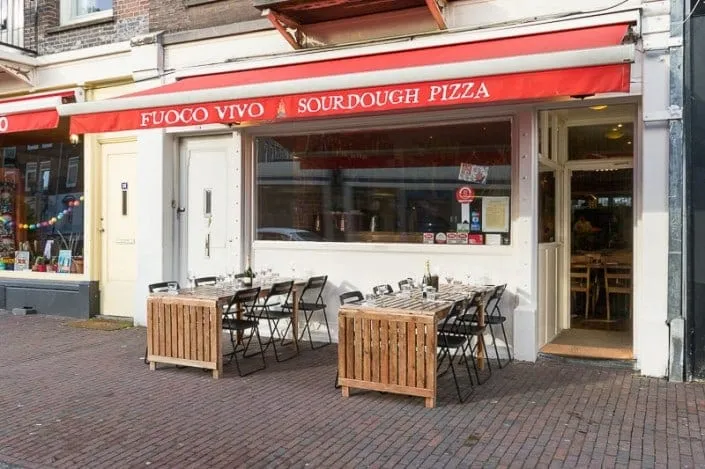
Fuoco Vivo names its production method in specific, checkable terms rather than general claims: double zero (00) flour, San Marzano tomatoes, and a wood oven built brick by brick with volcanic earth from Naples by an Italian company it says has handed the craft down for three generations. The dough is mixed on site on a mechanical-arm mixer the business dates to a 1969-or-earlier build, restored in 2009 -- a detail specific enough to check even without a named pizzaiolo.
Garfield, opened in early 2026 on Lygon Street, deliberately applies Japanese pizza-making technique to an Italian base: a dough of 100 per cent Italian Casillo wheat flour fermented for 72 hours and shaped with the Tokyo stretch method rather than the Neapolitan slap-and-toss, baked low and slow in a rotating Marana wood-fired oven. Owner Jamie Valmorbida and culinary director Karen Martini cite Japan's pizza scene, not Naples, as the direct influence.
Gigi Pizzeria is one of a small number of Sydney pizzerias accredited by the AVPN (Associazione Verace Pizza Napoletana). Founder and pizzaiolo Marco Matino converted the menu to fully plant-based toppings in 2015 while keeping the AVPN-accredited hand-stretched, wood-fired dough unchanged.
The best-known name on Via dei Tribunali, run by the great-grandson of Luigi Sorbillo and Carolina Esposito, who opened the family's first pizzeria on this street in 1935 and had 21 children who all became pizzaioli. Gino's own site names organic-farmed flour and a soft, tall cornicione as the current direction. His brother Toto runs the historic family premises while Gino has since opened branches across Italy and abroad, which sit outside this record.
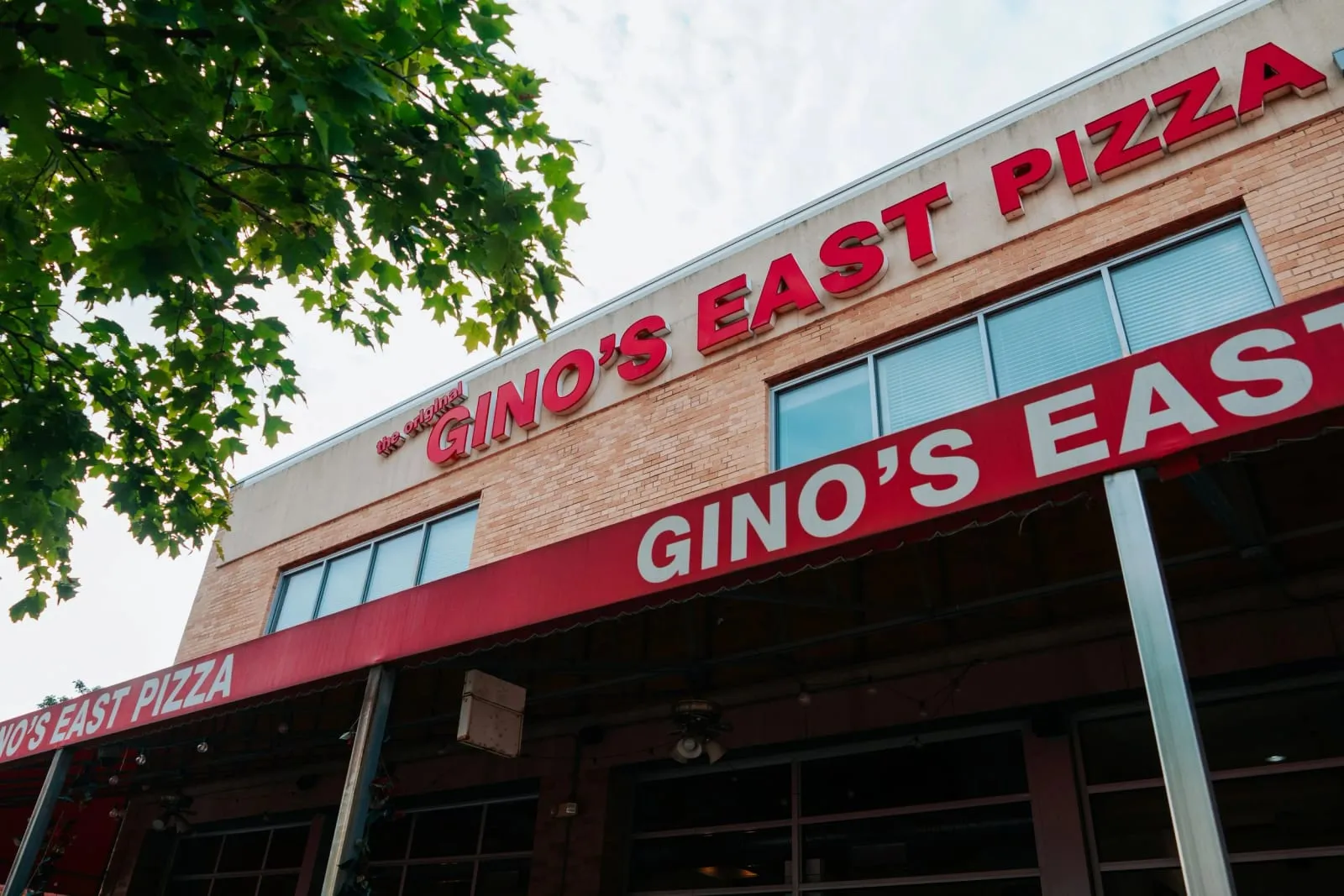
Gino's East credits its dough, and a "secret dough conditioner" that it says still shapes the crust's texture, to one named cook, Alice Mae Redmond, who worked the ovens for 29 years after joining in 1966. The business's own account that she came from 17 years at a competing restaurant is suggestive of the same figure named in outside historical research as a mid-1940s modifier of Pizzeria Uno's dough, but that identity match is not confirmed by either source and is not asserted here as fact.
Giovanni Santarpia, already known in Florence from an earlier address at Piazza Annigoni, opened this venture under his own name on 8 January 2020 after some years working outside the city. The pizza is baked in a gas-fired oven.
Potrero Hill's Goat Hill Pizza has been run by the same five founders since 1975 and markets itself, in its own words, as "San Francisco's sourdough pizza since '75" — a handmade sourdough crust that is still the house's defining claim, tying the pizza directly to the city's own Gold Rush-era sourdough bread tradition rather than an imported style. It is the clearest evidenced case this run found of the sourdough-and-local-lineage form the brief asked about, though it is one pizzeria rather than a citywide field.
A North Beach institution since 1978 that sells nothing but a square, focaccia-based pizza its own founder describes as "focaccia with pizza topping," now run by the founder's sons. A named KQED food editor calls the result "uniquely and idiosyncratically Bay Area" and records its official name for the style, "San Francilian," predating the region's later wave of Detroit-style pizza by about four decades. No enum discipline value fits a San Francilian pie, which is a genuinely distinct regional form rather than a Sicilian or Detroit import by another name.
A Corktown pizzeria, opened by named brothers in 2019, that runs both the thin round "bar style" pie and the square Detroit-style deep dish side by side under one roof, which is its identity rather than a single-format specialty.
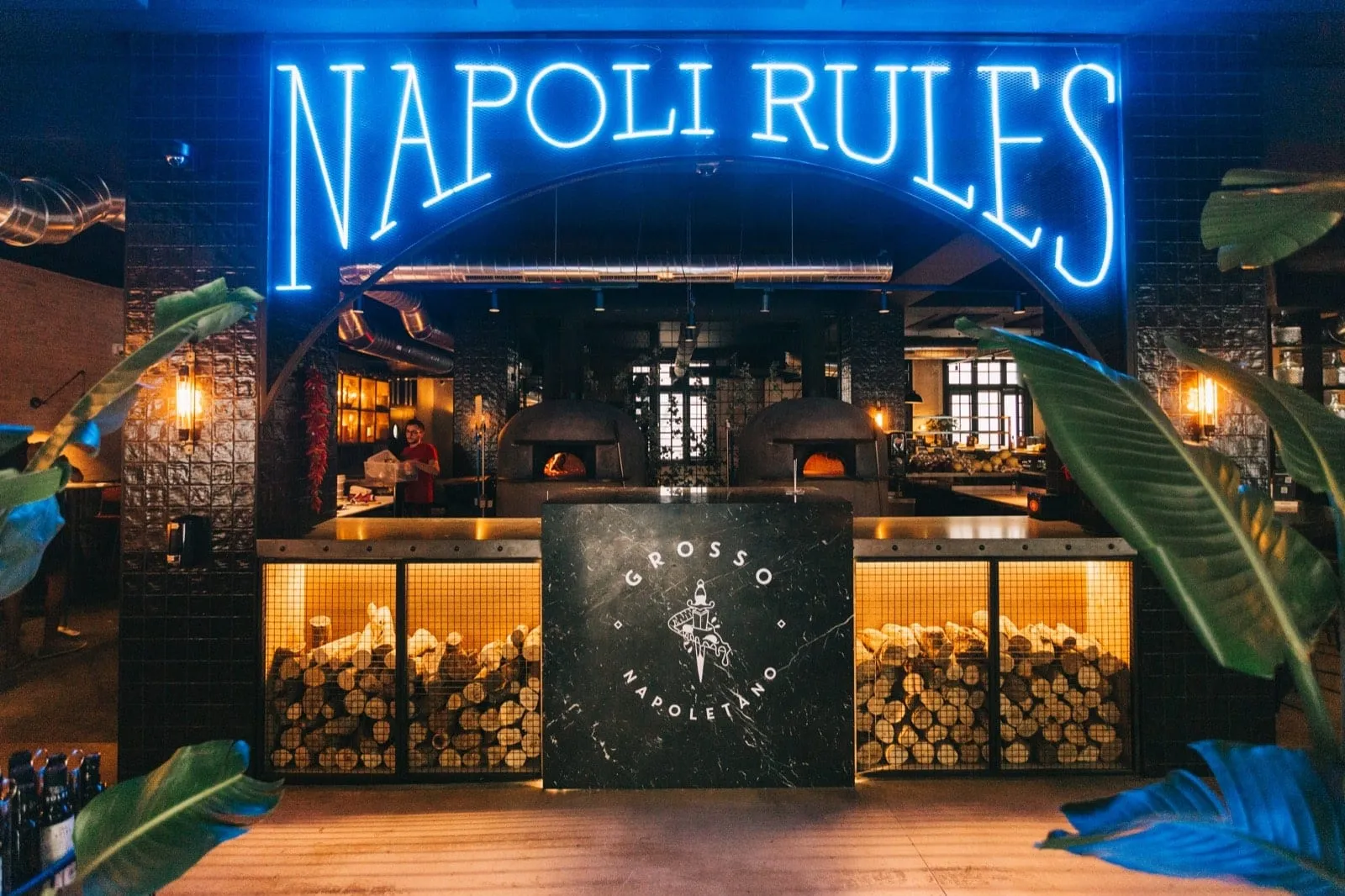
Grosso Napoletano is the one operation at scale in this set founded by Spaniards, and its own press boilerplate defines it entirely by somebody else's orthodoxy: it claims to be the only chain to have implanted the four pillars of the Neapolitan tradition, and calls itself the pioneer in bringing its pizzaioli from the best school in Naples. The first restaurant opened on calle Hermosilla in February 2017 on a little over €400,000 raised from family and friends; the company now reports 50 premises. For a project about whether a city's pizza is its own, the boilerplate is the evidence, not the marketing.
Grosso Napoletano is a Madrid-founded chain (2016/2017, by Hugo Rodríguez de Prada and Jorge Blas) whose Barcelona flagship on Carrer de Casanova was its first branch in the city, in the Sant Gervasi-Galvany neighbourhood near Diagonal. The stone-and-refractory ovens are built to order in Naples by fourth-generation artisans, and the dough is a 48-hour double-fermented mix of strong Italian flour and sourdough, baked around 90 seconds at 500°C. Its presence in Barcelona is itself evidence for the pattern this project has already found in Madrid: an imported, not indigenous, high-end pizza culture.
Guillaume Grasso is the first AVPN-certified (Associazione Verace Pizza Napoletana) pizzaiolo in Paris, cooking in a wood-fired oven left behind by a previous pizzeria at the same address. His own account traces the shop to his grandfather, a Neapolitan who settled in Paris after fleeing the war, and to a 2013 trip to Naples where Grasso trained before opening in 2018.
One of the two families credited with originating Chicago's tavern-style pizza — a thin, cracker-style, square-cut pie that is the pizza most Chicagoans actually eat, in contrast to deep dish's tourist reputation. The original South Side corner still operates as a family business, now in its fourth generation.
Homeslice is one of the clearest cases in London of an imported (not Neapolitan) American pizza tradition: the pizzas are '20-inch numbers... stylistically owe far more to New York than Italy', a self-description the company repeats today. It began as Ry Jessup's hand-built mobile wood-fired oven in 2011, with Alan and Mark Wogan as the other founders, and opened its first restaurant at 13 Neal's Yard in 2013, still trading at that address. The group entered administration in December 2024; the three restaurants, including Neal's Yard, continued trading through the process and remain listed as open in September 2026.
Martucci does not run one dough: he runs several, each with its own bake and a topping built for it. The three-stage cooking of steam, frying and oven is the high point of the meal. The Neapolitan-style dough under the composed pizzas has few equals at the moment, and Martucci, who has been at this since his earlier Viale Kennedy premises, is at the oven almost every day of the year. The pizzeria is a few minutes' walk from the Reggia, inside the comune di Caserta.
The dough is worked daily on the premises from a flour selection Martucci put together himself, and one pizza is taken to 83% hydration and baked in three stages — steam at 100°C, fried at 180°C, finished in a fan oven at 300°C. The lineage is direct: he learned from the age of ten watching his uncle, the maestro pizzaiolo Francesco Pagliaro, and the room he has occupied since 2016 was his uncle's own pizzeria, Il Solito Posto. Four pizzas on the current menu are dedicated to that uncle.
Il Caminetto has run a long-leavened, wood-fired pizza programme in Moonee Ponds since 2018 under head pizzaiolo Antonino Gallà. The restaurant's own site calls it Melbourne's first wood-fired pizza oven, a claim recorded here as the business's own and not independently verified.
Il Mare states plainly on its own site that it is Vienna's first pizzeria, opened in 1975 by Pasquale Tavella; the business has stayed in the same family for fifty years, with his daughter Grazia Tavella-Sevilmis taking over operations in 2016 and the restaurant marking its fiftieth anniversary in 2025. It still bakes wood-fired pizza alongside classic Italian dishes and Bistecca alla Fiorentina.
Built by Pasquale Naccari around Tropea seafood sourcing, this Florence restaurant fields a dedicated pizza department that carries fish-based toppings — monkfish-liver 'foie gras', house-cured tuna — on a direct, well-hydrated dough, an unusual fish-on-pizza fusion the local press treats as a genre in itself rather than a novelty item. The pizza side is headed day to day by resident pizzaiolo Federico Morieri.
IMperfetto is the reason Puteaux holds a record at all: a Neapolitan pizzeria run by Tonino Cogliano, world pizza champion in 2015. The dough is tipo 0, fermented 30+ hours at roughly 70% hydration and made in house — the pizzeria's own account and an independent one agree on that.
Tiago Jesus, of the family hospitality group Alfredo de Jesus (roughly 40 venues), is the person behind Jezzus, which opened in soft form in November 2022 in Anjos. The oven itself was imported from the Vesuvius area of Italy and built with Vesuvius stone, but everything else is deliberately Portuguese: stone-ground Portuguese flour, a 100% sourdough starter (massa mãe) fermented 48–72 hours, and seasonal, organic ingredients from small and mid-sized national producers.
Joe's Pizza is the Beijing outpost of the Greenwich Village New York slice institution, opened in September 2022 under China partner Adrian Wall, a New York native who worked at the original location for several years before bringing the brand to Beijing. It sells by the slice: cheese, pepperoni and Hawaiian.
JOJO'S, opened in La Latina in February 2025 by British former boxer Joe Fournier, is a pizzeria-cocktail bar built entirely around Roman-style thin, crisp artisanal pizza, cooked in a 2,000kg oven the founders state they brought from Naples and worked by a named Italian pizzaiolo, Giordano. Its most-discussed dish, a 100-euro caviar pizza, and a truffle pizza are both named by the co-founder as Fournier's own favourites, giving the record a specific pizza to point at rather than a general Italian menu.
Karijola began on the island of Vis and opened in Zagreb, first on Kranjčevićeva, in the early 2000s; Croatian food writers credit it as the country's first restaurant to treat pizza as a serious kitchen discipline rather than fast food — first to use real mozzarella, first to add prosciutto after baking rather than in the oven, first to cap bake time near 90 seconds, first to pour bottled wine by the glass, and first to run seasonal, gourmet toppings (shiitake, asparagus, fennel). A 2024 named-writer visit describes the dough itself as unusual for Croatian pizza: hand-shaped rather than long pre-fermented, lower hydration, only a few hours of fermentation, baked at comparatively low temperature in a genuine wood-fired brick oven — deliberately unlike the Neapolitan technique that arrived in Zagreb after it.
Founded by baker and author Ken Forkish (Flour Water Salt Yeast; The Elements of Pizza), the SE 28th Avenue pizzeria bakes a clearly Neapolitan pizza with an American accent in a wood oven, and serves it in a room built from local salvaged materials with a wine list centred on Oregon production — an imported discipline with a locally-inflected room rather than a distinctive indigenous form.
The Forcella room where the Condurro family has made a ruota di carro pizza - larger than the plate - across five generations, on a menu of four pizzas. An extension opened in summer 2025 along via Sersale, part of a plan that Sergio Condurro intends to include an academy and a Museo della Pizza. The founding year is contested between the family's own site and the outside record, and is left blank here.
This is the Sydney outpost of the Naples original founded in 1870, opened 5 December 2025 as the brand's first Australian location, with the oven and artisans brought from Naples. The dough is hand-kneaded and left to rise for at least 24 hours before being stretched and fired in the imported oven.
This is the actual Naples brand founded by the Condurro family in 1870, opened as its first Asia-Pacific location in 2024 under director and co-owner Marcello Mazzotta. The dough is described with specific numbers — Caputo flour, fresh brewer's yeast, 60-65% hydration, 24-48 hour fermentation, baked 45 seconds at 480-500°C — and the menu is deliberately narrow, in the same spirit as the original: for decades the Naples original served only Marinara and Margherita.
L'Impasto was founded in 2017 by Jean-Edouard Pigrenet, a former director of the French pizzaiolo school's Paris branch, on a premise of long-matured dough; the Nation room is one of the group's current addresses and its own site names the founders and describes the dough's long maturation, though it stops short of stating the dough is made at this specific location.
Massimo Laveglia, a Florence native, took over the Williamsburg shop in 2017 and built a proprietary flour blend — semolina, whole wheat, Type 1 and other varieties — milled to his own recipe in Italy, baked in a four-deck electric oven. It has since grown to a third New York City location on fresh ingredients and ideas rather than a change of method.
Three friends from the Veneto opened La Balmesina to make a pizza deliberately outside Neapolitan orthodoxy: a sourdough base of three organic flours fermented a minimum of 50 hours (80 for the thicker pala romana format), with pH controlled to keep acidity down. It has been ranked among Europe's 50 best twice (32nd in 2021, 9th in 2024) and won Madrid Fusión's 2021 award for Spain's best pizza, with the wood-fired oven visible in the ground-floor kitchen as the restaurant's stated centrepiece.
De Gregorio has been at the bench and the oven since the day the place opened, in the ground floor of the Villa Maria Cristina hotel a few minutes from the Reggia and the station. Opened sources describe a highly hydrated, open-crumbed dough with a pronounced cornicione, dough balls calibrated at 210–220 g, an electric oven chosen for drying and precision, and doubles bakes that begin with steam from 100°C to 180°C before the oven. The same dough is carried into a dedicated dessert-pizza list, fried, blast-frozen and regenerated in the oven with sugar and cinnamon to seal the base.
Antonio Miscellaneo names his own style 'Newpolitan' and describes it precisely: 70-80% hydration against a classic Neapolitan's 55-65%, 48 hours of fermentation, and a two-stage bake across two ovens set to different temperatures to drive moisture out of the crust. The restaurant grew out of a private-dining pizza business he ran from a condominium balcony from 2018.
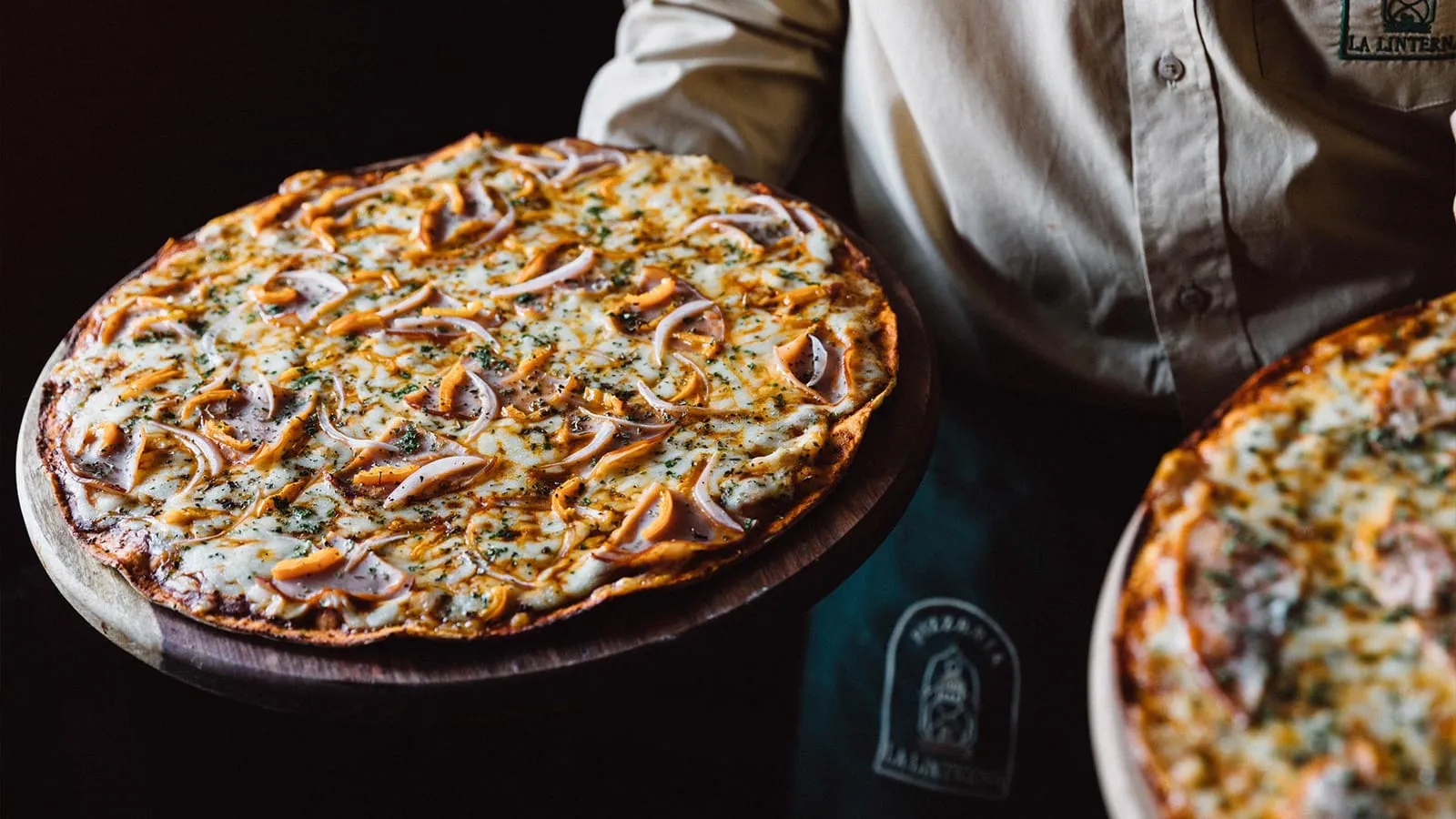
La Linterna has served thin, crisp-crust New York-style pizza in Lima since 1963, when a New Yorker named Floyd Scofield Sebastian opened the first location in San Antonio, Miraflores, and its own history page names the style explicitly rather than leaving it a generic import. It now runs two locations inside the Provincia de Lima boundary, in Barranco and San Isidro, and describes itself as unchanged in recipe across more than sixty years, but no source opened for this record states an oven type or where the dough is actually made.
La Manifattura is a design-forward Montparnasse address with pizzaiolo Angelo Cipullo at the oven and a soft, well-leavened dough, served alongside a fuller Italian menu of pasta, meat and fish rather than as a pizza-only room.
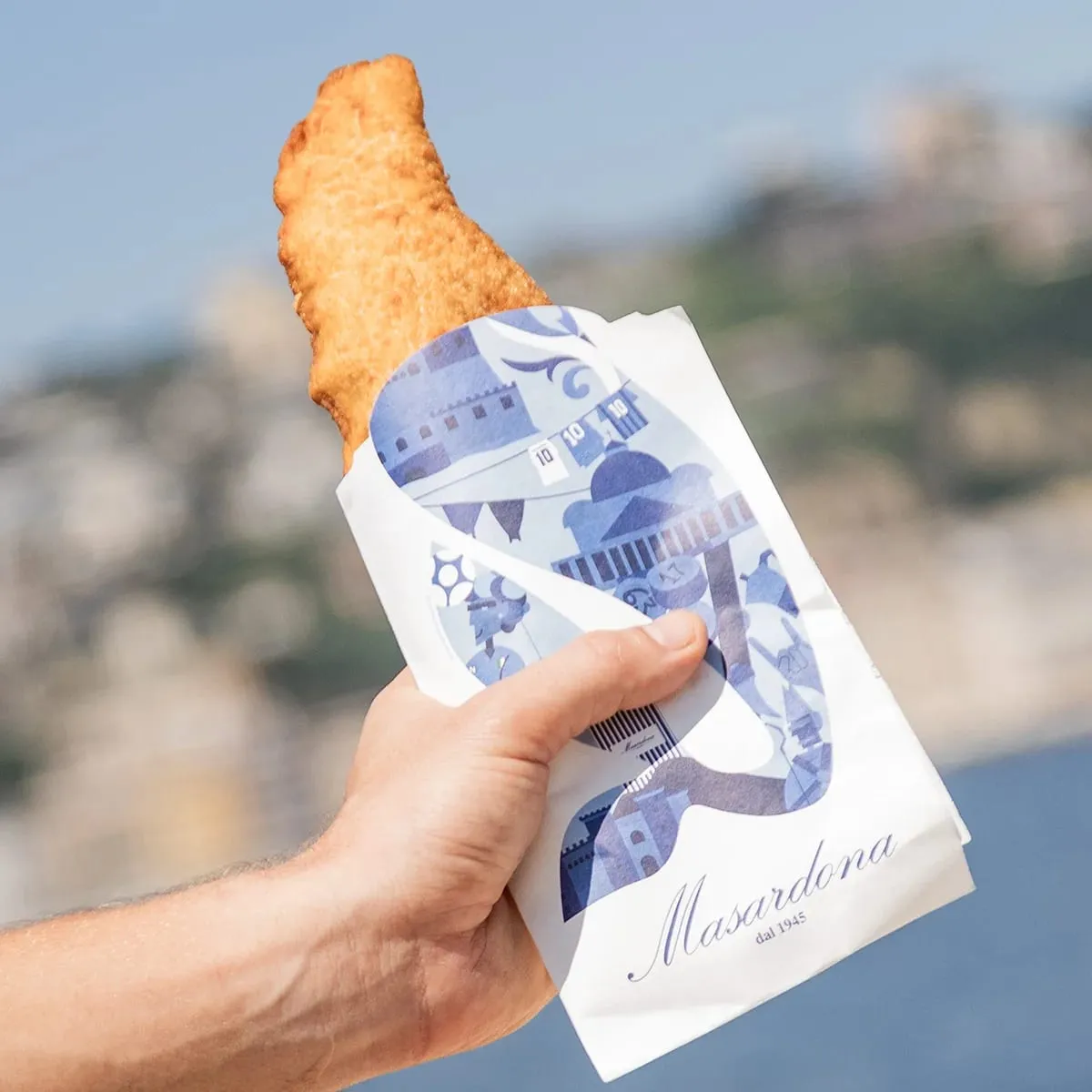
Eighty years of fried pizza from one family, a few steps from piazza Garibaldi. Anna Manfredi - 'a Masardona, a nickname that in Naples meant a carrier of messages between brigands - began selling pizze fritte from her house in 1945, across the street from the present pizzeria; her grandson Enzo Piccirillo runs it now with his wife Carmela. The Battilocchio, a half-moon format of fried pizza, is a registered trademark of the house.
The dough is made on site with organic flour from a family producer in Torres Vedras and ferments 26–48 hours, and describes the house style explicitly as a cross between Neapolitan and Roman — thin dough with a fuller rim — rather than either alone, which the DISCIPLINE enum does not have a value for. Pizzaiolo Mario Diaco joined from Italy's Adriatic coast after founder Matteo Bravi's holiday there; the tomato sauce, fior di latte and Bufala Campana DOP are sourced from Naples.
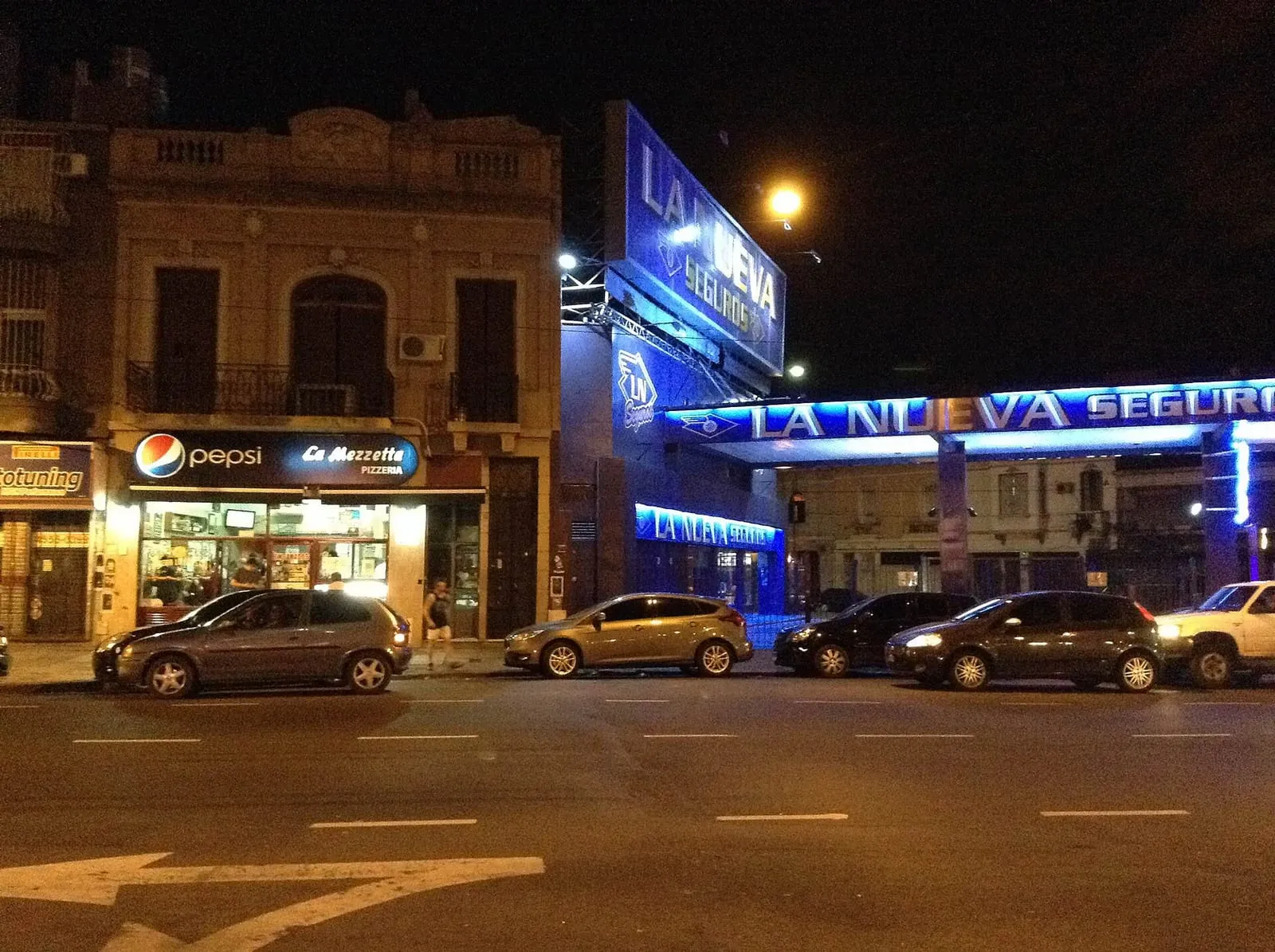
Open on Avenida Álvarez Thomas since 1939, La Mezzetta is one of the standard references cited by name for fugazzeta rellena in Buenos Aires, known for a thick, heavily-cheesed, stand-up counter format. A local Villa Ortúzar outlet profiled the family lineage that has run it since Marcelino, Gervasio and Abelardo Rodríguez bought the business in 1957, and named staff (Horacio Conde, son of Marcelino; Luis Dovale) as continuing that line today.
La Perla is the only pizza-maker on the Jordaan street known locally as Little Italy, working a large wood-fired brick oven and importing DOP buffalo mozzarella made by the Chiari family in the Naples area -- named, checkable provenance rather than a generic import claim. No source found in this run names the pizzaiolo or describes the dough itself, so the record rests on the oven and the ingredient sourcing rather than a fermentation claim.
La Piola Pizza is run by pizzaiolo Francesco Martini in Saint-Josse-ten-Noode, one of the 19 communes of the Brussels-Capital Region. The dough is well leavened and fragrant, with a modest cornicione, and the ingredients are entirely Italian.
La Pizza è Bella's Brussels room, in the Sablon district, is the original address behind a brand that has since expanded to a second Brussels-region location in Etterbeek and to Antwerp. The crust is thick, fluffy and digestible in the Neapolitan manner, and the house is credited with popularising smoked steam-cooked pizzas.
La Pizzaria is a small Gemmayze shop built around Fady Abounaoum, who left careers at Nestlé and in the oil business to spend a year training as a pizzaiolo in Italy. Its pizzas use Italian flour made fresh daily and are baked in a wood oven, with San Marzano tomatoes and Italian olive oil named as ingredients.
Owner Kenji Ota commissioned his oven from Stefano Ferrara — a craftsman he met during his own apprenticeship in Naples, who then travelled to Japan to build it for this restaurant — rather than buying a stock model, which is the kind of direct personal lineage this guide looks for.
Romualdo Rizzuti's own Florence address, open since 30 May 2019 in San Niccolò, is built around the classic Neapolitan repertoire — Margherita, Marinara, a Napoli served with anchovies on the side — plus a well-reviewed pizza fritta, backed by an unusually deep wine list for a pizzeria. Rizzuti also runs the seasonal pizza collaboration with chef Vito Mollica at Al Fresco, the Four Seasons Firenze's garden restaurant.
André Guidon trained at the Associazione Verace Pizza Napoletana's school in Naples before returning to São Paulo to open Leggera in 2013, and the business is AVPN-certified. The dough is described by the pizzeria itself as naturally fermented with a blend of Italian flours, hand-opened and baked in a wood-fired oven at 450°C, with San Marzano DOP tomato.
Siblings Chiara and Danilo Turilli, third-generation South African-Italian restaurateurs, sell Roman-style pizza al taglio from a trattoria that grew out of a De Waterkant deli and relocated to a purpose-chosen strip of independent Sea Point restaurants on Penarth Road. Their own account of the kitchen names the pizza al taglio as made 'in the traditional Roman style,' alongside bronze-extruded pasta made on site.
Leonardo's Pizza Palace opened in December 2018 in a Carlton building that previously housed Da Salvatore Pizza by the Metre, a pizzeria dating to 1959. The kitchen turns out woodfired, charred pizzas including one topped with 'Chinese bolognese' taken from a sister venue's menu, which the review itself frames as more Italian-American/Italian-Australian than Neapolitan.
Little Kitchener's is the pizza operation attached to Braamfontein's Kitchener's Carvery bar, a bar room turned over to pizza in November 2024. Executive chef Tanaka Mzondiwa was brought on to build a menu Italian in essence with a South African turn to it: the house pizza is fior di latte and tomato with Peppadew peppers — a South African-bred cultivar — and peri-peri chicken. A Pepperoni & Hot Honey pizza runs alongside it.
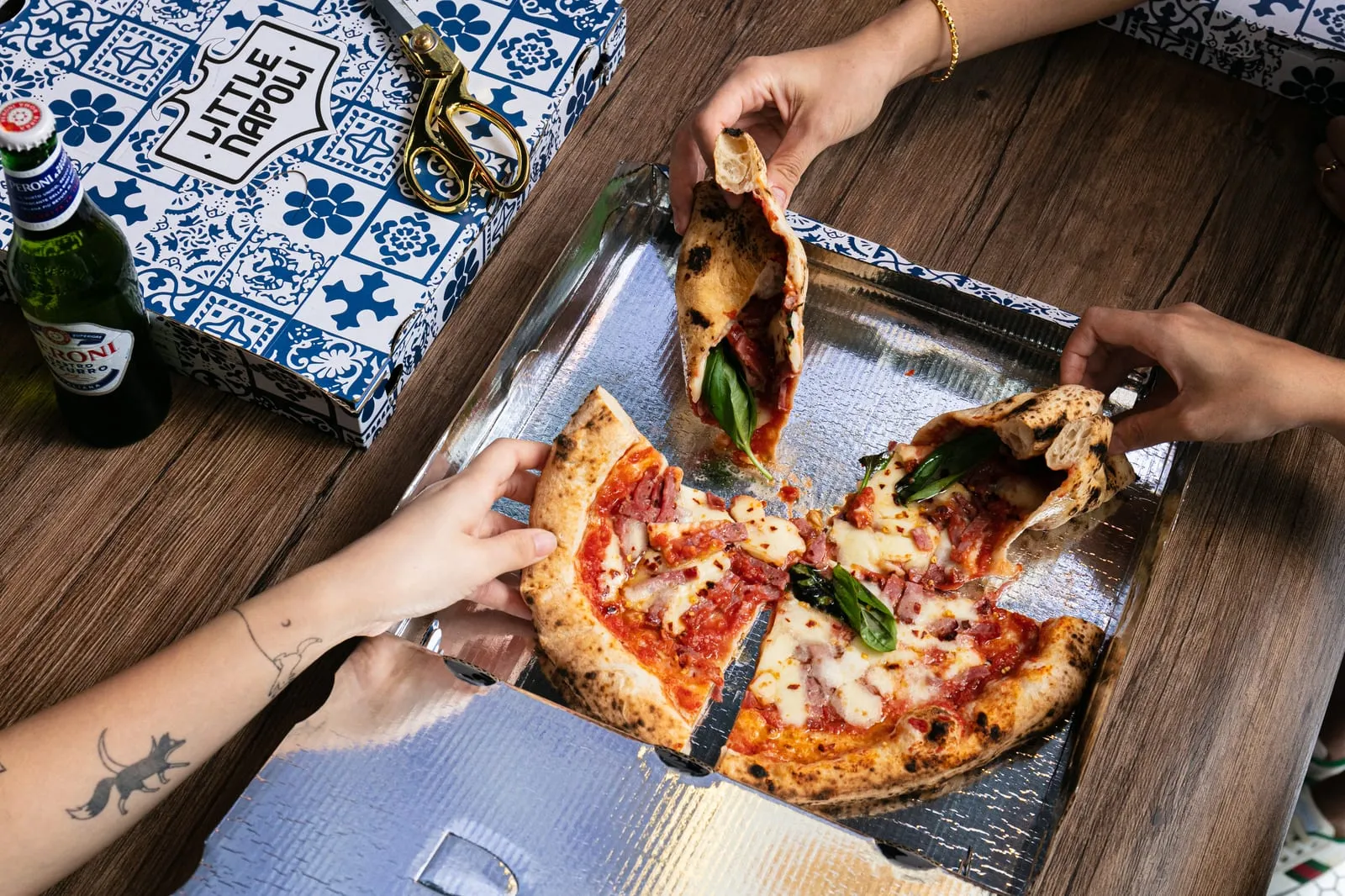
Gavino Pilo, a native of Naples, built Little Napoli on strict adherence to Associazione Verace Pizza Napoletana practice — imported ingredients, no half-and-half toppings, 90 seconds at 400°C.
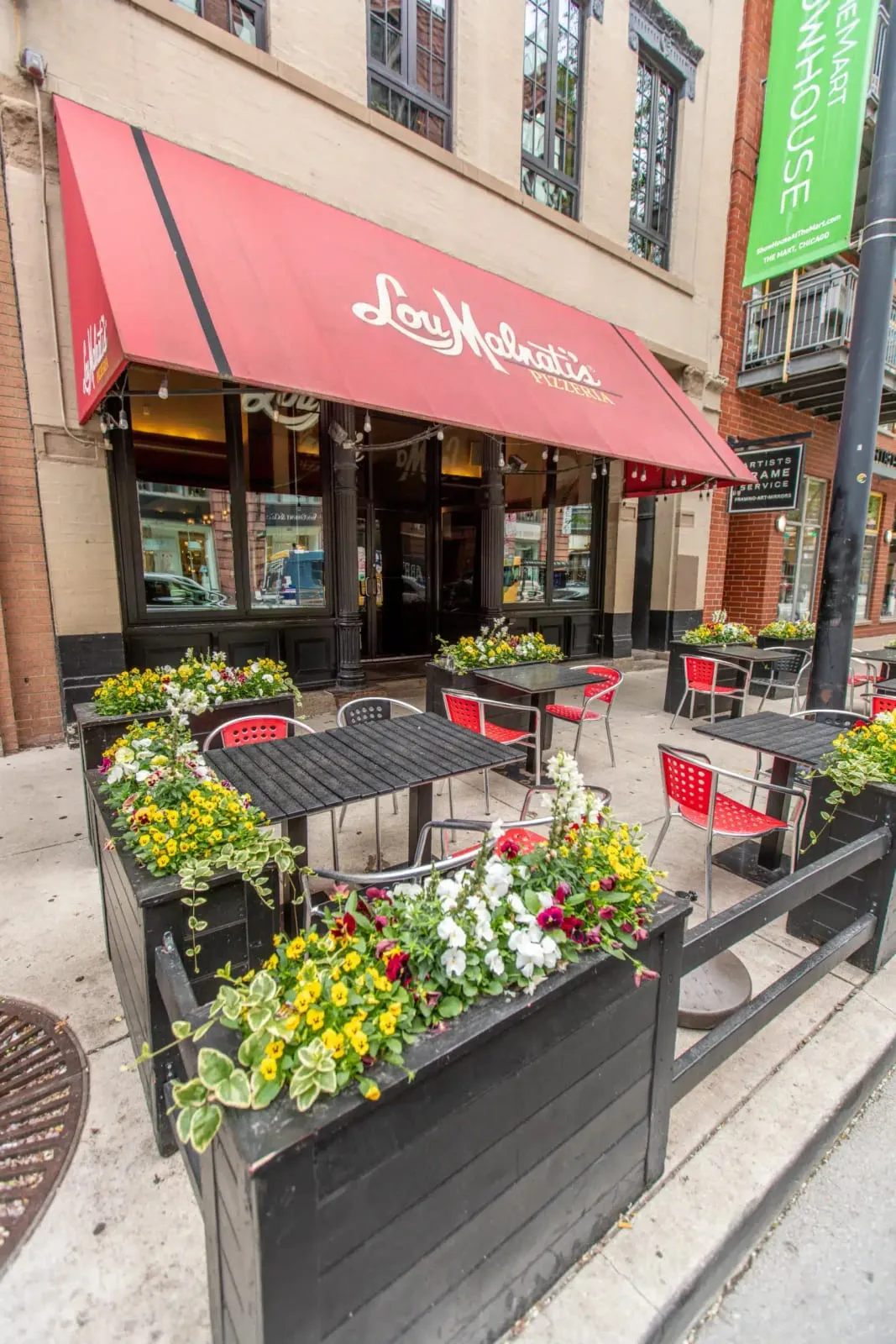
Lou Malnati's Buttercrust substitutes butter for oil in the dough, a specific, checkable departure the business states itself, and it carries its own thread into the city's contested deep-dish origin story: founder Lou Malnati was the son of Rudy Malnati Sr., one of the three people credited (and disputed) with inventing the dish at Pizzeria Uno. This record is for the River North location, inside the city; the company's original 1971 restaurant was in suburban Lincolnwood.
Lucio De Falco holds AVPN membership number 408, granted in March 2012, and is documented winning the title of Australia's best pizza at that year's World Pizza Championships with a signature STG (specialita tradizionale garantita) pizza in the traditional Naples style, the only year he entered. No source reached gives fermentation or hydration detail.
Lupita was opened in October 2019 by two Brazilians, Marcelo Parente and pizzaiolo Duda Ferreira, and is one of the clearer counter-examples to Lisbon's Italian-import pattern: Observador and NiT both report the founders deliberately distanced the project from 'pizzaria italiana' orthodoxy, using exclusively Portuguese flour (Paulino Horta) in a naturally leavened dough fermented 48 hours, while the electric copper oven itself was still imported from Naples (Izzo brand, 500°C). Brooklyn's Anthony Falco (Roberta's) consulted on the recipes as his first European project.
Owner Pedro Azevedo took an intensive pizzaiolo course in Naples in January 2018 and brought back two classmates to open the pizzeria; NiT reports the Marana oven imported from Italy reaching 480°C, a 90-second bake time cited as one of the Associazione Verace Pizza Napoletana's own rules, and a dough that ferments 16–24 hours. Tasting Table separately reports AVPN certification was subsequently granted.
Madre operates inside a converted emerald-trading passage in La Candelaria, Bogotá's colonial centre, behind a door a guard has to open, with an open kitchen built around a traditional wood oven that diners can watch pizzas come out of. Its pizza list runs from a Serrano ham and buffalo mozzarella pie to one with Spanish chorizo, thyme and garlic, but no source found names an individual pizzaiolo or a specific dough process.
Kim Ju-young opened this roughly 50-square-metre Seongsu pizzeria in 2020 after training under the Japan-based Neapolitan pizza master Makishima Pasquale from 2013, moving between Korea and Japan to learn the trade. The oven is wood-fired and the pizzas go into it as they are ordered.
Head pizzaiolo Michele Fernando, from Salerno, works under owner Luca Appino on a Neapolitan-inspired dough, naturally leavened over 72 hours and baked in one of two wood ovens. Massilia is the clearest Bangkok example of a named maker working a local ingredient into the pizza itself rather than as a novelty: sai oua (Thai sausage), Chonburi pineapple and Thai caramelized chili and sriracha appear on the menu alongside DOP Italian imports.
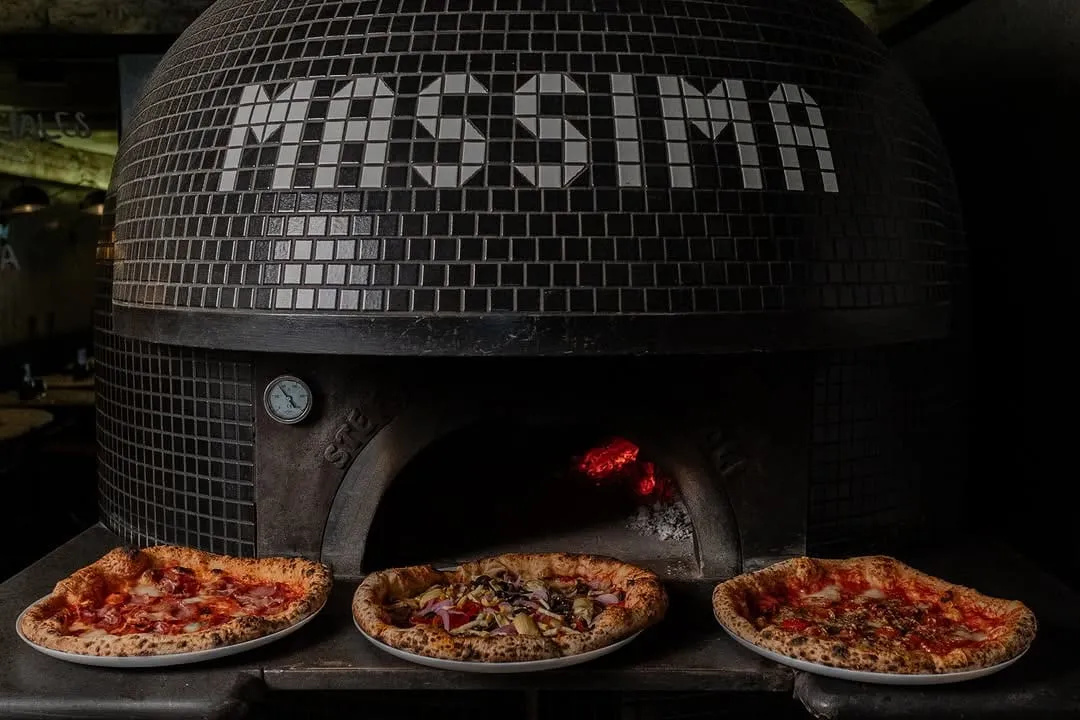
Massima was started by two brothers who, tired of what they considered 'muchas mal llamadas pizzas napolitanas' in Bogotá, built the restaurant around strict Neapolitan technique: 00 flour, Italian tomatoes, buffalo mozzarella, a slow-fermented dough, and a wood oven built by Stefano Ferrara and shipped from Naples that bakes each pizza in 90 seconds.
Minicucci, from Naples, apprenticed as a pizzaiolo from age 16, came to Japan in 1999 and spent over a decade as head pizzaiolo at Eifukucho's La Piccola Tavola before opening his own restaurant under his own first name. He built his own oven rather than buy one because, in his words, oven-builders only make fixed sizes, and made his deliberately smaller so the cornicione bakes light; he still bakes roughly 100 pizzas a day across a 39-pizza menu.
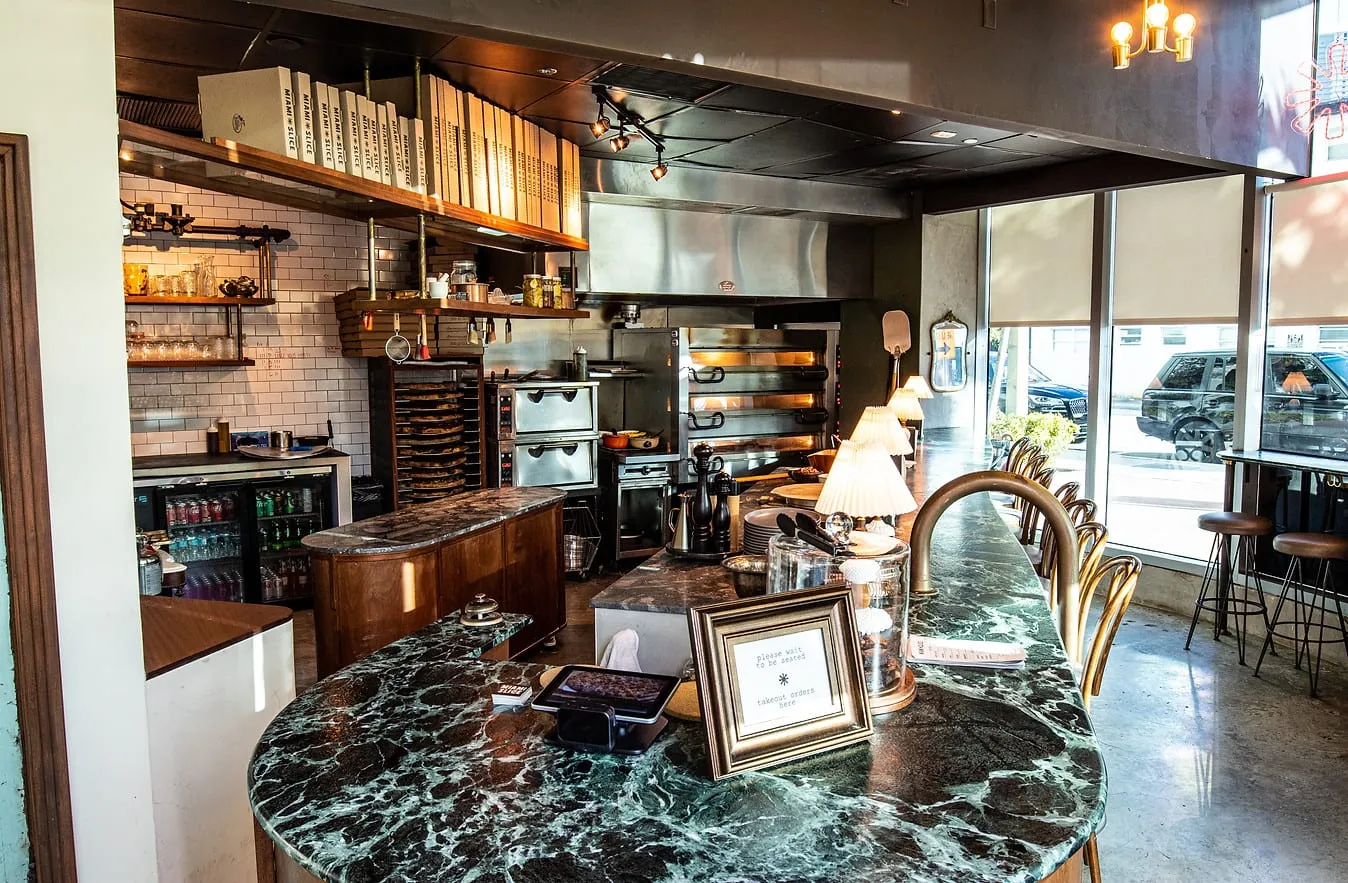
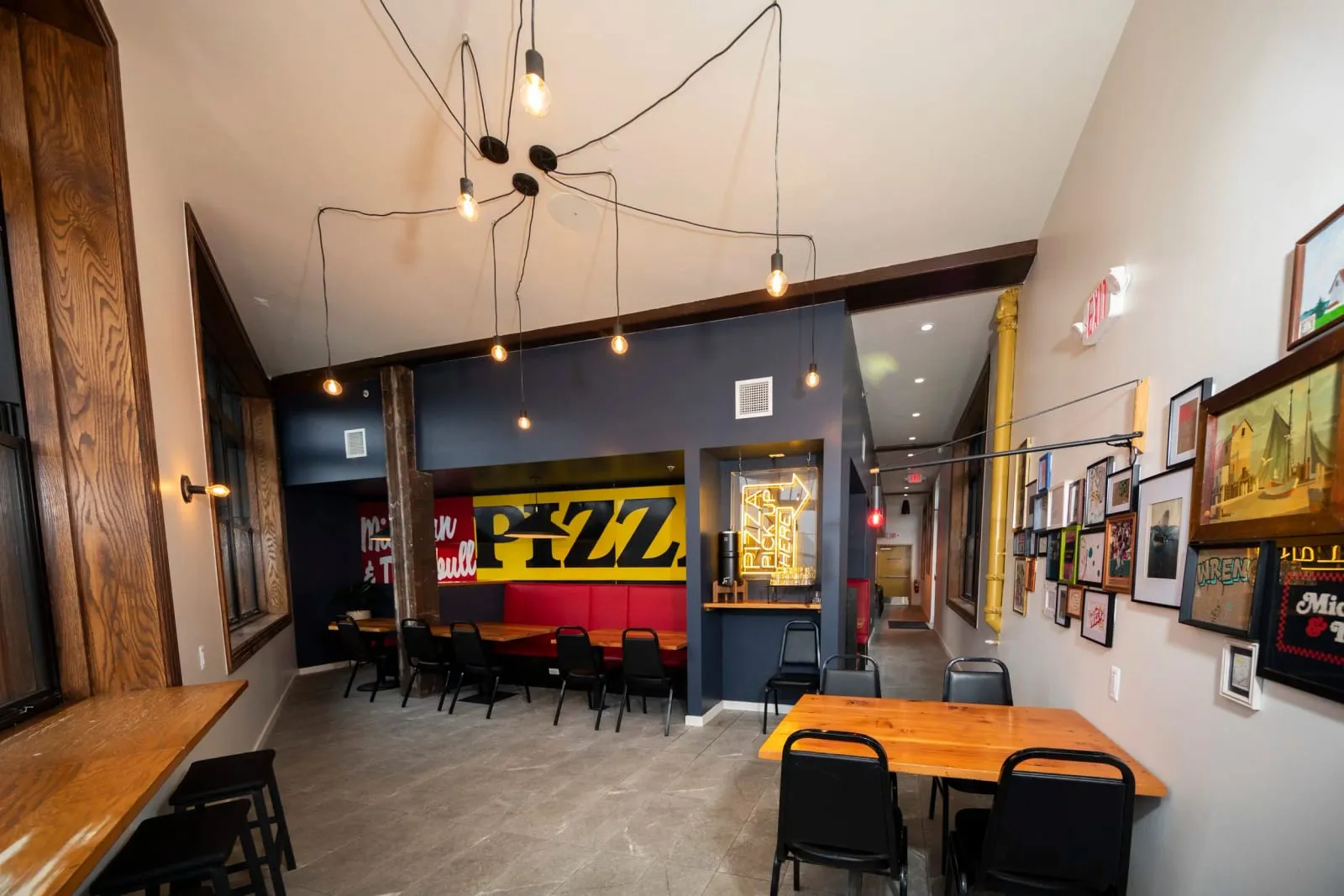
Miami Slice grew from a 2019 pop-up into a 15-seat walk-up counter in Downtown Miami built around a technique-driven dough: a lengthy pre-fermentation followed by a long cold fermentation, then a double bake at high heat for a caramelized, chewy New York-style slice.
A Detroit-native couple who first sold Detroit-style pizza away from Detroit — at a Pittsburgh food hall in 2017 — before bringing it home to open under the style's own street-corner name. The pizzeria closed its first Corktown storefront and reopened at the Dreamtroit development, still inside the city, and is named specifically for Detroit Red and Detroit White pizzas.
MIO's Naples-born pizzaiolo Antonio Arino was crowned European pizza-making champion at the European Pizza Excellence Germany competition in Hamburg on 12 March 2024 — a named professional's technique validated by a dedicated pizza competition rather than by a general restaurant ranking. The Donauzentrum branch has served 'authentic Neapolitan pizza' from a shopping-centre foodcourt location since November 2022, and was known to regulars as a specialist's kitchen before the title made it a headline.
Mistral is the Palermo pizzeria that has been making the same napo-siciliana pizza for forty years, and the third place in this set to sell sfincione from a round-pizza menu - here in both the Palermitan and the white versions, at 8 and 9 euro. The dough is recorded precisely: direct dough, tipo 00 flour, 65 per cent hydration, worked in the Neapolitan manner, with 20 per cent Sicilian durum added - a Sicilian habit he notes younger pizzaioli have been dropping. Ron Garofalo was hauling flour from Naples when he started in the early 1980s, and he sat on the technical jury of the 2018 Sanlorenzo Mercato sfincione contest, which is the trade in Palermo treating him as an authority on it.
Opened in 1934 as Tony Tolli's coke-fired (a coal byproduct) State Street Apizza and renamed Modern in 1944, the pizzeria is one of the city's 'Holy Trinity' alongside Frank Pepe's and Sally's, but its oven is the editorially interesting exception: it switched from coke to an oil-fired brick oven around 1967 when coke production stopped in New Haven, so it is not coal-fired like its two Wooster Street rivals. William "Billy" Pustari has owned Modern since 1988.
Modus carries a style its own maker, Cilento-born Paolo De Simone, roots explicitly outside Naples: a sourdough starter (lievito madre) on stone-ground, 100% whole-grain flours from small Cilento farms, aimed at a rustic, low-glycemic loaf rather than the classic Neapolitan disc. It is a genuine regional Campanian tradition distinct from Neapolitan tonda, imported to Milan wholesale.
mother was one of the first restaurants to open in Copenhagen's Meatpacking District in 2010, and its pizza is built on a self-described '100% natural and organic' sourdough culture baked in a wood-fired oven -- the same natural yeast, by its own account, that the restaurant uses to ferment two house beers with a nearby brewery. Owner David Biffani has kept the restaurant close to full since opening, and it opened a second location in the city centre in 2025, both inside the municipality boundary.
Dante's pizzaiolo Enis Baçova opened a second, distinct programme in June 2026: a Roman forno rather than a Neapolitan pizzeria, selling teglia romana (tray pizza) by weight from a display counter, alongside pala romana pizza sandwiches and Roman fried food. It is named for the Baçova family's grandmother and run with his sister Riljeta, making it a family successor concept rather than a Dante's satellite.
A family-run Neapolitan restaurant in El Born, open since 2004 under Naples-born Ciro Esposito, whose sourdough is fermented 72 hours and baked 90 seconds in a wood-fired oven at 480°C. The kitchen also runs Gragnano pasta and Campanian wine alongside the pizza, self-describing as an Italian restaurant rather than a pizzeria alone, but the pizza programme is a stated, dated and named specialism rather than an afterthought on the menu.
NAP is the import that did not come from Naples directly: it started in Barcelona in 2011 and reached Madrid afterwards, and now runs seven premises in the city. Its Margherita and Marinara carry the Associazione Verace Pizza Napoletana certification, and the oven is a named object — a Stefano Ferrara build of about 2,500 kg brought from Quarto. It is the clearest case in this set of Neapolitan orthodoxy arriving in Madrid as a format rather than as a person's own tradition.
naPizzà opened in 2022 in Etterbeek, one of the 19 communes of the Brussels-Capital Region, near the European institutions. Its pizzaiolo, Carmine Russo, is described as having trained at several of Brussels' best-known pizzerias before opening on his own account, first as a takeaway-only room before moving to the current address.
Owner Rocco Pezzullo has made pizza since he was 18, and this is his second Auckland pizzeria — which is why Auckland is no longer a single-address story in this guide. The pizzeria's own account of its pizza is 'a contemporary Napolitan pizza fired up in just 90 seconds,' alongside a traditional 'a rota e carretta' style.
The whole project is credited to a single named maker, Michele Pascarella. The dough is specific and has evolved across seven years of outside description: OO flour blended with a higher-bran flour at Chiswick, rested 24–48 hours; Molino Denti flour fermented 36 hours for the newer Soho tasting menu, with named wood ovens at each site. It clears the specialist floor comfortably on all three counts.
Napz opened in Rosebank in June 2025 under owner Enrico Adinolfi, who trained in Naples, and its own account describes a slow-fermented dough (24-48 hours) baked in a wood-fired oven reaching roughly 485°C, with San Marzano tomatoes and fior di latte on the two foundational pies. It is a single-purpose pizza operation rather than pizza on a larger menu.
nNea's own account of its dough is the clearest local-grain finding of the Amsterdam set: the house blend mixes Italian flour from Molino Denti with local Dutch Emmer (Triticum dicoccum) and Einkorn (Triticum monococcum), a deliberate bridge between southern Italy and the Netherlands rather than an imported recipe reproduced unchanged. Chef Vincenzo Onnembo, who placed among the last ten in the Pizza UNESCO competition, has run the wood-fired oven since the pizzeria opened on Bilderdijkstraat in 2019.
Ammy and Arno Steijn opened this family-run Little Mowbray pizzeria in March 2024, replacing Bruegel's Pizzeria in the same spot. Its Fellini is fennel sausage, caramelised red onion and fior di latte. The menu stays deliberately small — around a dozen pizzas — by the owners' own design.
Oobatz is a Paris-born pizza project by an American baker, Dan Pearson (previously of Ten Belles and Rigmarole), built around a six-flour, pure-levain dough rested 36 hours and a deliberately non-traditional oven. It is a genuine test case for whether Paris has worked anything of its own into the form rather than reproducing Naples: the dough and bake are locally devised, not an import of an Italian house style.
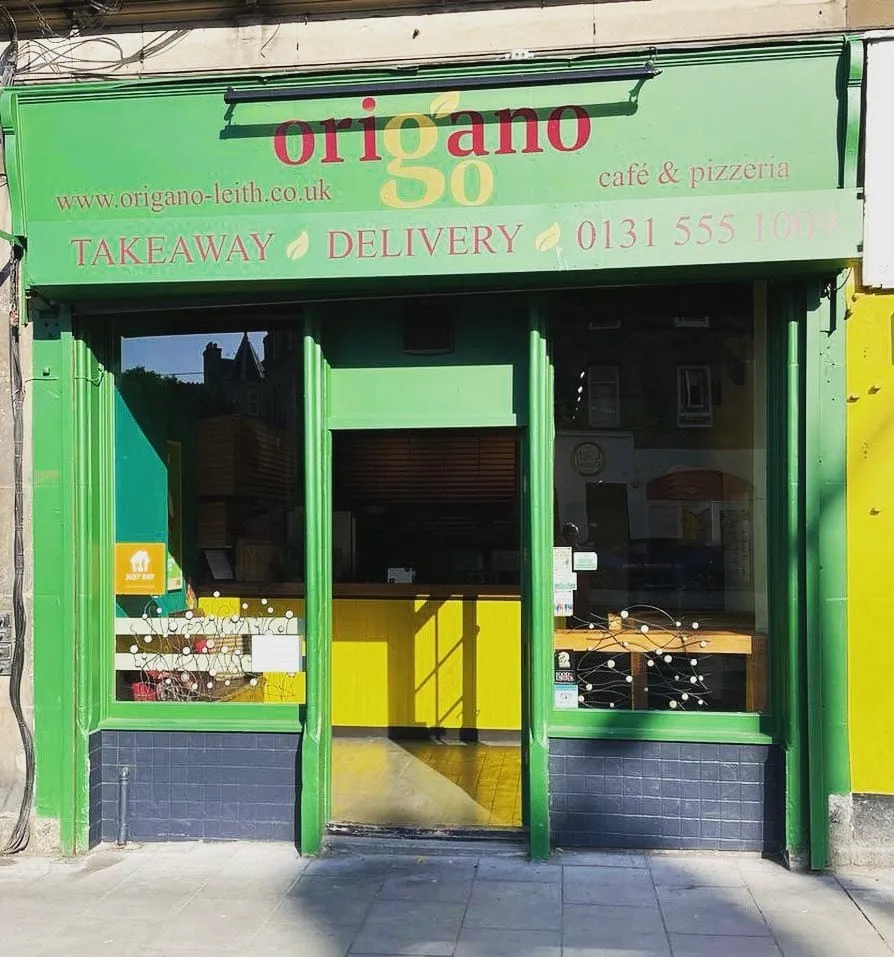
Origano is a busy, multi-room Leith Walk restaurant built around a wood-fired oven positioned in view of the dining room. The pizzas are offered in 12 or 14-inch sizes alongside pasta and other dishes; a 14-inch gluten-free option is also offered.
OTTO is the reference for Neapolitan pizza in Casablanca's Maârif district: a wood oven, a chef said to have trained in Naples, ingredients arriving from Italy, and a dough given a minimum 48-hour fermentation. It is cash-only, does not take reservations, and seats fewer than thirty, which reads as a specialist operation rather than a large restaurant.
Ôven Mozzarella's Atocha branch is a wood-fired Italian restaurant built around composed, contemporary pizzas (truffle and egg, pear) rather than the classic Neapolitan repertoire. An independent review of its first Fuencarral location describes a thin dough rested three days before baking in a wood oven visible through glass, and the chain (founded 2014 by Joaquín and Paco Capel) also promotes an organic spelt sourdough option. It is a sister business to Pizzart under the same restaurant group, Grupo Con Fuego.
Andrea Merlini runs a Turin house built specifically around pizza al padellino, the city's own thick pan pizza, alongside the related Ligurian farinata — the two forms that historically shared Turin's ovens. High-grade flours and territory ingredients back both the classic Piedmontese repertoire and Ligurian-leaning dishes like the Sardenaria padellino.
Paesano, which started in Glasgow, sources its wood-fired ovens from Naples and proofs its dough for over 24 hours at what it says is an intense 500°C bake, aiming at what it calls Verace pizza. A named Edinburgh reviewer who visited its George Street site after opening confirms two working wood-fired ovens at the back of the room, San Marzano DOP tomatoes and fresh mozzarella, and describes the sourdough crust as thin, soft and leopard-spotted -- an independent check on the business's own claims rather than a repeat of them.
The pizzeria occupies the ground floor of Palazzo Petrucci on piazza San Domenico Maggiore, separate from the group's Posillipo restaurant. The house rule is 48 to 72 hours of leavening, with close attention to the flours used. Davide Ruotolo is named at the oven, working alongside chef Lino Scarallo on several of the pizzas. The style sits closer to the Vomero model than to the ruota di carro of via dei Tribunali.
Graziano is the Palermo bakery that three separate guides reach for first on sfincione, and the one with a named succession behind the counter. Francesco Graziano took the family firm over in 1999 when his father Salvatore died, and has said on the record that he deliberately keeps the recipes as they were conceived in the 1960s, sourcing aged caciocavallo palermitano, tuma and primosale rather than innovating the pizza; the bakery bakes continuously and reaches 600 kilos on a Monday. The sfincione is the piece the house makes for the Immacolata on 8 December, which in Palermo is the day the city eats it.
This is the Palermo forno with the most specific dough evidence of the seven bakeries surveyed for the city's sfincione. Ottavio Guccione came to bread through his wife's family trade in Trapani, opened in Palermo, and rebuilt the recipes around stone-ground traditional Sicilian flours and ancient Sicilian grains with lievito madre, taking out lard for olive oil and white sugar for raw cane; the pizza is leavened twenty-four hours. Its sfincione is made in both the tall classic form and a lower one on pizza dough.
Parking Pizza is a Barcelona-founded pizzeria group, opened in 2015 in a former building garage on Carrer de Londres by Berta Bernat and the late Marcos Armenteras — a rare case in this cohort of an Italian-format pizza business actually started in the city rather than imported as a chain from elsewhere. The dough is a long-fermented, Neapolitan-style base baked in a wood-fired oven, dressed with Mediterranean and imported Italian ingredients (Sicilian cherry tomatoes, Mallorcan spicy sobrasada). Bernat, interviewed on the business's tenth anniversary, states plainly that Barcelona had no good pizza when they opened it and credits the shop with helping start the city's current pizza boom.
Paul Allam, co-founder of Bourke Street Bakery, opened this New York-slice shop using a 22-year-old sourdough starter as the base of a dough fermented for 24 hours at 62 per cent hydration, divided into balls and proved individually before being hand-stretched into 18-inch rounds and baked on an electric Moretti Forni deck.
A Vasto-quarter pizzeria near Napoli Centrale, founded in 1960 by Vincenzo Pellone and run since the mid-1980s by his nephews, the De Luca brothers, recognised by Federico II University as 'Maestri d'Arte in Pizzeria'. The house's signature is its pizza fritta, extra-large and cooked alongside the round pizzas, which brother Domenico De Luca calls 'la vera napoletana' in the trade press.
Peppe Cutraro won the world championship for contemporary Neapolitan pizza in Naples in 2019 and 2020 before opening his own room on Place Saint-Blaise, just before the March 2020 lockdown, per a named Paris critic who visited that July. A separate food-press piece on the dough describes a three-flour blend with a hydrated sourdough starter left to rise overnight, cooked well below standard Neapolitan oven temperature for extra lightness.
Peppina holds AVPN membership number 586 and is the founding location of the clearest Neapolitan programme in Bangkok, with ovens built in Naples and shipped to Thailand. Its own pizzaiolo Thanwa Seesaed -- a Thai who grew up and trained in Naples -- gives the kitchen an unusual, verifiable Naples-to-Bangkok lineage running the other direction from most of the city's Italian imports.
Pequod's is built entirely around one technique, a ring of mozzarella laid at the rim of the pan so it caramelizes against the metal as the pie bakes, credited by the business itself to the late Burt Katz. The Clybourn Ave address is the in-city location; the technique itself and the original restaurant both started in suburban Morton Grove, which is not this record.
Pie Squared is Beijing's Detroit-style specialist, founded in 2013 by Michigan native Asher Gillespie, who built the concept by merging his hometown's pan-pizza tradition with a Beijing market he had watched shift toward eating pizza and dairy. It applies the technique-level details that define the style: cheese laid before sauce so the crust does not go soggy, and the pan's edge caramelising the cheese into a crunchy border.
A Woodbridge pizzeria built around a rotating, invention-led menu with a genuine vegan programme (cashew cheese and a dedicated dairy-free line), run for four and a half years as a Sunday-night pop-up in a neighboring bar's kitchen before it became its own storefront in 2016.
Owner Enrico Di Giambattista runs a Woodstock pizzeria that makes two separate doughs — Napoletana and Romana — by the business's own account using imported San Marzano tomatoes and Fior di Latte mozzarella.
Pizza Pagana opened on 23 July 2026 at the Mercado de San Leopoldo stall previously occupied by D'Agustto, run by chefs Genaro Celia and Agustín Mikielievich with pizzaiolo Rubén Andressen (previously of 115 Pizza in Astigarraga). Their own account describes a deliberately hybrid dough — a biga-led, lower-hydration, double-baked process they say is 'neither Neapolitan nor Roman' — developed over more than a hundred test bakes, using Mammafiore and Molino Caputo flour, which is a specific, checkable dough story rather than a generic pizza-on-the-menu claim.
Pizza Pilgrims began as brothers Thom and James Elliot's street-food van on Berwick Street market after a research trip to Naples, and put down permanent roots at Dean Street in August 2013 — confirmed on their own site today ('Dean St will always hold a special place in our hearts'). Within weeks of opening it was working a wood oven the brothers built themselves, on a 500°C, 50-second bake; the company's own site now describes a double-fermented dough baked at 500°C. It is one of the originators of the street-food-to-pizzeria wave behind London's current pizza boom.
Pizza Studio Tamaki opened its Manila outpost on 11 October 2025 at Ayala Triangle Gardens, the brand's international expansion beyond Tokyo, Hokkaido, Okinawa, Singapore and Bangkok. Chef Tsubasa Tamaki and Chef Hiromi Nakada bring the house's proprietary flour blend and custom oven to the Philippines, giving Makati a second, entirely distinct pizza tradition alongside a mano's and Crosta's Neapolitan and multi-style programmes.
PST Bangkok, opened January 2025, is the first Thailand branch of Tokyo's Pizza Studio Tamaki, run by chef Tsubasa Tamaki, who by his own account never trained in Italy. The dough is fermented 30 hours and the oven was purpose-built with Japanese materials by the Tokyo team to replicate the original as closely as possible, making this a case of a deliberately engineered, non-traditional dough programme rather than an inherited regional style, which is why it is filed as pizza contemporanea rather than neapolitan.
Tamaki is a direct line of transmission through Tokyo's Neapolitan scene: he managed the Azabu-juban and Mishuku branches of Savoy — the brand Susumu Kakinuma of Seirinkan founded — then helped launch Pizza Strada in Azabu-juban as master pizzaiolo, where he devised the "Pizza Tamaki" that still carries his name, before opening this restaurant under his own name in Higashi-Azabu on 20 February 2017.
Explicitly described in print as making 'pizza contemporanea', this Santa Croce address near Florence's oldest market has been run since 2021 by Antonio Cappadocia, a pizzaiolo from San Severo whose prior collaborations include Stefano Callegari and Romualdo Rizzuti. His direct-method, well-hydrated dough is baked in a visible wood oven, with a stuffed-cornicione signature dish that changes with the season.
Pizzardi Artigianale opened in Bogotá in September 2023 after a decade-long project by Andrea Bornacelli and Alejandro Sardi, who taught themselves to make pizza from a chef in Barranquilla and then imported their ovens, refrigeration and ingredients from Italy. It holds an Associazione Verace Pizza Napoletana certification and runs a 72-hour dough fermentation.
Enzo Coccia is credited with being the first to marry research into raw materials with long leavening, and with writing the international disciplinare for vera pizza napoletana during his years in the Associazione Verace Pizza Napoletana. The room began as a single space with the oven and has since doubled into a second, differently formatted site further up the same street. Coccia's margherita is offered in seven versions, on request only.
The reference point for Roman pizza in teglia and the place the city's al taglio generation trained in or against. The dough is described in print as high hydration with fermentations up to 72 hours on seasonal short-chain ingredients, and the provenance claim is unusually specific for this trade: through Brigata Agricola, a collective of about twenty small producers Bonci created, the business contributes to cultivating 60 hectares of cereals milled and used in the Roman area. It reopened on 13 September 2025 after an expansion to about 160 square metres with a counter sized for eleven teglie.
Pizzart's Villa Fuencarral location is a dedicated wood-fired pizzeria — its own site describes a beech-wood oven and sourdough-leavened dough made with select flours, and Tapas Magazine's featured items were wood-fired Neapolitan-style pizzas. It is one of four Madrid locations belonging to the same business (Pizzart), part of restaurateur brothers Joaquín and Paco Capel's Grupo Con Fuego alongside sibling chain Ôven Mozzarella.
The best-specified dough in the Naples set: a blend of three flours - the source of the pizzeria's name - fermented 24 hours and then leavened a further twelve, 36 hours in total, at a hydration above 70%, the limit of workability. Ciro Cascella teaches the dough as well as making it, running courses that have been well attended for years. The San Pasquale room is the sede madre; the Rome and Milan shops are held to its standard.
Named for an Italian immigrant pizza seller who, per a first-person La Nación interview with his adopted successor's grandson Ramiro Pintos, sold pizza from a bicycle outside Buenos Aires football stadiums before opening a stall in 1936 and moving to the current Avenida Córdoba address in 1938. The pizzeria is now run by the third generation of the family that inherited it, and its pizza is still baked in a wood-fired oven, per the same article's photo caption.
Founded in 2020 by Naples-born Susanna 'Susy' Di Cosimo after her tour-operator business was interrupted by the pandemic. The dough matures cold for 48 to 96 hours at controlled temperature and bakes in a wood-fired oven; the flour is imported Molino Caputo, the tomatoes San Marzano and the mozzarella di bufala.
Opened in 2005 next to the Stolls' James Beard-winning Delfina, this was among the first artisanal pizzerias in the Bay Area, predating Flour + Water and Tony's Pizza Napoletana by its own owners' account. Craig Stoll, who took about a year to develop the dough after trips to Naples, describes the result as deliberately "not strictly Neapolitan style but a combination of Naples- and New York-style pizzas," including a New York-rooted sausage pie built from his own childhood. In 2023 the Stolls moved off imported Italian 00 flour to a custom blend, "farivita," milled at Central Milling in Petaluma — a stated shift toward a California-sourced flour program.
Güerrín has occupied the same corner of Avenida Corrientes since 1932 and is named by the city of Buenos Aires's own tourism site as a founding monument of pizza al molde, with dough still worked by hand in a large trough despite the volume served. It carries a Ciudad de Buenos Aires Interés Cultural declaration (2011) and is one of the standard references for fugazzeta in Buenos Aires.
MaMeMi is run by two brothers and a cousin who grew up together near Rome and reunited in Copenhagen in 2014 to open it. Pizzaiolo Francesco Barletta makes what the restaurant calls its own interpretation of pizza tonda romana, thin and crisp, from a stated secret blend of five kinds of organic flour sourced from small Italian producers rather than a single named mill. The restaurant places its pizza second to its extensive natural and biodynamic Italian wine list, which the owners built by visiting the producers themselves.
A family-run house in Barriera di Milano active since the 1970s, Pizzeria Mandis is named locally as one of the historic wood-fired addresses for both padellino and farinata, Turin's paired local specialities.
A small, self-described 'vera pizzeria napoletana' in Meidling, Pummarò ferments its dough 48 hours before use and tops it with named specialty ingredients (fior di latte, Prosciutto di Parma, 'nduja calabrese), served alongside espresso the business roasts itself in Naples. It has since grown from a single eight-seat room to a second Vienna location.
Almost 400 square metres in the seventeenth-century Palazzo Ischitella on the Riviera di Chiaia, restored under the supervision of the heritage authority, with storage, cellar, a frying area, two wood-fired ovens, washing and a warehouse laid out as separate spaces. The team at the ovens is directed by Salvatore Salvo. The house states its own dough: more than 24 hours of leavening at room temperature on a mix of two flours.
William Joo and his wife Jennifer So opened this Pico-Robertson storefront in 2022 practising a Tokyo-style pizza: a Neapolitan foundation reworked through the Nakameguro school Susumu Kakinuma founded at Seirinkan in 2007, plus a signature "salt-punch" technique of sprinkling salt into the oven as the pie bakes. Joo describes constantly checking his dough's pH and adjusting flour and hydration by hand.
The building at Ohio and Wabash is where Chicago deep dish is dated to, in December 1943, and the restaurant still operates on the site as a historic landmark. Who actually created the recipe is genuinely contested rather than settled, and that dispute is itself part of what a record about this address should carry rather than smooth over.
Purger has run at the same Trešnjevka address, with the same Swedish wood-fired oven and the same interior, since 1979, and Croatian food writers call it Zagreb's oldest still-operating pizzeria and the last surviving example of the city's pre-1990s pizzerias. It introduced the country's first bacon-and-sour-cream 'Slavonian pizza' when that combination was still unheard of in the former Yugoslavia, and the same baker, Darko Zakora, has worked its oven for more than thirty years alongside the founding family's son Toni, who now shapes the dough. It takes cash only and offers no delivery, by deliberate choice rather than neglect.
Pizzetta is a June 2025 Poblacion opening built explicitly as a lower-priced, high-hydration Neapolitan-style counter -- Wellington wheat flour, hand-stretched rather than rolled dough -- under two named head chefs with Metro Manila pizza-kitchen backgrounds (Alvin Pobre previously made pizza at Amare La Cucina and La Dolce Vita). It is the newest of the four Makati records and the clearest case of Neapolitan technique deliberately repriced for a neighbourhood audience rather than a fine-dining one.
Two bankers who quit in Rome, one of whom ran a pizza food truck in France before landing in Lisbon, put a wood-fired oven from Naples into the ground floor of the other's hostel. That is an unlikely route to a serious Neapolitan pizzeria, and the result is treated as one of the city's best by people who ate it rather than announced it. Lisbon has no shortage of Italians cooking Italian food; what distinguishes this one is the narrowness of the ambition — a short Neapolitan menu, ingredients carried from Italy, and a room rebuilt around the oven rather than the other way round.
Childhood friends Jack Gasparre and Eric de Siena took over an existing Sea Point restaurant in 1998 and built it around their mothers' southern Italian recipes (their families from Bari and Naples); it has since expanded to Hout Bay and Rondebosch, with Sea Point remaining, by outside description, 'the mothership.' The business's own site tells the founders' story directly, though it does not describe the pizza's dough or oven in technical terms.
Trading since 2008 (originally on Kollárovo námestie, relocated to Námestie 1. mája in 2018), Primo Amore's own site describes a roughly 70-pizza menu made from its own flour blend with a long fermentation and an undisclosed added ingredient it says lowers the dough's calorie count. No named pizzaiolo or oven type is recorded anywhere found, so the record rests on the dough claim.
Frank and Dominic Morano opened Prince Street Pizza on 4 January 2012, in the Nolita storefront that had housed the original Ray's Pizza since 1959, upgrading to a 750°F deck oven that fits six pies. The signature Spicy Spring is a Sicilian-style square slice built on the Morano family's own sauce recipe, with a thick, crisp, fluffy crust, fra diavolo sauce and cup-and-char pepperoni.
QT Pizza Bar names its own programme 'Pizza Contemporânea' on its own site, built around Neapolitan-style dough with roughly 48 hours of natural fermentation, individual-sized pizzas and an autoral topping list. Matheus Ramos opened it in 2019 with Bruna Pires, and works the crust high and aerated rather than to a classic Neapolitan profile.
Chef-owners Aaron Lindell and Hannah Ziskin, per the business's own site, opened this Echo Park storefront in January 2022 as their first restaurant, growing out of a pandemic-era pop-up. The house style is Detroit pizza in its own defining terms — a pan richly oiled and cheesed to the edge for a crisp, cheesy bottom crust — dressed with Los Angeles-specific toppings (Santa Barbara pistachio pesto, Fresno chili, "yum yum" peppers) rather than a straight regional copy. The pastry programme has been a James Beard semifinalist.
Queen Margherita of Savoy was the fifth Sydney pizzeria to be AVPN-accredited (member #539, since 2015), on a wood-burning Stefano Ferrara oven imported from Naples. In 2023 owner-pizzaiolo Lee Carroll added a Roman-style, teglia-cut lunch service on a separate deck oven, switching the whole kitchen's discipline through the day.
Raffaella began as a delivery-only dark kitchen in late 2022, founded by Javier Lizama -- a MasterChef Chile 2019 Top 10 contestant who had worked three years for an Italian-import distributor -- and his university friend Javier Gómez, before growing into a full Las Condes restaurant. The dough ferments 24 hours, the oven runs above 400°C, and the flour is imported Italian Caputo.
Dan Richer opened Razza in a former theater on Grove Street in 2012 and built its reputation on long-fermentation dough and hyper-local, seasonal New Jersey ingredients rather than a claim to any single national tradition. The wood-fired ovens stand behind a bread counter, and the condiments, butter and accompaniments are made in house.
Bruno Cardinale, from a Palermo family that ran several pizzerias, opened Retrogusto84 in 2017 as his first Lisbon pizzeria, and NiT quotes him describing it as carrying more Sicilian influence than his later restaurant: a thinner, crunchier dough, distinct from the taller Neapolitan-leaning dough at his newer Retrogusto Experience. The business's own site confirms the dough is a three-flour blend aged a minimum of 48 hours.
Ribalta is run by Neapolitan founders Rosario Procino (previously of Kestè) and chef Pasquale Cozzolino, and in 2014 it was the only pizzeria in the city certified by the AVPN (Associazione Verace Pizza Napoletana). It bakes in a wood-fired oven. A May 2025 fire closed the restaurant temporarily; its own site now shows normal operating hours.
RistoPizza by Napoli sta ca is the Azabudai Hills flagship of Giuseppe "Peppe" Errichiello's Napoli Sta Ca group. The company's own site names Errichiello as representative and describes the restaurant as a deliberate ristorante-pizzeria hybrid built around seasonal Japanese and imported ingredients; the specific dough and oven at this location were not independently confirmed in an opened source, though the sister restaurant it was built from documents a Japanese-wheat/Caputo flour blend developed for this market.
Roberta's, running in Brooklyn since 2008, opened its first Singapore restaurant at Marina Bay Sands in 2022. Chef and co-owner Carlo Mirarchi describes reworking the hydration level and flour ratio specifically to handle Singapore's humidity, on a dough close to classic Neapolitan style: 65-72% hydration, 72-hour fermentation on a decade-old sourdough starter, baked about two minutes at 425°C.
A Hongdae Neapolitan pizzeria open since 2020, using Caputo flour and affiliated with the Associazione Pizzaiuoli Napoletani, baked in an oven its own reviewers describe as built from Pompeii volcanic stone — the largest of its kind reported in Korea. No source we opened named the pizzaiolo, so maker is left blank rather than filled from an unopened aggregator's claim of a first name.
Rudy's is a Manchester-founded chain (Ancoats, 2015) that brought its Neapolitan programme to London for the first time with the Soho site in 2021. The company's own account is specific and checkable rather than vague marketing copy: dough is made fresh daily at each pizzeria with 00 Caputo flour, rested overnight then fermented a second time, and every oven is handmade by Stefano Ferrara in Naples. It is included as a momentum case — like-for-like sales up 23% in the 2023 Christmas trading period — rather than for a named local pizzaiolo, which this run could not find for the Soho site specifically.
The clearest evidenced case of the Roman teglia lineage passing to a second generation: Ruver spent about eighteen months on Pizzarium's counter and two years in its kitchen before opening his own 24 square metre shop near Circo Massimo in 2022. The dough is described in specific terms — 900 grams on a 60x40 teglia, risen 24 to 36 hours, and baked entirely in the oven, which the piece records as a deliberate break from his teacher's method. Sourcing is named rather than gestured at, including a tomato sauce being built with Le Meraviglie della Terra of Velletri and a salumi line with Macelleria Avagliano of Sabaudia.
Sally's Apizza was founded in 1938 by Salvatore "Sally" Consiglio, nephew of Frank Pepe, a block away on Wooster Street, and it still bakes in a coal-fired oven — photographed and described as such by the New Haven Register in coverage of its 2017 sale. The Consiglio family sold the business to Lineage Hospitality that year but Bobby and Rick Consiglio, Sally's grandsons, stayed on as managers rather than owners.
A Naples-born pizzaiolo who supervised Rossopomodoro's pizzerias in Italy and abroad before putting his own name on a Milan address in 2018, Mugnano deliberately abandoned a wood oven for an electric Neapolis unit for its lower environmental impact while keeping a sourdough starter reported at over fifty years old and a blend of three Caputo flours.
Sardinian-born Andrea Ena has run Sapori Italiani for over twenty years. The dough is high-hydration with a minimum 48-hour fermentation, baked in a wood-fired oven, and the place doubles as a full Italian restaurant and a small Italian grocery on site. Framed by itself as a restaurant with a pizzeria rather than a pizzeria alone, so the pizza is one part, evidenced, of a larger Italian programme.
Opened in Gràcia in 2018 as Garden Pizza by chefs Rafa Panatieri and Jorge Sastre, both formerly of Roca Moo, the project rebuilds the Italian pizza format around Catalan and Spanish ingredients — mortadella with Idiazábal cheese, roast pumpkin with Iberian pork belly — while keeping a wood-fired oven and a 72-hour, stone-milled dough. The founders cure their own cold cuts and cheeses on-site rather than buying them in.
SestoGusto is built entirely around Massimiliano Prete's live sourdough (lievito madre), worked across several leavened formats — round pizza, alla pala, an eighth-cut 'Pizz'otto' — unified by an engineered lightness that is Prete's signature, dressed with gourmet combinations like whipped salt cod and Piedmont IGP hazelnut.
Settebello has run a Neapolitan pizza counter in New Lynn since 2012, with a wood-fired oven imported from Italy and dough proofed more than 24 hours on the business's own account. Head pizzaiolo Alberto is a member of the Association of Neapolitan Pizza Chefs and took second place at New Zealand's first Caputo Cup pizza competition in 2025.
Rome's most decorated contemporary pizzeria, and the record is unusually checkable: a named pizzaiolo, suppliers named in print (Petra/Molino Quaglia flour, Solania tomatoes, Latteria Sorrentina fior di latte), a stated hydration of 68-70% baked at about 420C, and a separate padellino dough at 75% that is baked in a static oven, blast-chilled and regenerated. It closed for five months of works and reopened on 30 October 2025 under the shortened name Seu Pizza, with three ovens and a menu that now runs pala and padellino alongside the tonda. Its own second Rome site, TAC, is the one the business describes as its Roman-style pizza, which is the clearest evidence of where this pizzeria sits in the city's three traditions.
Shop225 works a 72-hour proofed Neapolitan-style dough baked in a custom Melbourne-made Colosimo wood-fired oven. It is the first pizzeria in Australia accredited by Coeliac Australia.
Southwest Detroit's naturally leavened entry in the Detroit-square field: a mother sourdough starter kept alive since a shift the owner dates to about five years before a 2022 profile, no commercial yeast, and a house rule that only the owner and his manager are allowed to touch the dough.
Soho Pizza brought a by-the-slice New York format to a Bangkok street-food strip, with its dough program designed and its team trained by Anthony Falco, a nine-year veteran of Brooklyn's Roberta's. The fermentation is 48 hours and natural, and the by-the-slice format separates it from Bangkok's earlier New York pizza entrants.
Solo Pizzeria Napoletana in Gauthier is a Neapolitan-format pizzeria whose menu credits a named, independently verifiable chef — Myriam Ettahri, a well-known Moroccan chef (Cordon Bleu-trained, past kitchens under Pierre Gagnaire and Heston Blumenthal) — for a specific signature pizza built on San Marzano tomatoes and fior di latte.
Chef Son Pham, with business partner Shakib Pasha, opened one of Hong Kong's few genuine by-the-slice, walk-up pizzerias, using a Naples biga method rather than a sourdough base: a salt-free yeast starter combined with fresh yeast for extra 'funkiness.' The Hong Kong-specific flavour is named directly rather than implied — the 'Kowloon Kid' slice uses Chinese preserved lap cheong sausage — which is the kind of locally worked-in ingredient this research run was specifically looking for.
Sophia Loren Restaurant's Milan branch, opened 6 June 2022, carries the pizza programme of Francesco Martucci of I Masanielli in Caserta: a highly hydrated dough with complex fermentation and haute-cuisine toppings. Martucci trained three named pizzaioli to run the ovens day to day rather than working the pass himself. The restaurant explicitly describes itself as a restaurant with a pizza offering rather than a pizzeria.
The clearest survivor of a 2012 Seoul list, and the strongest evidenced pizzeria in the city: Lee Young-woo, who trained in Naples and became the first Korean to win the Naples World Pizza Championship's Classico category, has run Spacca Napoli in Hapjeong/Mapo since 2011.
Founded in Materdei in 1901, first as a cantina and then in turn trattoria, friggitoria and pizzeria, and the location used for the filming of L'oro di Napoli. Antonio Starita, founder and honorary president of the Associazione delle Pizzerie Centenarie, is still in the room; the fourth generation, Peppe and Mena, now run it. Frying is the house signature - the montanara is fried first and finished in the wood oven, and the angioletti are Antonio Starita's own creation.
Starita Bangkok is the first branch outside Italy, and the first in Asia, of Pizzeria Starita, a 124-year-old Naples house now led by Don Antonio Starita; the Bangkok branch requires its pizzaioli to be Naples-trained and mixes dough water to match Naples' own mineral profile. It also carries Starita's own historic invention, the fried-then-oven-finished Montanara, onto a Bangkok menu otherwise built around imported Italian ingredients.
Described locally as one of the first places to bring Neapolitan-style pizza to Casablanca, before it became fashionable, Street Pizzeria Napoletana runs a wood oven that does the work on a soft, lightly smoky dough, at a lower price point than the more premium Maârif and Gauthier addresses.
Stretch Pizza was opened in 2023 by chef Wylie Dufresne (wd~50) and Gadi Peleg (Breads Bakery) as a chef-driven take on the classic New York slice. The original Flatiron location closed on 2 July 2026 after a three-year run; the brand now operates solely from the Williamsburg storefront recorded here.
Sugo sells pizza al taglio -- baked on large rectangular trays and cut to order -- in De Pijp, made by hand daily with flour the business says is imported from Italy specifically for its protein content, to keep the base light rather than dense. Joep Noordhoek, described as a supporter of the shop from its earliest days, took over the business in April 2023 and reopened it as a neighbourhood spot in the area he grew up in.
Not a Detroit-style pan pizza but the Eastern Market thin-crust counterpoint to it — named for owner Dave Mancini's father's hometown in Italy, hand-stretched, and still made with Mancini's own hands in the dough by a 2024 account of the kitchen after a post-fire renovation.
SURT is named for its own sourdough starter, 'Sure Dame', which pizzaiolo Giuseppe Oliva — a fourth-generation baker whose family has baked bread since 1941 and whose grandfather ran a watermill bakery for the Italian army — develops for wild yeast activity and deliberate sourness rather than speed. The base is built from five different historic grain varieties, and toppings come from small farms in Denmark and elsewhere in Europe rather than a fixed import list. That combination — an engineered sourdough culture, heritage grains, and a seasonal, farm-sourced topping list, built by a formally trained pizzaiolo who set aside the standard Neapolitan recipe — is the clearest case in this run of the 'pizza contemporanea' definition: dough science and gourmet, seasonal toppings breaking from received rules rather than reproducing them.
Talho Capixaba is a long-running Rio charcuterie-and-bakery counter that added pizza to its two Zona Sul locations; its pizza programme describes itself, in the words of the person who runs it, as the first pizza in Rio certified by the Associazione Verace Pizza Napoletana. Ricardo Rocha calls the diploma 'muito difícil' and details the standardisation of flour, sauce, oil and cheese the certification demanded.
Tavolina in Mar Mikhael is built by chef Dany Khairallah with entrepreneur Dany Aprat, and is named in a local Arabic-language pizza round-up specifically for its wood-fired pizza. A separate English-language local review describes the crust as thin-bordered with a spongy, airy heart and singles out the tomato sauce as distinctively made.
The Dolphin Hotel relaunched its pizza programme in 2023 around a new Neapolitan Mesiano wood-fired oven and a named head pizzaiolo, Sasa Smiljanic, previously of Bella Brutta. The dough is made with three wheat flours imported from Italy and pre-fermented to use less yeast.
Chef Ivan Janic renovated a former Grey Lynn dairy and imported a custom pizza oven from Naples to make Roman-style pizza — 15-inch sourdough bases, thinner and wider than a Neapolitan pie, topped with a housemade tomato base he spent two years perfecting. It is a single-maker, single-site operation rather than a chain outpost, and still appears in current (2026) Auckland pizza coverage.
Executive chef Daniele Cason deliberately rejects the Neapolitan style in favour of Roman "alla pala" — organic Italian flour from Mulino Marino, 1g of yeast per kilo, 80% hydration, 48-hour fermentation — baked to order rather than reheated, and served from an eight-seat marble counter inside the Mandarin Oriental.
Canadian owner David Lauckner learned pizza-making from artisans in Sorrento before opening a small pizzeria inside Itaewon Market, and he says plainly that his pizza is not strictly Italian: he wanted to combine what Americans and Canadians like with what he learned in Italy. The dough and sauce are made in-house daily to a Neapolitan base recipe, baked in an imported brick oven. It is a deliberate hybrid rather than a faithful reproduction, and one of the few names from Seoul's early-2010s wave confirmed both to survive and to be still run by its founder.
The Pizza Show is a DIY-build pizzeria in Parkview Green mall, founded by two Beijing restaurant veterans — Nemanja of You-Li and Fabio, formerly head chef at the tapas restaurant Sorí — whose dough is made in-house, fermented under controlled temperature and humidity, hand-stretched, and baked in a wood oven at roughly 450°C for under two minutes. It is a useful counterweight to Beijing's Italian-lineage pizzerias: a locally founded, customisable format, three base sauces and up to 35 toppings, built by chefs with no claimed Italian training.
Tony Gemignani, a 13-time world pizza champion, built a single North Beach room around seven separate ovens, each dedicated to a different national tradition rather than one house style. Its own account and local press both name the Neapolitan margherita and a coal-fired "New Yorker" as the two most-ordered pies, and Gemignani says he was the first in San Francisco to serve Detroit-style pizza. The record is filed as neapolitan because that is the name over the door and the top-selling pizza, but the venue is genuinely multi-discipline and an editor should weigh whether that is the right call.
Totò e Peppino is the oldest candidate in this set by thirteen years: Salvatore Romano, a Neapolitan pizzaiolo from Scampia, opened on calle Fernando VI in 2004, when by his own account there were few pizzerias in Madrid and fewer good ones. In 2024 his nephew Luigi Foria won the ruota di carro category at the Campionato Mondiale Pizza DOC, and Romano has since received the Arcimboldo d'Oro for his career.
A team in their twenties revives the informality of Neapolitan street pizza in Turin under a name written to evoke Vesuvius. The press is explicit that the dough itself is traditional — made with a flour blend by pizzaiolo Eduardo Ore for Molino Colombo — with the house's invention confined entirely to playful topping combinations.
Anthony Mangieri makes every ball of dough by hand and shapes, tops and bakes every pizza himself in a wood-fired oven that fires only three pies at a time. He works in the Neapolitan style, on a naturally leavened dough he has been tinkering with for over three decades.
Three dough versions are made with imported Caputo flour and were developed by consultant pizzaiolo Davide Civitiello, a Naples native, baked in an electric Neapolitan Izzo oven at 450°C with a copper finish in up to 90 seconds. The pizzeria specialises in individual-size, high-crust Neapolitan rounds rather than the slice format.
Valdo Gatti's own site describes its process in detail: 100% Italian organic semi-wholewheat flour, a house lievito madre, hand-harvested salt and cold-pressed organic olive oil, a roughly two-day rise, and pizzaiolos hand-stretching a cornicione. NiT's year-end 2018 round-up of that year's best new restaurants independently confirms a wood-fired oven with a rotating stone. No individual maker is named in any source found.
Founded in 2000 by Roberto Loscalzo and Célia Alves, Veridiana built its identity around Italian Caputo flour and a stated 48-to-72-hour fermentation, served in a historic 1903 mansion in Higienópolis alongside two later São Paulo units.
Via Napoli has run wood-fired Neapolitan pizza from Lane Cove for over 15 years under third-generation Naples-born pizzaiolo Luigi Esposito, on an 8-hour-fermented dough with imported San Marzano tomatoes.
Via Toledo is a Neapolitan pizzeria in Vienna, and its dough out of the wood oven is the high point of a meal here. One of its pizzas has won a 'Weltmeisterpizza' (world champion pizza) title at a pizza competition. The restaurant's own site could not be verified in this pass — see notes.
Vincenzo Capuano's own description of his method matches the charter's definition of pizza contemporanea closely: precision in place of his father's and grandfather's instinct, a proprietary flour blend (Nuvola Super), a 24-hour preferment, and an almost soupy 80% hydration dough that diners cut with scissors to see the air pockets. The Singapore branch, which opened in May 2025, is his first in Asia.
The other of the two families most often credited with originating Chicago tavern-style pizza. The Barraco family has run it as a tavern since the 1920s and, by the business's own account, Nick Barraco began making the thin, square-cut pizza in 1946 with a dough recipe the family still will not disclose.
Yard Sale started in 2014 when co-founder Nick Buckland began making pizza in his own garden in Hackney, and opened its first shop — in a former kebab shop on Lower Clapton Road — that May, confirmed on the company's own site today. What makes it worth a record on its own terms is a genuine, named departure from Neapolitan orthodoxy: co-founder Johnnie Tate has said the trio deliberately uses gas ovens over wood-fired ones for a more consistent cook suited to delivery, and 'specially engineered' dough with stronger flour to survive the trip. That is a London-specific answer to a London-specific problem (delivery), not an imported technique, and it is the clearest evidence found in this run that the city's pizza culture is doing something of its own rather than only reproducing Naples.
Kakinuma opened as Savoy in Nakameguro in 1995 after independently teaching himself Neapolitan pizza from travels in Italy, and renamed it Seirinkan in a 2007 renovation; the menu has stayed at exactly two pizzas, Margherita and Marinara, ever since. It is the clearest documented case in Tokyo of the city's stated thesis: Kakinuma switched from French flour at Savoy to a domestic Japanese flour blend, worked out with a Kumamoto miller to his own specification, because he judged the imported product would not give him the char and aroma he wanted — a deliberate rebuilding of the Neapolitan form around a Japanese ingredient, not a substitution made for cost or availability.