Is Naples the deepest pizza field in the world, or a city living off a reputation its contemporary leaders have already exported? Its best pizzaioli now win in London, Milan and Caserta.
Italy · 19 spots selected · last checked 2026-09-18
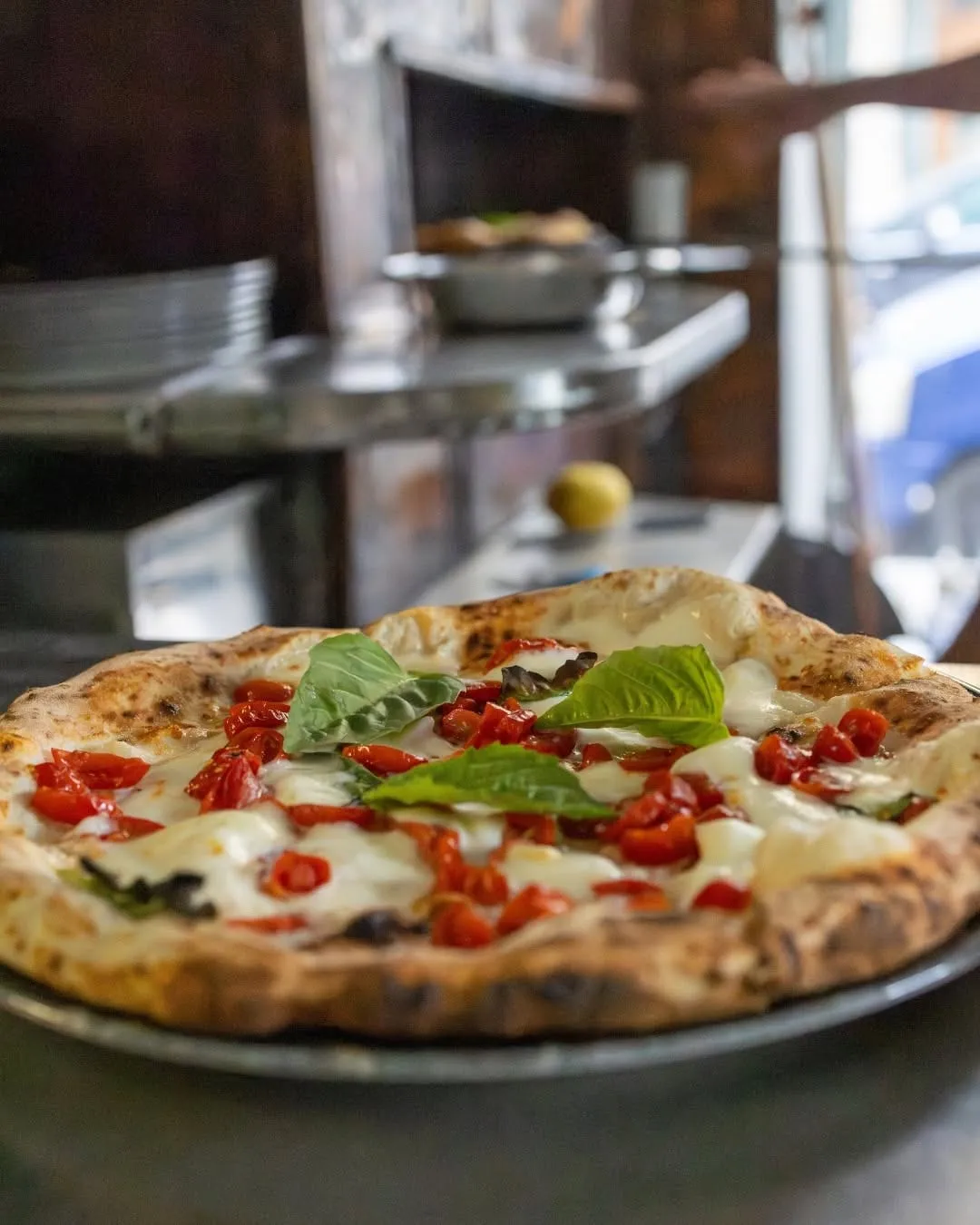
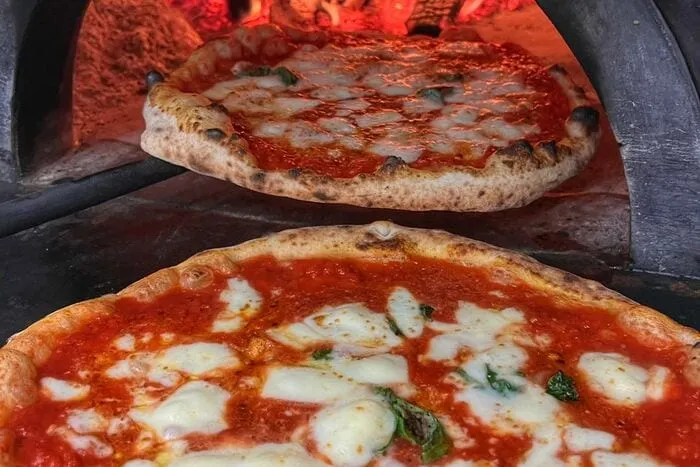
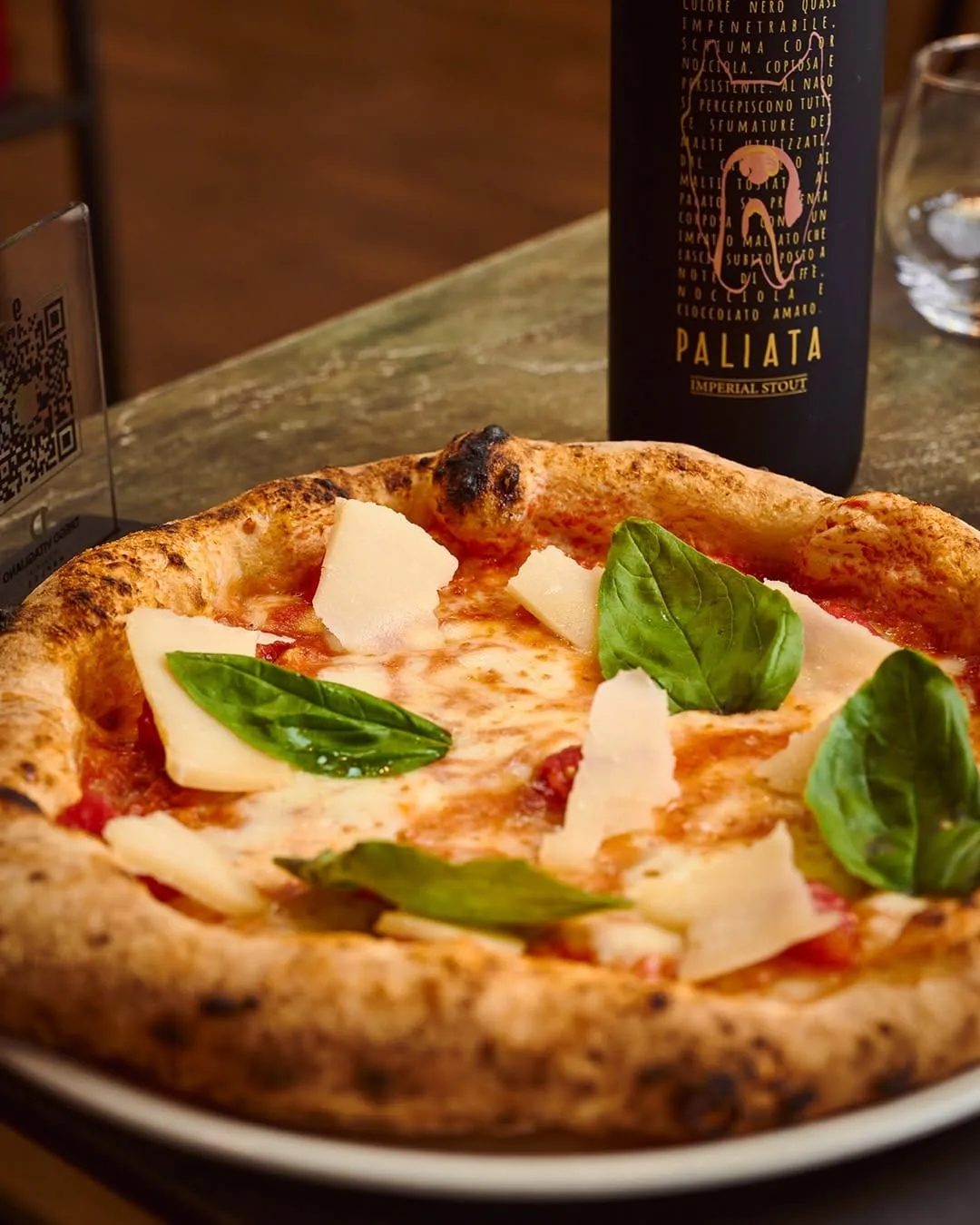
Naples is the only city in this guide where the pizza is a legally defined craft with its own disciplinare, its own professional association and a living public argument about itself. The field is not a handful of exceptions: eighty addresses can be named inside the comune without leaving it, and the ordinary neighbourhood pizza is the point rather than the backdrop. Three programmes run side by side — the ruota di carro tradition, the pizza fritta street tradition, and a contemporary school built on long fermentation.
Region
Campania
Tradition
Neapolitan
Population
908,082 (as of 2025-01-01)
Boundary
The comune of Napoli. The province of Caserta — Maddaloni and Caserta itself included — is not Naples, however often a maker's biography runs through it.
The pizzeria occupies the ground floor of Palazzo Petrucci on piazza San Domenico Maggiore, separate from the group's Posillipo restaurant. The house rule is 48 to 72 hours of leavening, with close attention to the flours used. Davide Ruotolo is named at the oven, working alongside chef Lino Scarallo on several of the pizzas. The style sits closer to the Vomero model than to the ruota di carro of via dei Tribunali.
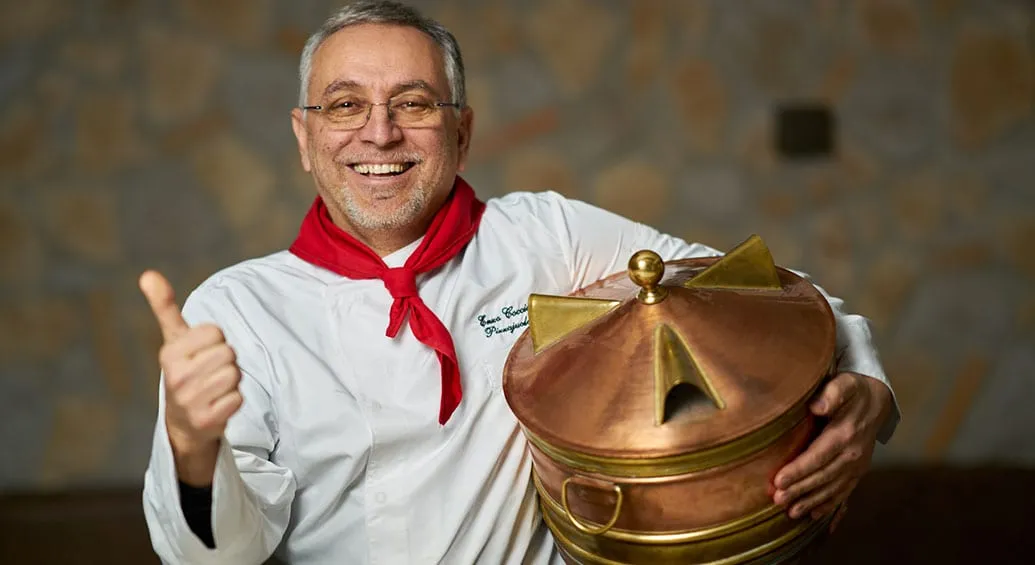
Enzo Coccia is credited with being the first to marry research into raw materials with long leavening, and with writing the international disciplinare for vera pizza napoletana during his years in the Associazione Verace Pizza Napoletana. The room began as a single space with the oven and has since doubled into a second, differently formatted site further up the same street. Coccia's margherita is offered in seven versions, on request only.
Ciro Salvo, a pizzaiolo the son of pizzaioli, makes a ruota di carro pizza on a dough whose hydration he has pushed to the extreme limits. The piazza Sannazaro room has been joined by a second Naples site on piazza della Repubblica serving the same pizza with the addition of bookings.
The best-specified dough in the Naples set: a blend of three flours - the source of the pizzeria's name - fermented 24 hours and then leavened a further twelve, 36 hours in total, at a hydration above 70%, the limit of workability. Ciro Cascella teaches the dough as well as making it, running courses that have been well attended for years. The San Pasquale room is the sede madre; the Rome and Milan shops are held to its standard.
Concettina Oliva opened the pizzeria on this spot in the Sanità in 1951, beside the shrine to the Madonna, Sant'Anna and San Vincenzo that gives it its name. Her great-grandson Ciro Oliva has turned a neighbourhood pizzeria into an experimental one without leaving the neighbourhood, and the form that takes is concrete: a dedicated laboratorio di lievitazione e maturazione, a clean separation of takeaway from the dining room, and a cellar run by a trained sommelier.
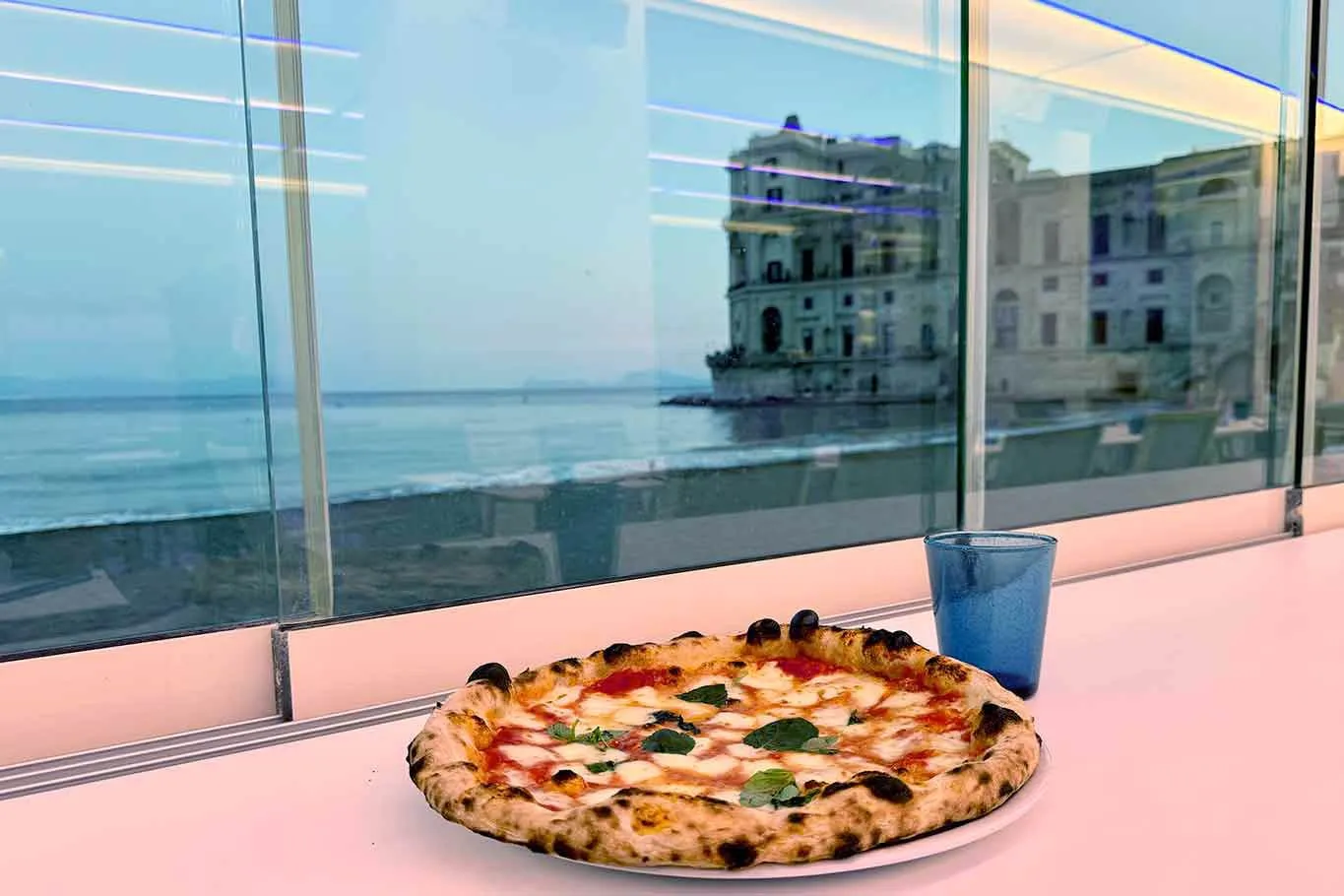
Almost 400 square metres in the seventeenth-century Palazzo Ischitella on the Riviera di Chiaia, restored under the supervision of the heritage authority, with storage, cellar, a frying area, two wood-fired ovens, washing and a warehouse laid out as separate spaces. The team at the ovens is directed by Salvatore Salvo. The house states its own dough: more than 24 hours of leavening at room temperature on a mix of two flours.
Founded in Materdei in 1901, first as a cantina and then in turn trattoria, friggitoria and pizzeria, and the location used for the filming of L'oro di Napoli. Antonio Starita, founder and honorary president of the Associazione delle Pizzerie Centenarie, is still in the room; the fourth generation, Peppe and Mena, now run it. Frying is the house signature - the montanara is fried first and finished in the wood oven, and the angioletti are Antonio Starita's own creation.
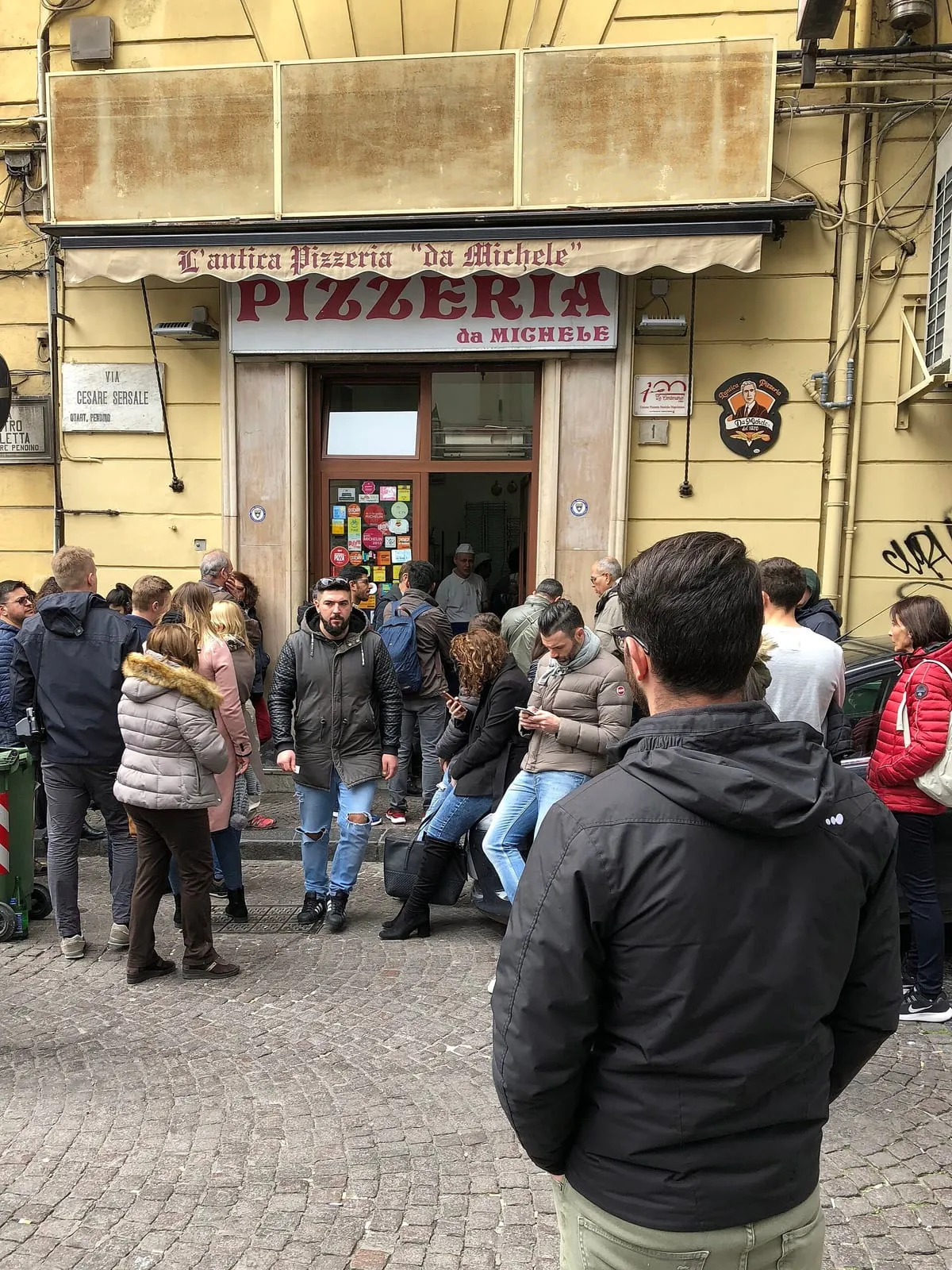
The Forcella room where the Condurro family has made a ruota di carro pizza - larger than the plate - across five generations, on a menu of four pizzas. An extension opened in summer 2025 along via Sersale, part of a plan that Sergio Condurro intends to include an academy and a Museo della Pizza. The founding year is contested between the family's own site and the outside record, and is left blank here.
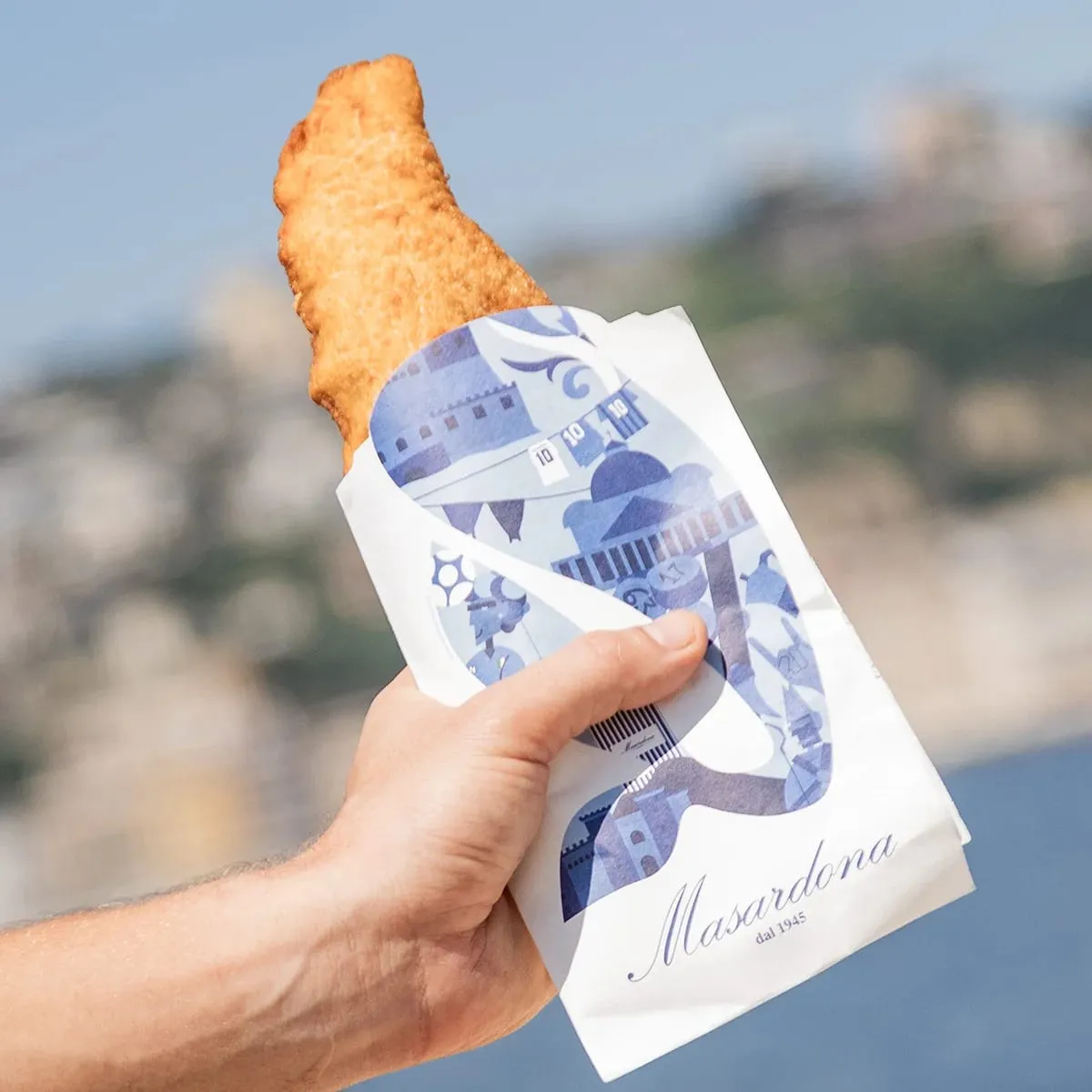
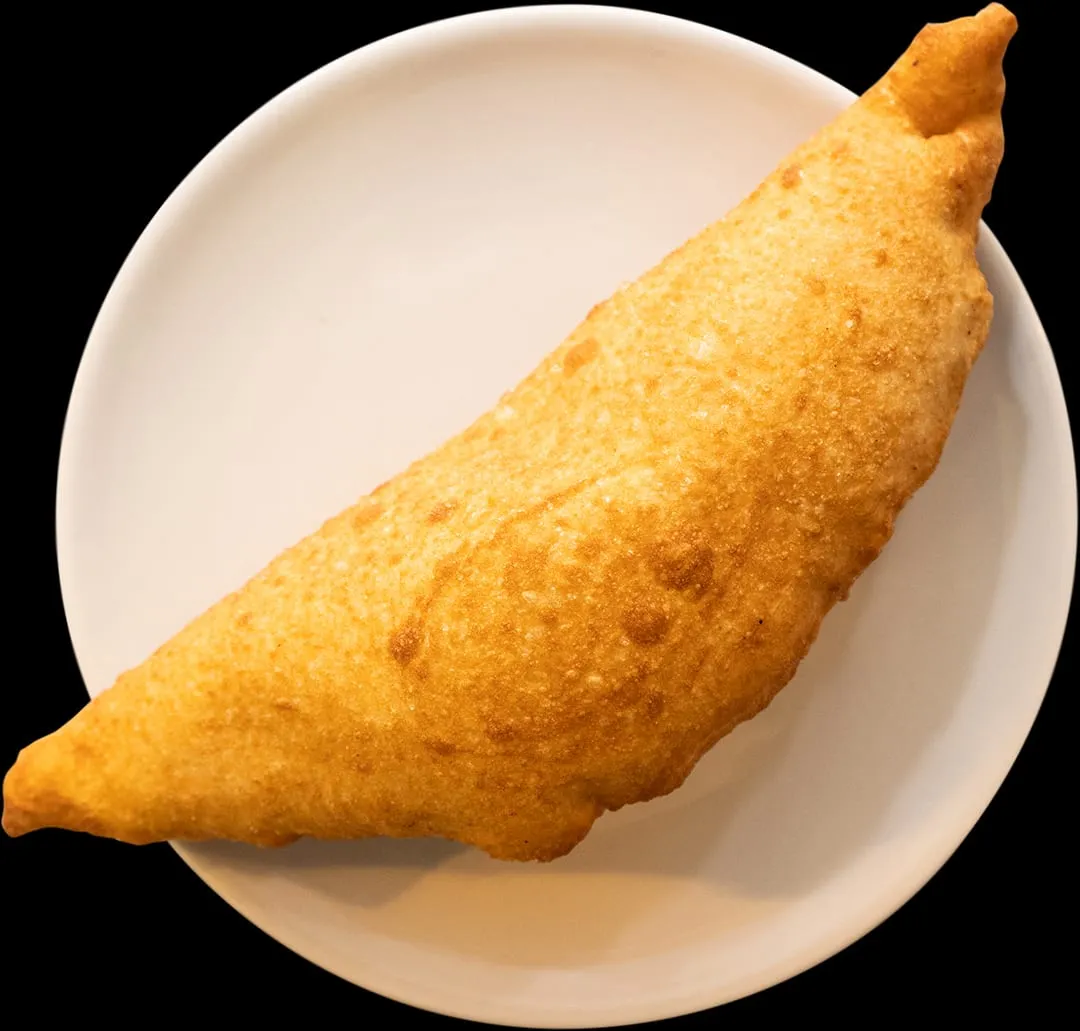
Eighty years of fried pizza from one family, a few steps from piazza Garibaldi. Anna Manfredi - 'a Masardona, a nickname that in Naples meant a carrier of messages between brigands - began selling pizze fritte from her house in 1945, across the street from the present pizzeria; her grandson Enzo Piccirillo runs it now with his wife Carmela. The Battilocchio, a half-moon format of fried pizza, is a registered trademark of the house.
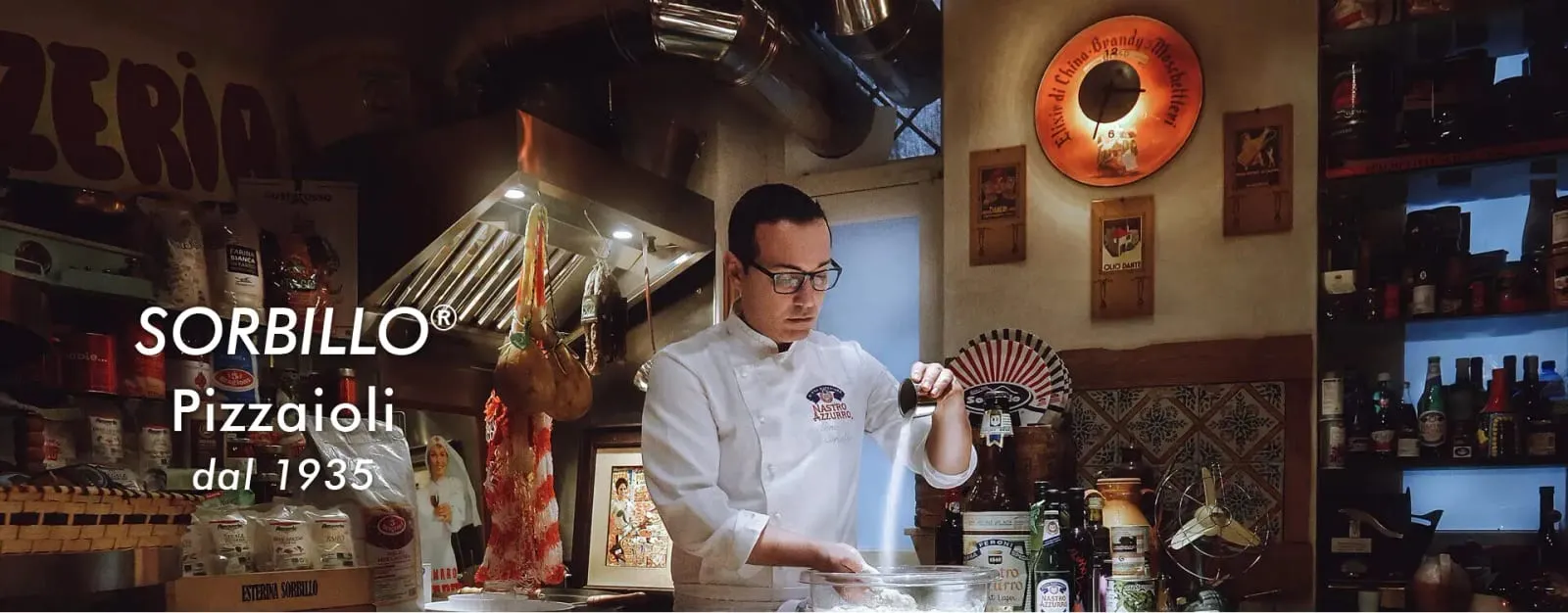
The best-known name on Via dei Tribunali, run by the great-grandson of Luigi Sorbillo and Carolina Esposito, who opened the family's first pizzeria on this street in 1935 and had 21 children who all became pizzaioli. Gino's own site names organic-farmed flour and a soft, tall cornicione as the current direction. His brother Toto runs the historic family premises while Gino has since opened branches across Italy and abroad, which sit outside this record.
Run by cousins Antonio and Luigi 'Gigi' Sorbillo, grandchildren of the same Luigi Sorbillo who opened the family's first pizzeria in 1935 a few doors down, this is the branch of the family most often overshadowed by Gino's. Pizzaiolo Vincenzo Iannucci raised the hydration and lengthened the leaven on a doppio zero flour base, later adding wheat-germ flour, moving the dough toward a lighter, more digestible result.
A neighbourhood pizzeria in the Loggetta quarter near the old Stadio San Paolo, opened by Ciro Pellone in 1984 after his own father trained at the Trianon, one of the postwar schools of Neapolitan pizza-making, and after an earlier family shop called Pellone on Via Nazionale. The dough is direct, given a twelve-hour leaven and not pushed to extreme hydration, and the family still works the oven together. Now Ciro's sons Marco and Antonio share the shift.
A Vasto-quarter pizzeria near Napoli Centrale, founded in 1960 by Vincenzo Pellone and run since the mid-1980s by his nephews, the De Luca brothers, recognised by Federico II University as 'Maestri d'Arte in Pizzeria'. The house's signature is its pizza fritta, extra-large and cooked alongside the round pizzas, which brother Domenico De Luca calls 'la vera napoletana' in the trade press.
Teresa Iorio, daughter of pizzaiolo Ernesto Iorio, is a two-time world pizza champion — 2015 in the Neapolitan STG category and 2017 in fried pizza with the recipe that gives this shop its name. She opened Femmena e Fritta in her home neighbourhood in November 2023 after a three-year wait through the pandemic, building the space around two dedicated stations: a wood oven and a separate fried-pizza counter. This is one of very few Naples records in this guide with a named woman at the head of the dough and the fire, in a trade the guide has otherwise recorded almost entirely through men.
A Fuorigrotta pizzeria whose founding name, Capasso, became Cafasso for the whole family after a registry clerk's transcription error. Today's dough is a blend of four flour types (grade 0 and 00) with a small amount of yeast, left to leaven 13-14 hours, worked by grandson Stefano who took over from his father Ugo.
A Fuorigrotta neighbourhood pizzeria opened by Salvatore Urzitelli, who started at the oven at 18 and has since competed in national and international pizza competitions. His son Ciro now works the oven. The dough is soft and dissolving, Neapolitan in the plain sense, with no concessions to fashion. The house's own site describes a long leaven for higher digestibility, matching the family-transmission story it tells about itself.
A Forcella pizzeria whose entire programme is pizza fritta, the fried, folded Neapolitan tradition born of postwar scarcity — the shop's name recalls 1947, the year the format spread through the city's alleys. Vincenzo Durante's own site describes a dough leavened up to 24 hours and deliberately well-hydrated, on the stated principle that a wetter dough absorbs less frying oil. The panetto weighs 120 grams, and the dough is offered classic, wholemeal or grain.
Diego Vitagliano opened this Santa Lucia address in December 2023 as the Naples flagship of a brand he started in Pozzuoli in 2016 and brought to the city's Bagnoli quarter the following year. The dough is indirect, built on an organic type-1 preferment with a 36-hour leaven, high hydration and very little salt — the technical basis of the 'canotto'-adjacent contemporary style he is credited with helping popularise.
The pizzeria under the Port'Alba gate is the one every history of pizza stops at, and it is the oldest continuously trading pizzeria in Naples by the city's own reckoning — the mayor's plaque says exactly that, and no more than that. It has a street window for pizza a portafoglio and a dining room upstairs, and the Luciano family has run it since the 1940s, Gennaro taking it over in 1982 and teaching the house method abroad since. The record exists because the claim around it is worth stating precisely rather than repeating.
Verified 2026-09-21
Research notes
City boundary
The comune of Napoli. The province of Caserta — Maddaloni and Caserta itself included — is not Naples, however often a maker's biography runs through it.