Rome has three pizzas. Are they three living traditions, or one tradition, one export and one product?
Italy · 13 spots selected · last checked 2026-09-18
Rome runs three distinct pizza disciplines at once — the thin tonda rolled with a pin and baked in under a minute, the teglia sold by weight from bakeries, and the pinsa. It is also where the contemporary argument is most active: the pizza in teglia revolution started here and was exported nationally. The three are not equal in kind, and the difference is the city's story. The al taglio counter is a bakery craft with a named father; the pinsa, on its inventor's own family's account, is a commercial formulation of 2001 whose ancient-Roman origin story they describe as a misunderstanding that everyone enjoyed.
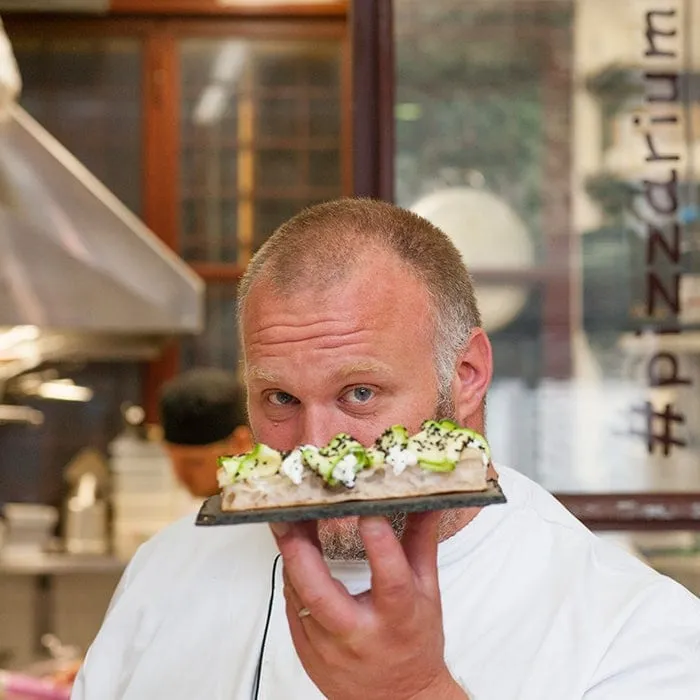
The reference point for Roman pizza in teglia and the place the city's al taglio generation trained in or against. The dough is described in print as high hydration with fermentations up to 72 hours on seasonal short-chain ingredients, and the provenance claim is unusually specific for this trade: through Brigata Agricola, a collective of about twenty small producers Bonci created, the business contributes to cultivating 60 hectares of cereals milled and used in the Roman area. It reopened on 13 September 2025 after an expansion to about 160 square metres with a counter sized for eleven teglie.
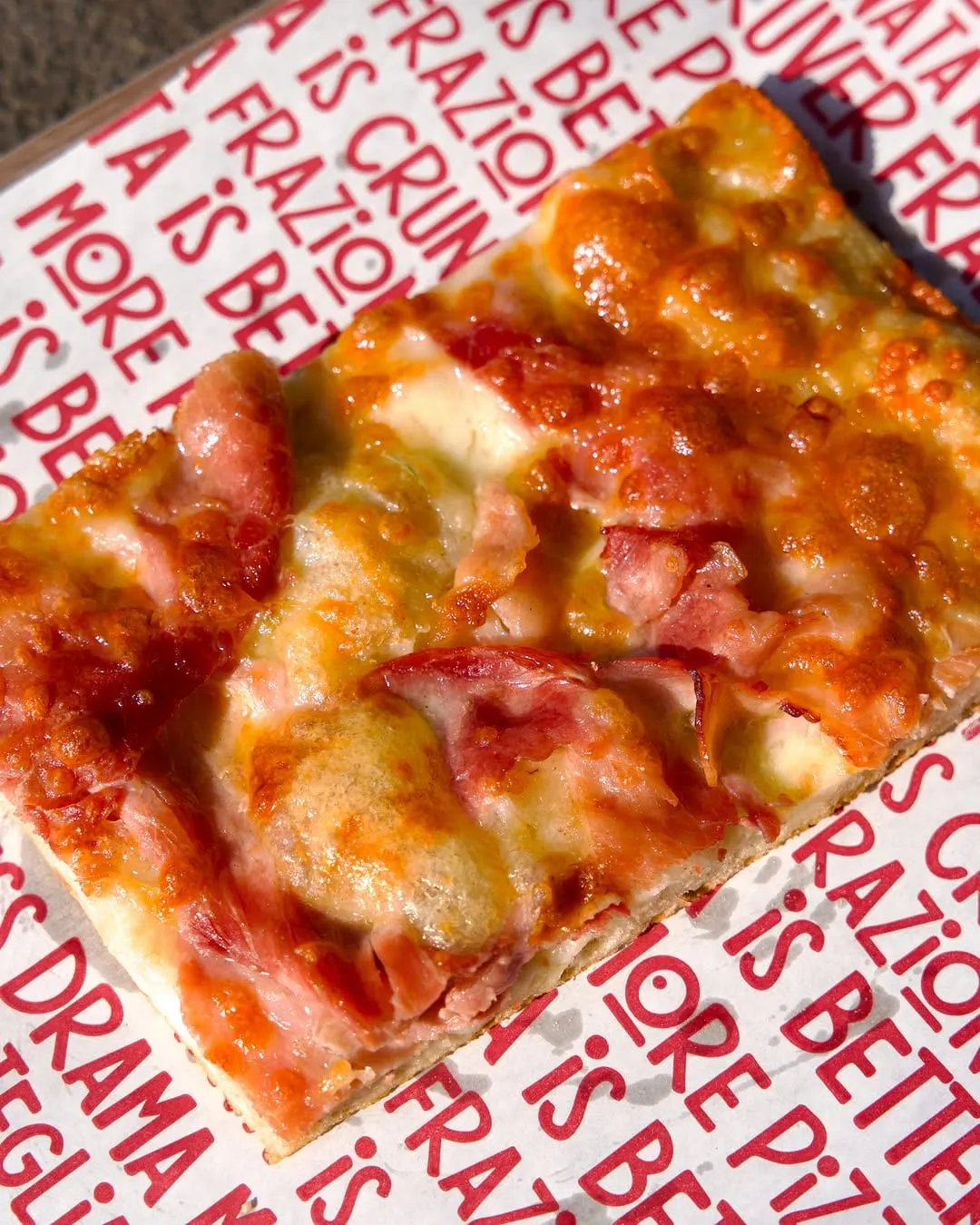
The clearest evidenced case of the Roman teglia lineage passing to a second generation: Ruver spent about eighteen months on Pizzarium's counter and two years in its kitchen before opening his own 24 square metre shop near Circo Massimo in 2022. The dough is described in specific terms — 900 grams on a 60x40 teglia, risen 24 to 36 hours, and baked entirely in the oven, which the piece records as a deliberate break from his teacher's method. Sourcing is named rather than gestured at, including a tomato sauce being built with Le Meraviglie della Terra of Velletri and a salumi line with Macelleria Avagliano of Sabaudia.
The dough is specified precisely enough to check: 180 grams is the weight of the ball, made with a liquid pre-ferment and high hydration, stretched by hand until it is almost transparent. The result is low, thin and lightly crisp with a scorched edge, which is the tonda discipline. It has been in Centocelle for a decade and runs two take-away counters elsewhere in the city.
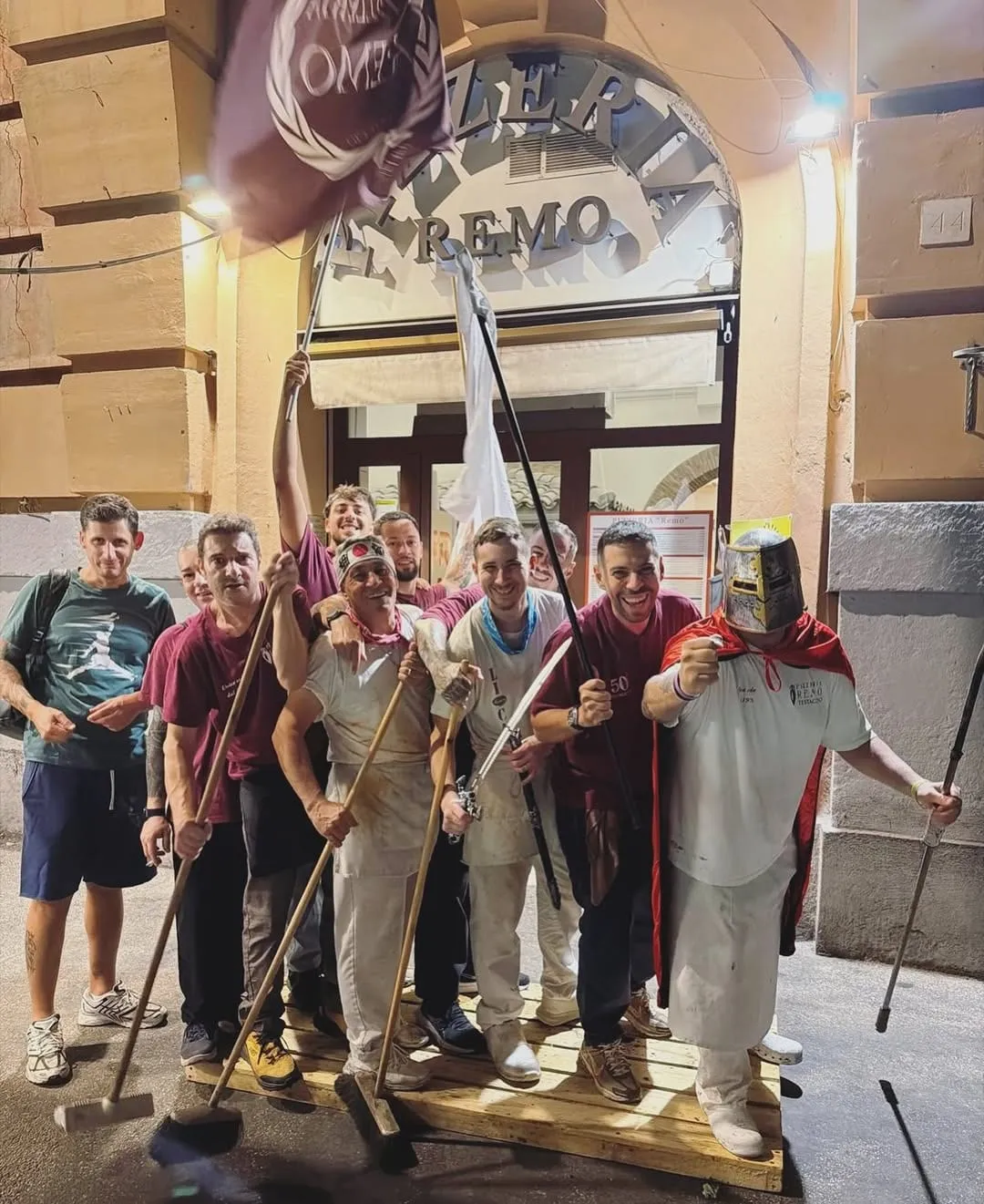
The plainest statement of the tonda romana method this run found: low, rolled out with a mattarello, short-risen, and baked in a wood oven for barely a minute. It has been feeding Testaccio since 1976 at prices under 20 euros for a starter, a capricciosa and a drink, which is the kind of everyday fact the depth-of-field dimension actually rests on. It is one of six strongholds the city's revival generation says it learned from.
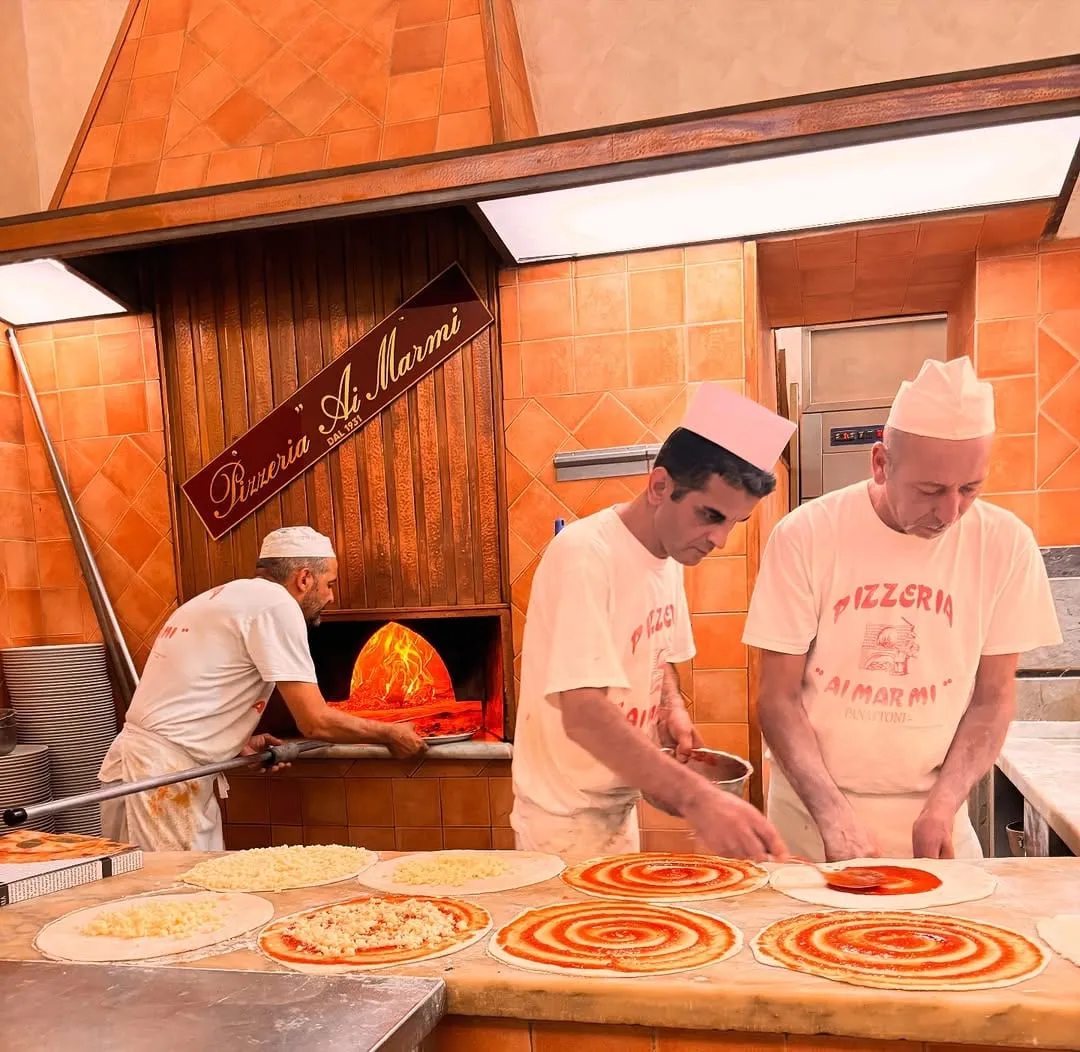
Approaching a century on Viale Trastevere and still working the way the discipline is described: a large wood oven in full view, pizzaioli working in front of the room, marble-topped tables. Pier Paolo Pasolini, who lived at Monteverde and ate there often, gave the place the nickname l'Obitorio. It is the longevity-and-local-significance case in the Rome set rather than a dough case, and the record says so.
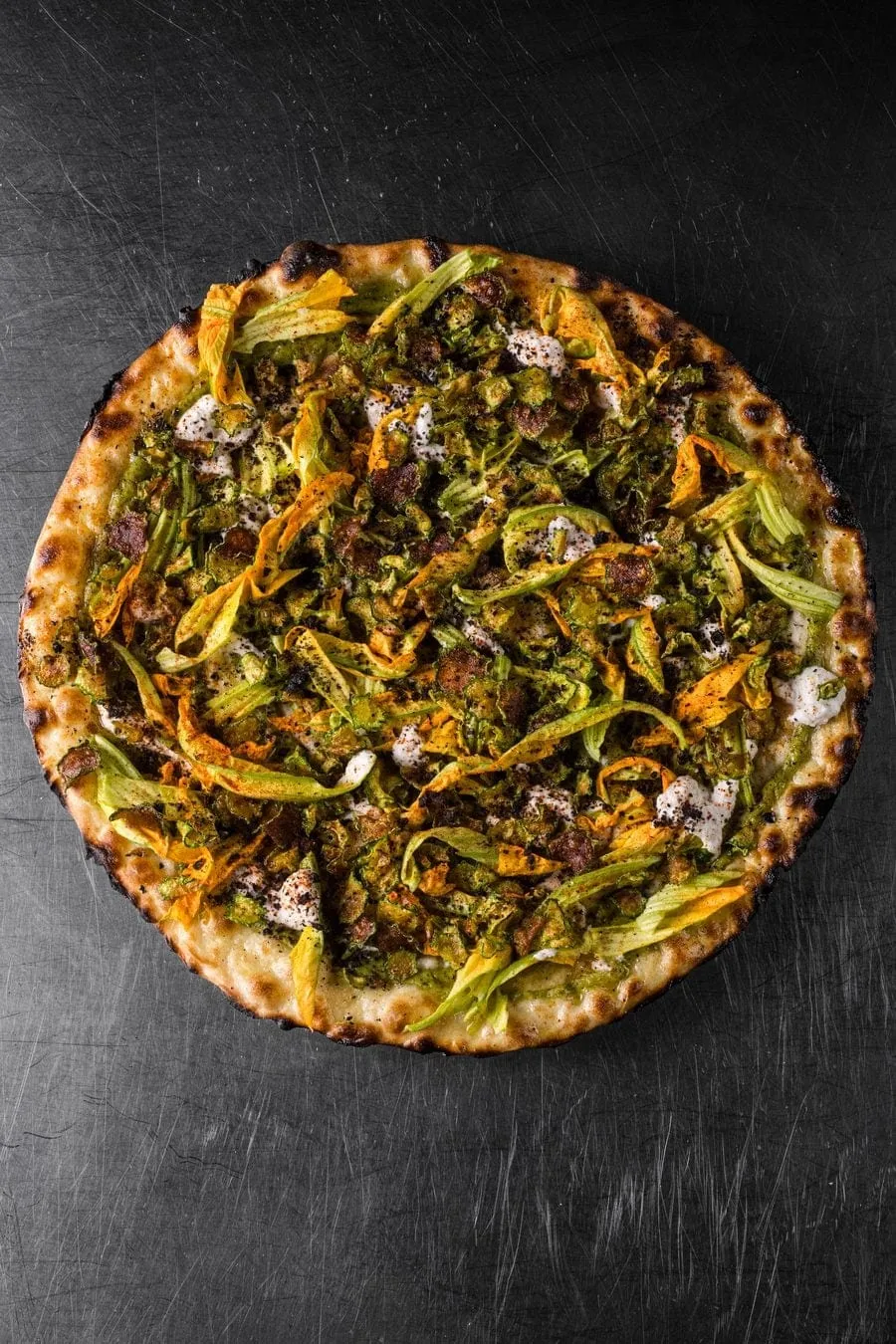
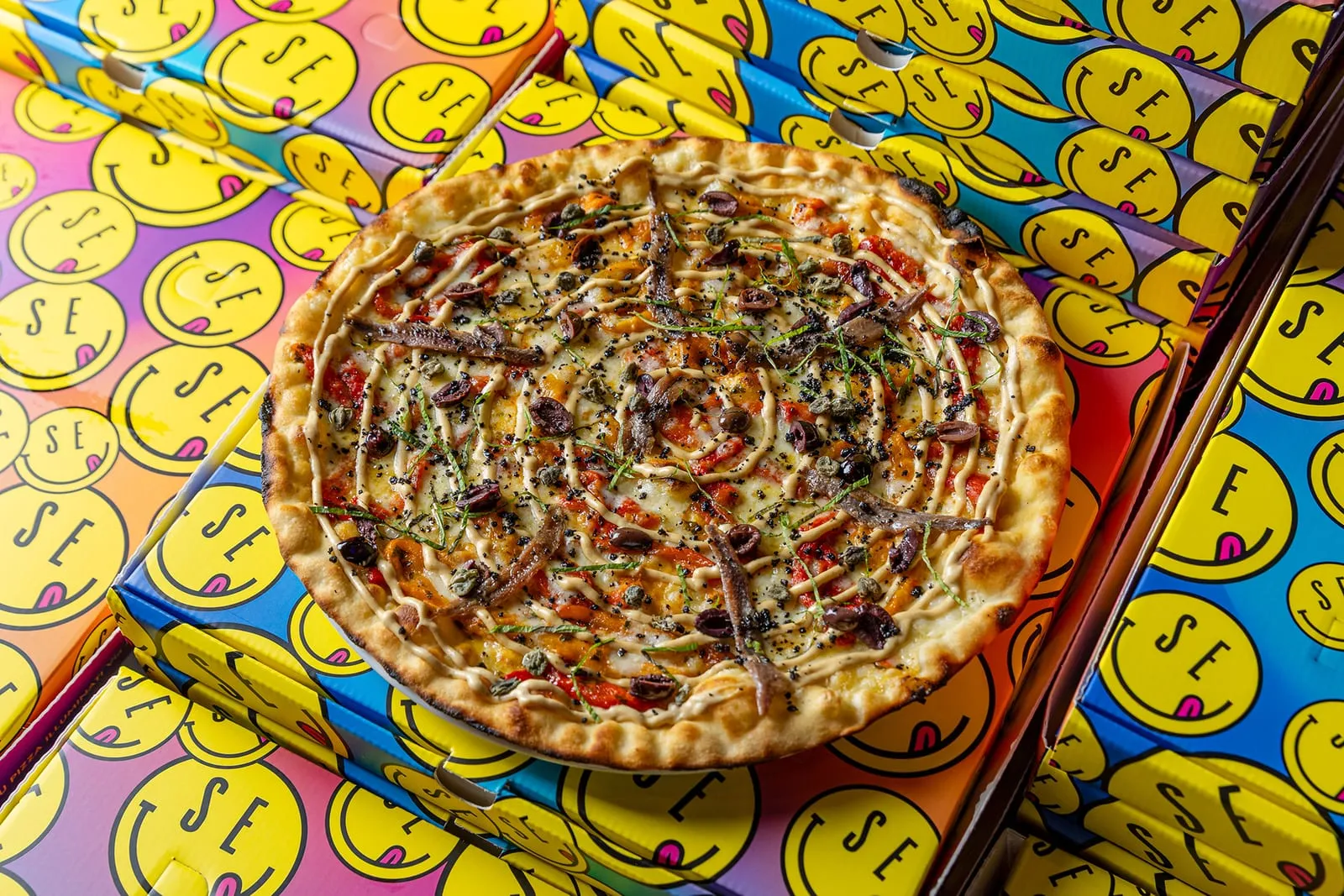
Rome's most decorated contemporary pizzeria, and the record is unusually checkable: a named pizzaiolo, suppliers named in print (Petra/Molino Quaglia flour, Solania tomatoes, Latteria Sorrentina fior di latte), a stated hydration of 68-70% baked at about 420C, and a separate padellino dough at 75% that is baked in a static oven, blast-chilled and regenerated. It closed for five months of works and reopened on 30 October 2025 under the shortened name Seu Pizza, with three ovens and a menu that now runs pala and padellino alongside the tonda. Its own second Rome site, TAC, is the one the business describes as its Roman-style pizza, which is the clearest evidence of where this pizzeria sits in the city's three traditions.
A teglia counter in Furio Camillo, on the edge of Appio-Latino, built on a division of labour that is the whole point of the place: Mario Panatta makes the dough and Sara Longo, who came from the kitchens of Roman trattorie and restaurants, cooks what goes on it. The base is described in print at 80-85% hydration with twenty-four hours of maturation on a blend of artisan flours, and in Longo's own words every recipe on their pizzas is cooked, and prepared the same morning. They had been running an established pizzeria in the Appio quarter as consultants for a year when they opened it as their own in July 2017.
A bakery at the EUR end of Rome where the pizza in teglia comes out of the same 150-square-metre open workshop as the bread. Francesco Arnesano, born in 1995 and self-taught from the age of fourteen, founded the first Lievito at twenty-one in a 35-square-metre shop on Viale Europa and later opened this larger second one nearby. Five different mother yeasts are kept here, each for a particular bread — and the pizza is not one of them. The teglia is a direct dough on a blend of stone-milled organic flours, which in a city where the biga now dominates is a deliberate move against the current; it is reported at eighty per cent hydration after a short autolysis, on a blend he built himself of seventy per cent type 2 soft wheat with Sicilian durum, whole spelt, rye and a little wholegrain soft wheat. He bakes it for more than ten minutes, long enough that raw toppings cook into the base rather than sit on it.
Gabriele Iambrenghi, born in 1996, left restaurant kitchens for baking and opened this small counter behind via Trionfale in 2022, learning the advanced bread technique from a baker he names as the turning point. The teglia is a direct dough on a blend he mixes himself — about seventy per cent type 0, twenty-five per cent semi-wholemeal type 1, and a last five per cent rotating between wholemeal rye and spelt — raised thirty-six to forty-eight hours and reported above eighty per cent hydration. The slice it makes is deliberately not the exaggeratedly open crumb the style is known for. On weekday mornings the same room turns into a small bread oven for about fifteen naturally leavened loaves. He declines to sell pizza bianca, and says so.
Alessandro Santilli, born in 1995, cooked in Oliver Glowig's kitchens and then took a leavening course before opening this small counter near piazza Re di Roma in September 2023. The point of it is the transfer: high-kitchen method onto a slice people can afford, with about ten varieties a day on half-trays and every sauce, oil and dressing made in house. The base is a direct dough of type 0 flour at eighty per cent hydration risen forty-eight hours, and each slice is finished at the counter rather than sold as it leaves the oven.
Valerio Esse cooked in restaurant kitchens in London and Australia and spent seven years as executive chef of a Roman restaurant before taking a few square metres in Trionfale and turning to the teglia. One dough serves the whole counter: a bespoke blend of wholemeal, type 0 and type 1 flours worked indirectly from a biga prefermento, at eighty per cent hydration and about forty-eight hours of maturation, with the toppings added cold as the slice leaves the counter. He named the shop for his grandmother, and says the aim is not nostalgia but that every customer should feel at home — a pizza in teglia that is rich and still legible to any palate.
A shop that sells one thing: Roman pizza bianca baked on the pala, split while hot and filled to order. Massimiliano Ceccarelli, who is better known online than in print, took the idea from a Primavalle baker who has carried the filled-pala trade for nearly fifty years, and was let into that laboratory to learn it. He makes the dough behind a glazed wall on the premises — direct, at seventy per cent hydration, with a long rise — and nothing is part-baked: each pala is filled as it comes out and carried warm to the counter, sold by weight. The fillings and the mayonnaise are made in house.
Manuel and Niccolò Trecastelli, who already ran a Roman trattoria and a wine bar with a kitchen, opened this counter in Garbatella in September 2023 to make the opposite of what the style was chasing. Where the trade was going towards ever more complex doughs and spectacular toppings, they went back to the low, thin, crisp Roman slice Manuel remembered from his uncle's bakery — fragrant, never biscuit-dry, and strong enough to carry a rich topping. The dough is built around a prefermento. The shop closed during 2025 and reopened at the same street number that December.