Barcelona has two of the world's ranked pizzerias and a bread tradition of its own that has nothing to do with them. Is that a pizza culture?
Spain · 6 spots selected · last checked 2026-09-19
Sartoria Panatieri and La Balmesina are strong enough to carry Barcelona into this guide. The harder question is whether it is a second Madrid: an elite pizza city that never made a pizza of its own. Largely, yes, with one partial exception worth stating.
Every strong Barcelona house found here is explicitly Italian in format, run by transplanted Italians, by Spanish chefs trained in Italian technique, or by chains. The oldest of the six dates to 2004. The exception is Sartoria Panatieri and, less strongly, La Balmesina: both reject Neapolitan orthodoxy outright and build a locally flavoured pizza on Catalan ingredients and a deliberately non-Neapolitan dough. That is a local inflection of an imported form, not a local form. It is weaker than what the distinctiveness dimension is looking for and it is more than Madrid offered.
Coca deserves a sentence because it is the obvious trap. Barcelona has a living coca tradition — Forn Franquesa turns out seven to eight hundred a day from its own wood oven — and no source found here treats coca and pizza as the same thing or lists them together. One food writer imagined a hypothetical Barcelona pizza of ganxet beans and salt cod and was explicit that it was speculative, attached to no dish on any menu. Coca is a real bread tradition that is not pizza, and this guide does not annex it to raise a score.
Population
1,713,247 (as of 2025-01-01)
Boundary
The municipality of Barcelona. Not the wider Àrea Metropolitana.
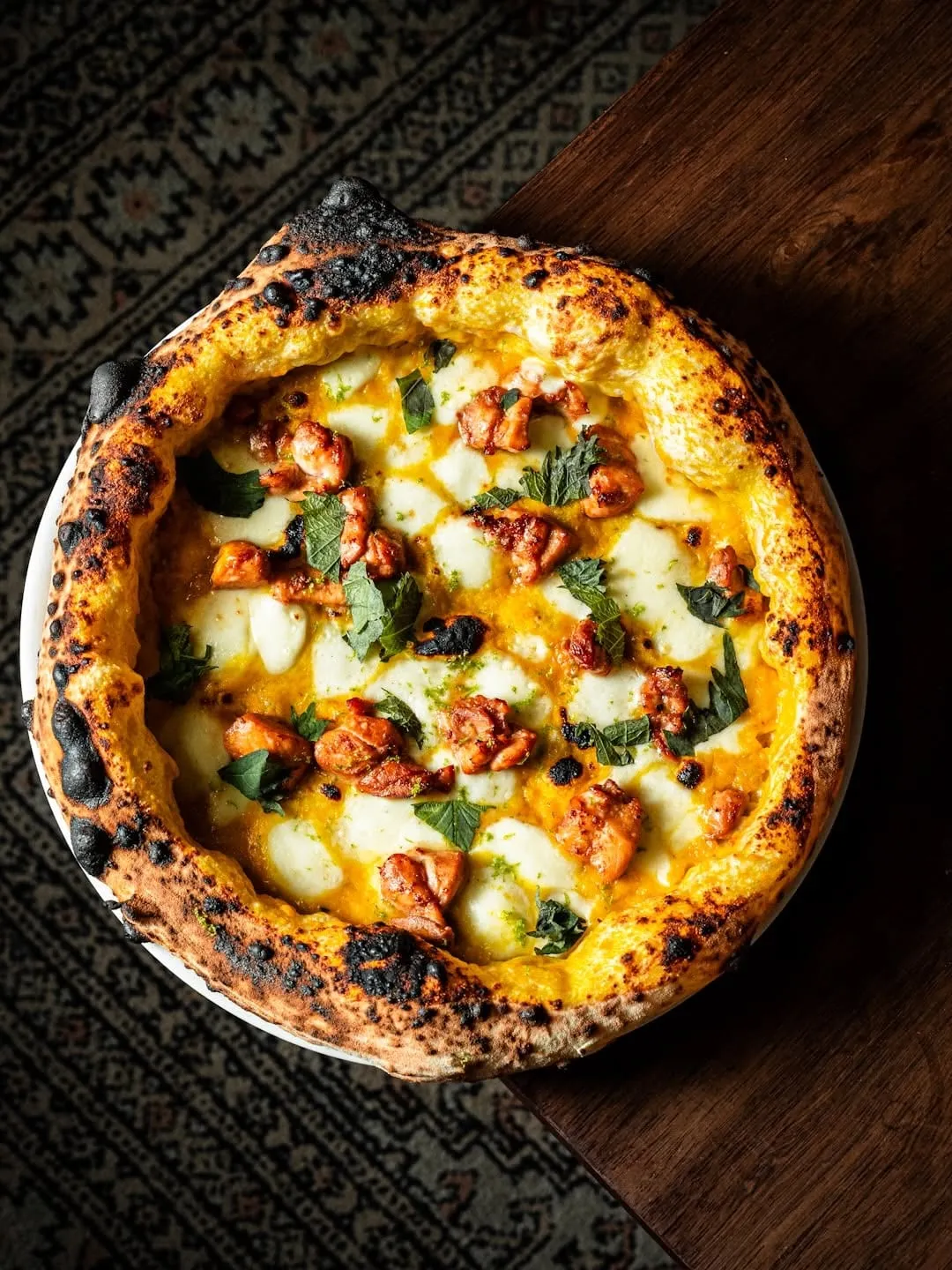
Opened in Gràcia in 2018 as Garden Pizza by chefs Rafa Panatieri and Jorge Sastre, both formerly of Roca Moo, the project rebuilds the Italian pizza format around Catalan and Spanish ingredients — mortadella with Idiazábal cheese, roast pumpkin with Iberian pork belly — while keeping a wood-fired oven and a 72-hour, stone-milled dough. The founders cure their own cold cuts and cheeses on-site rather than buying them in.
Three friends from the Veneto opened La Balmesina to make a pizza deliberately outside Neapolitan orthodoxy: a sourdough base of three organic flours fermented a minimum of 50 hours (80 for the thicker pala romana format), with pH controlled to keep acidity down. It has been ranked among Europe's 50 best twice (32nd in 2021, 9th in 2024) and won Madrid Fusión's 2021 award for Spain's best pizza, with the wood-fired oven visible in the ground-floor kitchen as the restaurant's stated centrepiece.
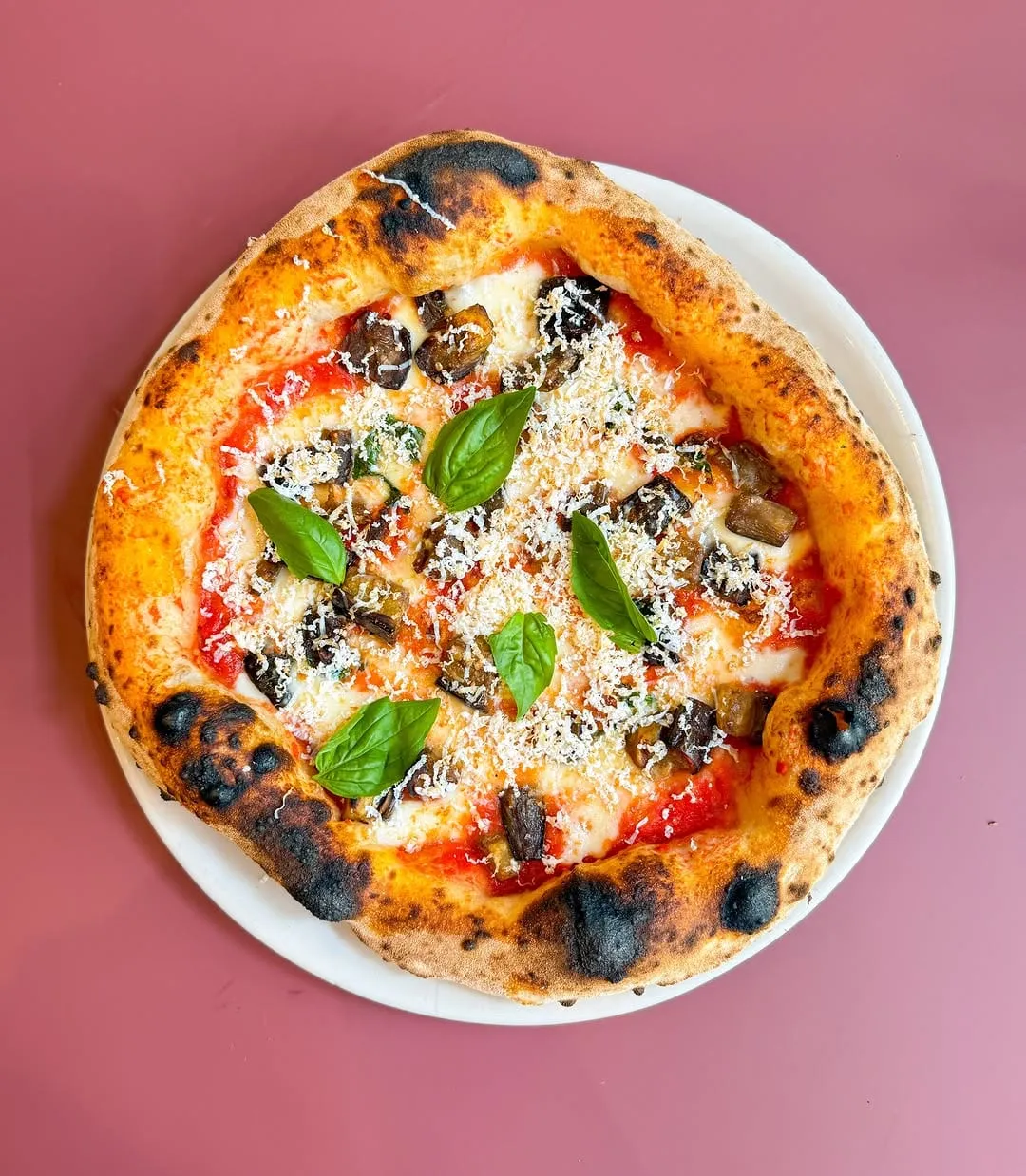
A family-run Neapolitan restaurant in El Born, open since 2004 under Naples-born Ciro Esposito, whose sourdough is fermented 72 hours and baked 90 seconds in a wood-fired oven at 480°C. The kitchen also runs Gragnano pasta and Campanian wine alongside the pizza, self-describing as an Italian restaurant rather than a pizzeria alone, but the pizza programme is a stated, dated and named specialism rather than an afterthought on the menu.
Can Pizza is a Catalan-founded group (first restaurant in El Prat de Llobregat, 2014) whose stated policy, in co-founder Lolo Lorenzo's own words, is to train its own pizzaioli in-house — including people from vulnerable backgrounds — rather than import formed pizzaioli from Naples. The dough is a hand-shaped, five-flour blend (00, toasted soy, wholemeal, wholewheat and semolina) fermented 72 hours, prepared daily at each restaurant. The Sagrada Família branch, its fourth and first inside Barcelona city, was named in the 2022 '50 Top World Artisan Pizza Chains' list alongside Grosso Napoletano and NAP.
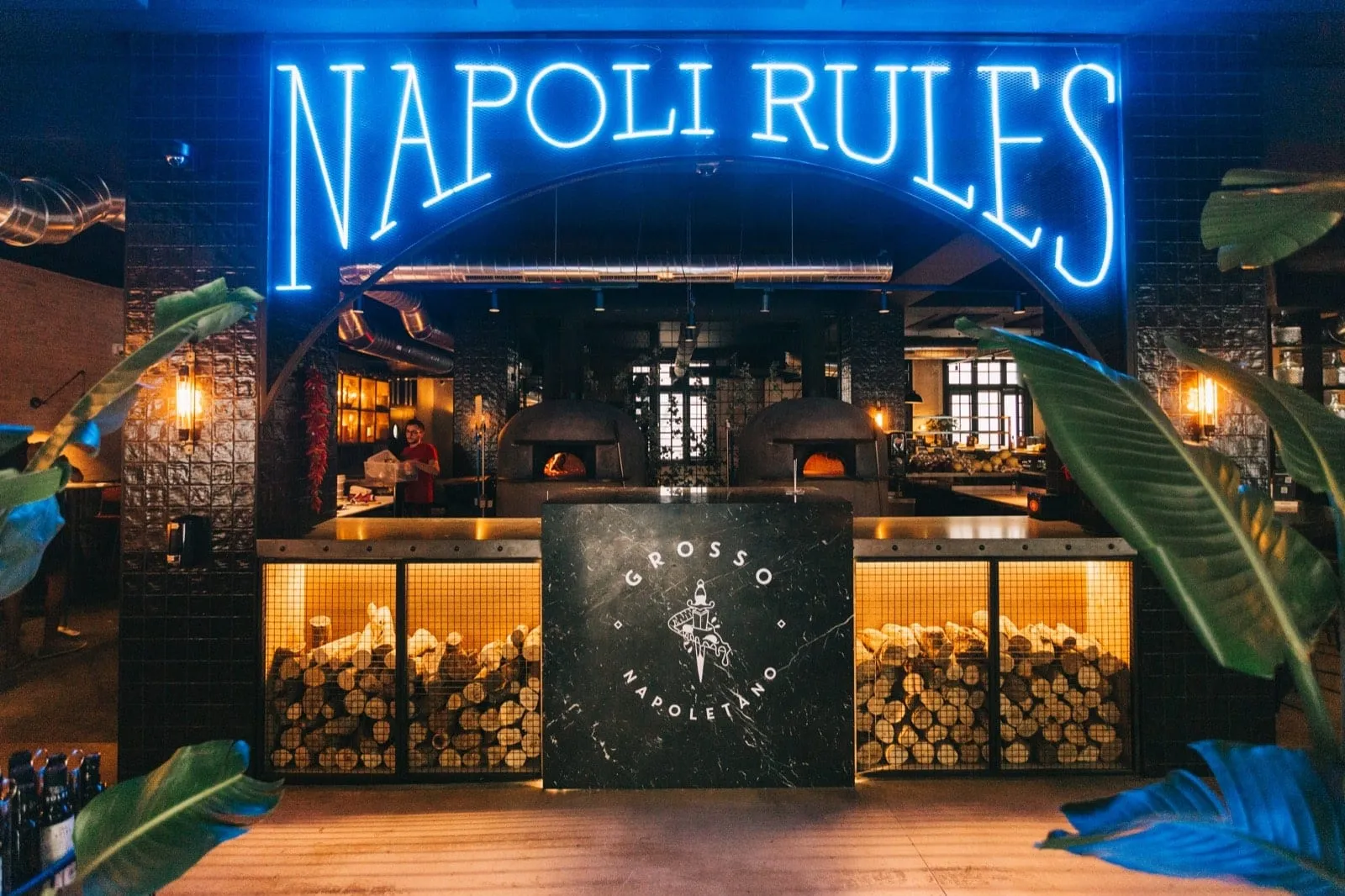
Grosso Napoletano is a Madrid-founded chain (2016/2017, by Hugo Rodríguez de Prada and Jorge Blas) whose Barcelona flagship on Carrer de Casanova was its first branch in the city, in the Sant Gervasi-Galvany neighbourhood near Diagonal. The stone-and-refractory ovens are built to order in Naples by fourth-generation artisans, and the dough is a 48-hour double-fermented mix of strong Italian flour and sourdough, baked around 90 seconds at 500°C. Its presence in Barcelona is itself evidence for the pattern this project has already found in Madrid: an imported, not indigenous, high-end pizza culture.
Parking Pizza is a Barcelona-founded pizzeria group, opened in 2015 in a former building garage on Carrer de Londres by Berta Bernat and the late Marcos Armenteras — a rare case in this cohort of an Italian-format pizza business actually started in the city rather than imported as a chain from elsewhere. The dough is a long-fermented, Neapolitan-style base baked in a wood-fired oven, dressed with Mediterranean and imported Italian ingredients (Sicilian cherry tomatoes, Mallorcan spicy sobrasada). Bernat, interviewed on the business's tenth anniversary, states plainly that Barcelona had no good pizza when they opened it and credits the shop with helping start the city's current pizza boom.